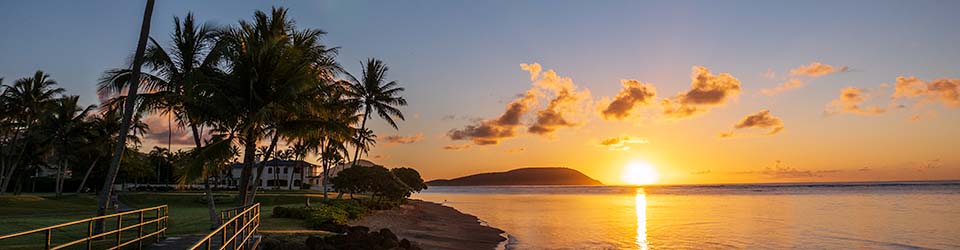
After getting married just before the end of 1939, my parents rented a house on Kealaolu Avenue in Kahala, just above Farmers Road. They moved down the street in 1942 when they bought a house a block or so away for $5,700. At the time of her death in January 2013, my mother, Helen Lind, had lived in the same house for over 70 years.
She was interviewed in April 2009 by a contractor compiling a cultural history of the area for Kamehameha Schools. According to the transcript provided to my mother, “the project is an internal document for Kamehameha Schools to learn more about their lands.”
From the introductory paragraph: “Mrs. Lind is 95 years young and is full of so much life and history. SHe has lived in the same house on Kealaolu for over 65 years and has witnessed many changes that have occurred to her community and neighborhood through the years. Mrs. Lind vividly remembers the days when Kahala-Waialae was considered ‘country’ and she graciously shared many of those memories with us.”
What follows is a slightly cleaned up version of her recollections of old Kahala. I’ve trimmed some of the diversions, cleaned up a few things, but it’s largely in her words. The original transcript, with her corrections, can be found here.
Kamehameha’s apparently unpublished report, likely including other old-timer interviews, is floating around somewhere. I hope that it becomes publicly available someday.
So here’s my mother in her own words.
We were in Waikiki and I wanted out! I wanted to be in the country, so first I found a rental up the street. Then I had this friend who was a real estate agent, and she told me there was an opening on this street.
When we came here, there were houses on both sides of the street, except mauka of Farmers Road on the golf course side. I think this was the last lot that they built on.
Right in back of us when we came here was a large forest, right over our fence. There was space, about ten or twelve feet, because I had a little garden over the back yard. And I had a vegetable garden. And during the war, they cleared the forest.
A farmer came in and raised vegetables, and in the evening when I went to tend my garden–I had cabbage, tomatoes, and ‘ohelo berries, and I would go and pick somebody’s tomatoes and string beans from their garden [laugh].
Taylor’s Chicken Farm was on Farmers Road. And every Sunday morning the neighbors went there to gossip and pick up their chickens and eggs for the week. IT was a gathering place and there were three or four of the Taylor brothers. This was the Honolulu Paper Company family.
The next house down was one brother, and there was one up the street, and another one opposite the park on Kahala Avenue. The Taylor brothers lived here a long time. Oh, and this one here had a son that lived across the street. They had a daughter who was a professional dancer in London!
 I knew practically everyone on this street. There were mostly local people. One of Kamokila Campbell’s daughters lived next door to us in the next block where we rented before we moved into this house.
Farmers Road sort of meandered down…all the way down and there was a pavilion where we had dances. I think it was a private affair and I think we must have paid, but it wasn’t an open, public thing. THey had musicians and dancers and parties, and they had hula classes there.
On the old Farmers Road, there were stables, and a lot of pig farmers. Then Doris Duke had a hydroponic garden. They raised vegetables and fruit in the troughs along the sides of the building. Doris Duke owned it, but I think it was cared for by Sam Kahanamoku. He lived down there some place. I think Sam did a lot for Doris Duke.
All of the neighborhoods in the past had vendors that came, and they would lift the side of their truck and all of their things would be displayed. You went and bought what you wanted. Most of them were vegetables, but sometimes they had some fish and eggs. In those days, milk was delivered to your door. I remember so distinctly. We had an account with the Metropolitan Meat Market. We would leave the kitchen door unlocked because when they delivered, they took the meat and put it in the refrigerator [laugh]. And milk was left outside your door in the morning.
And then we saved all of our kitchen scraps for the piggery farmers. We left it outside the kitchen door in a bucket. That’s how we got rid of our food scraps.
This has always been a place with a lot of coconut trees, though I don’t remember a grove of trees. But there was a mango grove right there where Kahala School is now, down to Farmers Road. There were lots of mango trees and some of those real old ones, I think are still there today.
Right after World War Two, I think 1948, they subdivided and then called it Waialae-Kahala, and the pig farmers were displaced.
When we gave directions of where we were, we used to say that we were on the last street within the city limits because many businesses didn’t deliver past here.
THere was a bus turnaround right here at the end of Kealaolu, and then next door to it was Star of the Sea Church.
The street car was running on Waialae when my mother was still in high school (c. 1905), because I have a picture of her and she said they had just gotten off the street car and walked down to the beach, and it was a long, long walk.
After I graduated from the University in 1935, I was hired as an instructor in Home Economics, and we used to get together and rent houses on the beach in Kahala. In those days there were just a handful of houses that were nice houses. Like Mr. Louis from Metropolitan Meat Market, they had a nice home with pillars. There were a couple more nice homes, but mostly there were cottages and the ones we rented were real beach cottages, the kind where there weren’t glass windows, but wood windows. You push them out and put sticks to hold them, and then when you left you put them down and locked them. That’s real typical of a beach house, and we would rent them for the weekend lots of times.
We went swimming, we hiked around, but mostly we were just lazy. I think we rented several times from people who lived in Nuuanu, and when it was the wet season they would come down here.
At the mauka end of Kealaolu, Joe Fats BBQ was across the street, with a big huli area and it was all glassed in. So people would stop on their way out to the country and get their chicken or whatever it was they wanted. It was a very popular stop-over place.
And I think on the Kaimuki side of Joe Fats and mauka of the highway was the bus stop, and on the makai side was Okada Store. There was a block there of stores. There were two grocery stores, Okada and Afuso, which was down at the other end. There was a feed store, which is now on Beretania Street. There was a barber shop.
In the early 30’s, the paved road continued past Kealaolu, probably around Hanauma Bay. In there 1930s there was the Massie case, when the Navy people murdered the Hawaiian, and they took the body and were going to throw him over the cliffs out there, but they didn’t know that the road ended.
My uncle was the lighthouse keeper at Makapuu, and he was killed in an explosion there in 1925. My family would drive from Waipahu to visit my uncle at the lighthouse and it was an all day trip. We left around five in the morning and we didn’t get back until sunset.
We went up what is now Lunalilo Home Road, which goes mauka into the valley. We turned east and crossed a ridge where there are subdivisions now. It was a dirt road. We drove through bushes all the way over to the lighthouse.
The area beyond Kahala was fairly well populated, especially along the shoreline. Portlock was built up, Lunalilo Home was there,and further on mauka there were flower farms. The Kamehameha Boys School had a farm or ranch in Hahaione Valley. The highway beyond Hanauma to Makapuu was completed in the 1930s.
It was all marsh in the Hawaii Kai area, and there was one stretch of road where the beach park is now, Maunalua Park, where you drove on planks of wood, otherwise you got stuck in the mud [laugh].