
Seventy-five years ago, on the evening of April 9, 1947, an F-5 tornado reported to be two miles wide at some points, swept up from Texas and across Oklahoma, finally dissipating in Kansas. Directly in its path was the small town of Woodward, Oklahoma. When the storm moved through, it demolished a reported 100 city blocks in the small town. Over 100 people were killed. 1It is still considered the worst tornado in Oklahoma history, and it remains one of the deadliest in US history.
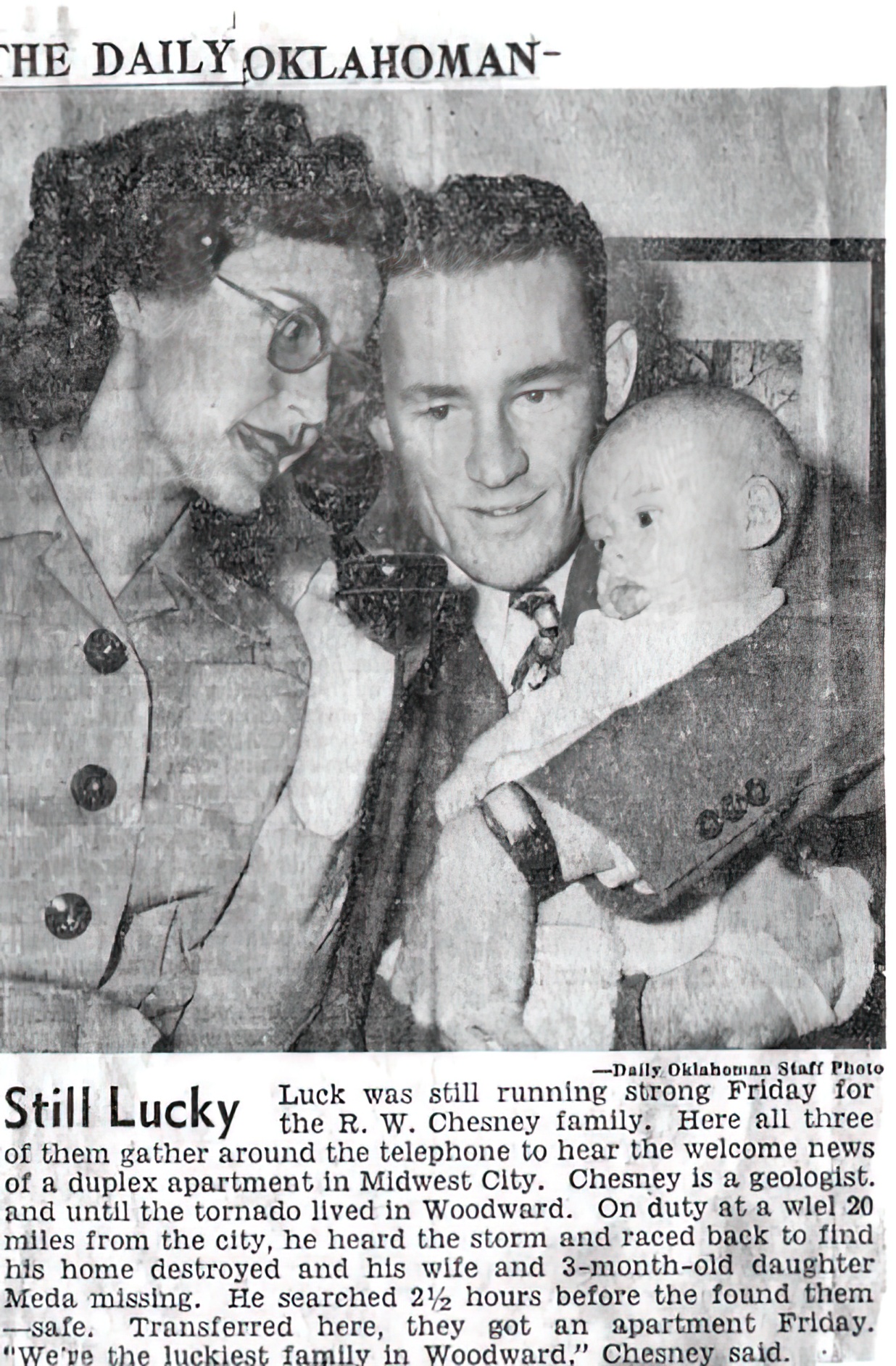 Meda and her family family were living in Woodward at the time, while her father, a geologist by training, was working in the oil fields nearby. Meda was less than three months old. She was home with her mother the night of the storm, while many of the men were away at work when the storm hit without warning. This was prior to the development of warning systems, and the storm interrupted phone service as well, so news of the devastation took time to spread.
The Weather Channel ranks the storm as the 2nd deadliest tornado in history.
The Monster Tornado of April 9, 1947
The second-deadliest F/EF5 tornado on record was a monster that plowed for 170 miles through Texas, Oklahoma and Kansas on April 9, 1947, killing 181. The town most impacted was Woodward, Oklahoma, where 107 people perished. At some locations along the tornado’s path it was as much as two miles wide, making it one of the largest tornadoes in U.S. annals. This tornado struck just a few years before the modern warning system was established.
And here’s a longer summary of the storm prepared by the National Weather Service:
The most deadly tornado to ever strike within the borders of the state of Oklahoma occurred on Wednesday, April 9, 1947 in the city of Woodward. The Woodward tornadic storm began in the Texas Panhandle during the afternoon of April 9, 1947, and produced at least six tornadoes along a 220 mile path that stretched from White Deer, TX (northeast of Amarillo) to St. Leo, KS (west of Wichita).
The tornado that would strike Woodward began near Canadian, TX. Moving northeast, it continued on the ground continuously for about 100 miles, ending in Woods County, Oklahoma, west of Alva. The tornado was massive, up to 1.8 miles wide, and traveled at forward speeds of about 50 miles per hour. It first struck Glazier and Higgins in the Texas Panhandle, devastating both towns and producing at least 69 fatalities in Texas before crossing into Oklahoma. In Ellis County, Oklahoma, the tornado did not strike any towns, passing to the southeast of Shattuck, Gage, and Fargo. Even though no towns were struck, nearly 60 farms and ranches were destroyed and 8 people were killed with 42 more injured. Moving into Woodward County, one death was reported near Tangier.
The violent tornado (F5 on the Fujita Scale) unleashed its worst destruction on Woodward, striking the city without warning at 8:42 pm. Over 100 city blocks on the west and north sides of the city were destroyed with lesser damage in the southeast portion of the town. Confusion and fires reigned in the aftermath with over 1000 homes and businesses destroyed, at least 107 people killed in and around Woodward, and nearly 1000 additional injuries. Normal communications between Woodward and the outside world were not restored for some time and there was great uncertainty as to victim status. In fact, the bodies of three children were never identified, and one child who survived the tornado was lost and never reunited with her family. Help for Woodward came from many places, including units from as far away as Oklahoma City and Wichita. Beyond Woodward, the tornado lost some intensity, but still destroyed 36 homes and injured 30 people in Woods County before ending.
In all, at least 116 lives were lost in Oklahoma on that fateful night. Never before or since has a tornado been so costly to human life in the Sooner State. Because of the Woodward tornado and other devastating tornadoes in the late 1940’s and early 1950’s, and because of new technologies available after World War II, the Weather Bureau (now the National Weather Service) began a tornado watch and warning program in 1953. During the last five decades, the warning system composed of the National Weather Service, local civil preparedness agencies, and the media has continued to mature and provide better and better information to citizens to help them protect themselves from tornadoes. Because of the strengths of the warning system, tornado death tolls in Oklahoma, and nationwide, have dropped considerably with each passing decade and, hopefully, will continue to decrease.”
Now with Doppler radar coverage of Woodward from Norman, Dodge City, and an Air Force AFB NEXRAD located northwest of Enid in Alfalfa County…Woodward is better protected than it ever has been. Doppler radar technology has dramatically improved the warning process…and it is probable that a storm like the Woodward tornado of 1947 would be warned on well in advance by the National Weather Service.
– Donald W. Burgess, formerly with the National Severe Storms Laboratory (NSSL)
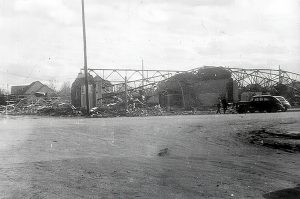
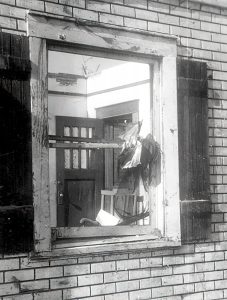
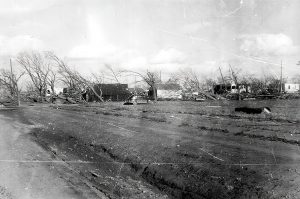
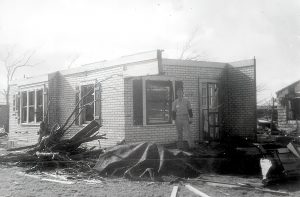
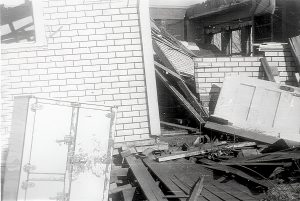
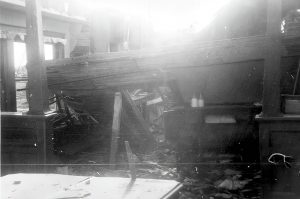
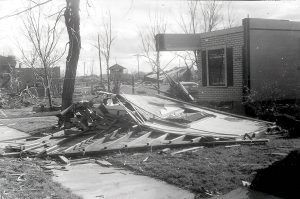
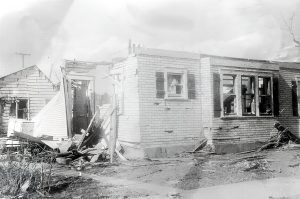
Here are some photos of the home where Meda’s parents lived. A wall in the kitchen caved in and fell across the stove, which held it up off the ground. Meda’s mother was huddled under it with Meda in her arms, and the wall provided a protective cover as the storm blew through.
Click on any of the photos to see a larger version.
Her mother later wrote to her parents describing her experience. You can read that letter here.
We drove several hours in order to visit Woodward in February 2009 after Meda was invited to give several lectures at the University of Oklahoma in Norman. It’s the only time she has been back in the tornado.
Discover more from i L i n d
Subscribe to get the latest posts sent to your email.
Wow. I live in earthquake country-the Bay Area. I have taught my children, now adults, to always huddle next to a heavy object to create a triangle, in case anything falls on you.
My mother’s grandparents, aunts and uncles lived in Woodward at that time. They survived. I have many pleasant memories of visiting family in Woodward over the years.
Wow, 1947 was a bad year for rare events as poor baby Maeda, made the news. The April 1, 1947 Hawaii Tidal Wave. Is barely remembered on Oahu.
Several deaths occurred on Oahu, in Punaluu Valley. A little Cemetery remains with about five deaths, by Tsunami, adjacent a long burned down Old Mormon Church. Great damage also occurred in Lanikai, coral heads washed onto beach front lots, waves reached 4 lots down side streets.
But, in 1947 scant homes were found on the beach. If all of these events repeated today, an epic number of what were sparsely developed, would be massive devastation.
And none of these were attributed to Global Warming, as long before invention. The good news of 47’ was, the nearing end of WW2.
Close. But the April 1st tidal wave was in 1946.
War ended in 45’ as well! Journalism students take note, always double verify all dates. George H. Bush during Presidency:
“Dec. 7, 1947 shall live in infamy”.
You so funny. I laughed. Thank you. ( I am so guilty of this )
” I was born in a crossfire hurricane … And I howled at the wind and the driving rain ” ~ jagger/richards