
Saturday, May 18, 1974.
It was another iconic moment in the modern history of Hawaiian activism captured in my photos.
Here’s how I described it a number of years ago.
May 1974. Two years before the first protest landing on Kahoolawe. George Ariyoshi was serving as acting governor after the death of Gov. John A. Burns, but would have to run for the office in the election later in the year. Hawaiians and part-Hawaiians were becoming increasing restive and politically active, with long-term problems of the Department of Hawaiian Home Lands becoming key issues for many.
And then there was Sonny Kaniho, Air Force veteran and Pearl Harbor shipyard pipe-fitter. Kaniho, originally from Waimea, had been on the Hawaiian Homes waiting list for nearly two decades without being awarded any land, while watching large parcels being leased to some of the state’s largest landowners.
Perhaps an unlikely activist, Kaniho began a campaign of civil disobedience. In April 1974, Kaniho issued a public statement claiming land that had been leased to Parker Ranch in the name of the Hawaiian people waiting for land leases. The Parker Ranch lease had lapsed, and Kaniho stepped up to oppose its renewal, and used direct action in an attempt to rally support for those Hawaiians who had been waiting for land while large areas were leased to corporate interests.
I was lucky enough to be invited to join Kaniho and supporters a month later when he moved to occupy this piece of pasture land in Waimea on the island of Hawaii.
This was the scene when a Kaniho and a number of supporters removed the fence and walked into a 375-acre parcel of ranch land in Waimea. The land was described as being located mauka of Manawea Gulch on the Kohala Mountain Road about a half mile Hamakua of Puu Kawaiwai.
Hawaii Police Officer Leningrad Elarionoff later arrived on the scene and notified the group that they were trespassing and would be arrested if we did not leave. No one left, and he proceeded to issue citations to 18 people who later received summons to appear in Waimea District Court in August. After retiring from the police department, Elarionoff was elected to the Hawaii County Council.
Following a two-hour trial held on August 6, the trespassing charges were dismissed after it was determined that the month-to-month permit under which Parker Ranch controlled the parcel after expiration of its lease had itself expired. Judge Norman Olds then ruled Parker Ranch had no standing to bring the trespassing charges, and threw out the case.
-
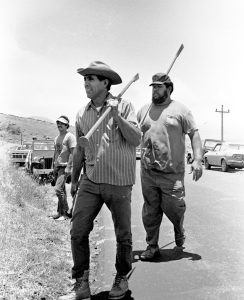
- Kaniho and Andy Akau carry their o’o tools to remove the gate
-
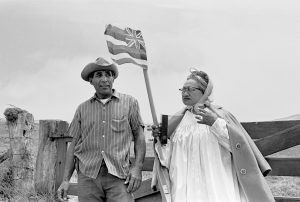
- Kinoho with Mary-Mae Unea, chaplain for The Hawaiians, just before the gate was removed
-
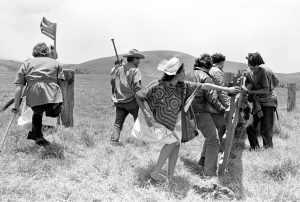
- Moanikeala Akaka swings the gate open as the group moves onto the land
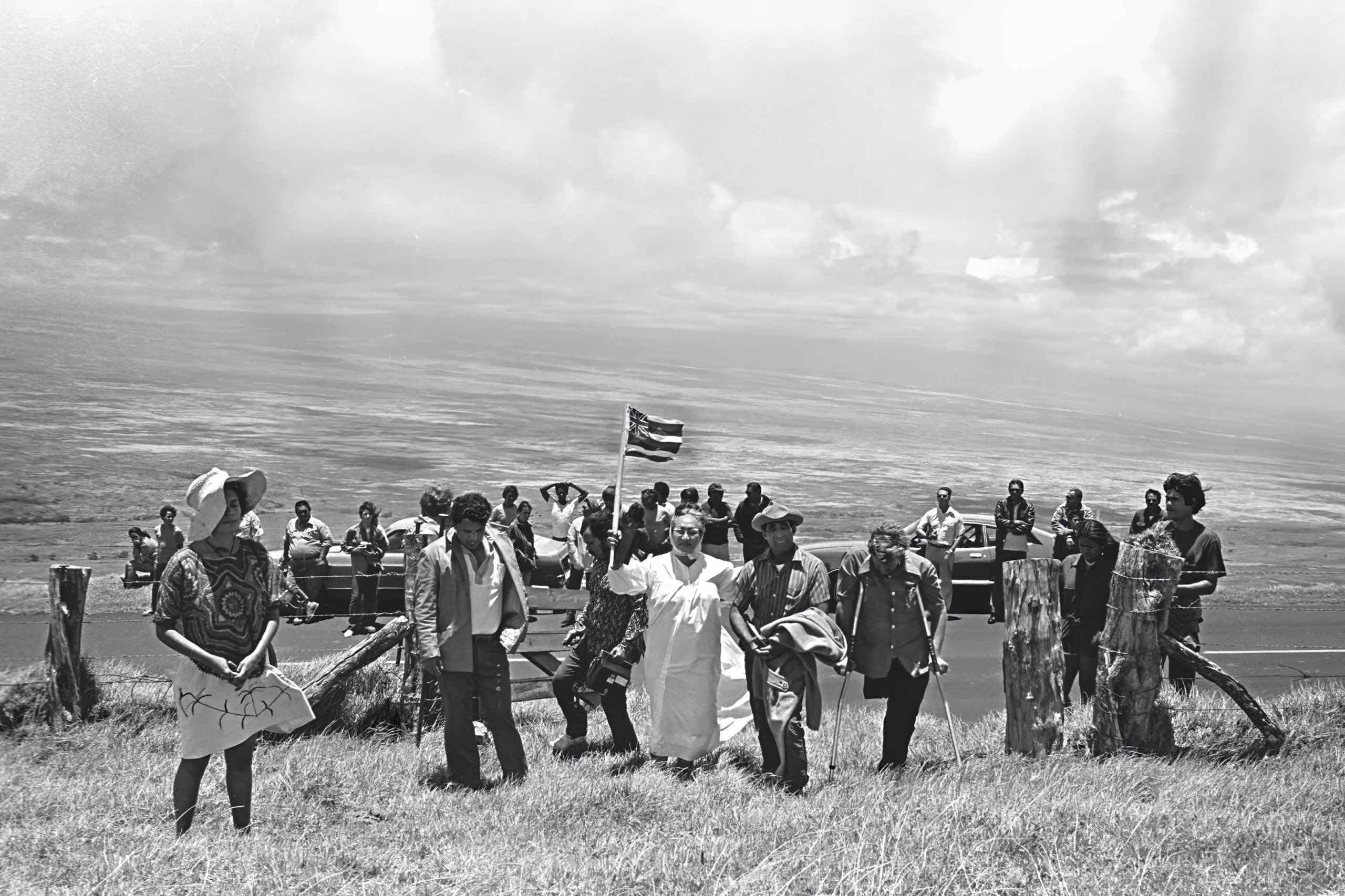
Left to right: Moanikeala Akaka; Raymond Pae Galdeira, leader of The Hawaiians; Mary-Mae Unea, chaplain for The Hawaiians; Sonny Kaniho; and Jim Letherer, a civil rights activist who famously walked on crutches the entire 54-mile length of the Selma-to-Montgomery march in support of voting rights led by Dr. Martin Luther King. He settled in Hawaii in 1970, according to a Honolulu Advertiser story at the time.
Discover more from i L i n d
Subscribe to get the latest posts sent to your email.
Wow. What an odyssey to get some justice.
I lived in Waimea in the 90s a d in the late 2000s. This was spoken about by local families when I lived there.
Thank you for sharing.
Thanks for this history.
Hwns are still waiting.
Thanks, what an historic flashback! Even Larry Mehau was there.
I do not recall Larry Mehau being there. However, his company, Hawaii Protective Association, was hired by Parker Ranch to provide security. Early that day, there were fears of a possible confrontation, but an understanding of sorts was apparently reached.
He is in the background of the last pic.
nah, that is not him