Category Archives: Business

Fraud allegations lead to resignation of prominent business attorney

The Hawaii Supreme Court has approved a request by prominent Honolulu attorney Robert E. Chapman to “resign from the practice of law in lieu of discipline” after finding he had committed numerous “egregious violations” of the court’s Rules of Professional Conduct over a five year period.

The court referred to the findings of a preliminary investigation by the Office of Disciplinary Counsel (ODC) which identified “conduct involving dishonesty, fraud, deceit or misrepresentation.”

Until recently, Chapman was the managing partner of the law firm of Clay Chapman Iwamura Pulice & Nervell, which ranks as the 12th largest law firm in the state, according to a listing published early this year by Pacific Business News. He has been licensed in Hawaii since 1980, and specialized in real estate, business litigation, and trusts and wills. However, his name has now been removed from the list of attorneys posted on the firm’s website.

ODC’s investigation was triggered by a complaint filed from the attorney general’s office alleging Chapman had attempted to claim approximately $2,000,000.00 in abandoned property belonging to a former client he had represented in the 1980s, but had never met, and had no contact with over the last 30 years.

On October 21, ODC filed a 37-page petition laying out the findings of its preliminary investigation, and initiating formal disciplinary proceedings against Chapman. Five weeks later, Chapman filed a declaration admitting the allegations were true and requesting to be allowed to resign rather than face formal proceedings that could lead to an order of disbarment.

“I request to resign in lieu of discipline pursuant to Rule 2.14 RSCH because I know that if these matters continue to be prosecuted, I could not successfully defend myself,” Chapman admitted in his declaration.

According to ODC’s recitation of the charges, Chapman represented a client in a civil suit involving a commercial real estate lease. The case was settled at the end of 1988.

ODC said “Chapman has never met nor spoken with” the former client, and has not spoken with her representative since about 1989.

Sometime in late 2015, Chapman became aware the state’s Unclaimed Property Program was holding at least $852,565.19 in cash, and four safe deposit boxes containing other valuables, belonging to his former client. As additional property was itemized, the estimated value grew closer to $2 million.

On November 5, 2015, Chapman went to the public records room at First Circuit Court to look at files from the 1980’s lawsuit, which included several document signed by the former client, and obtain copies of selected records. On the same day, he wrote to an accountant claiming to represent her and her company, and asking to received copies of any files held by the accountant. Chapman made similar requests over to several banks seeking records associated with her accounts, including original applications setting up the accounts.

He also filed a claim with the state for all the property held in the former client’s name.

To support his requests, Chapman provided copies of a power of attorney purportedly signed by the client.

The state repeatedly sought additional evidence that the long-missing client was even still alive. That was a key point, because a power of attorney is no longer valid after the death of the principal. Despite the repeated demands for additional documentation, such as a current government-issued photo ID of his supposed client, Chapman never complied.

A forensic document examiner contracted by the state in 2019 “concluded that Power of Attorney documents were forgeries created using publicly available court documents” from the earlier 1980s litigation.

Investigators finally located Chapman’s former client living in Taiwan, where she was interviewed on November 7, 2019.

She “stated that she did not know who Chapman was, had never met him, that she did not authorize Chapman to represent her in any personal financial matters, and that she did not sign the Power of Attorney” that he had been displaying while trying to gain control over her unclaimed property.

Chapmann’s resignation becomes effective 30 days after the entry date of the court’s order, which was filed on December 6.

In his declaration, a copy of which was filed with the Supreme Court, Chapman wrote: “I understand that while this Declaration may be a matter of public record, pursuant to RSCH Rule 2.14(c), it shall not be used in any other proceeding except upon order of the supreme court or as otherwise allowed by the disciplinary rules.”

More relics of the pre-digital age

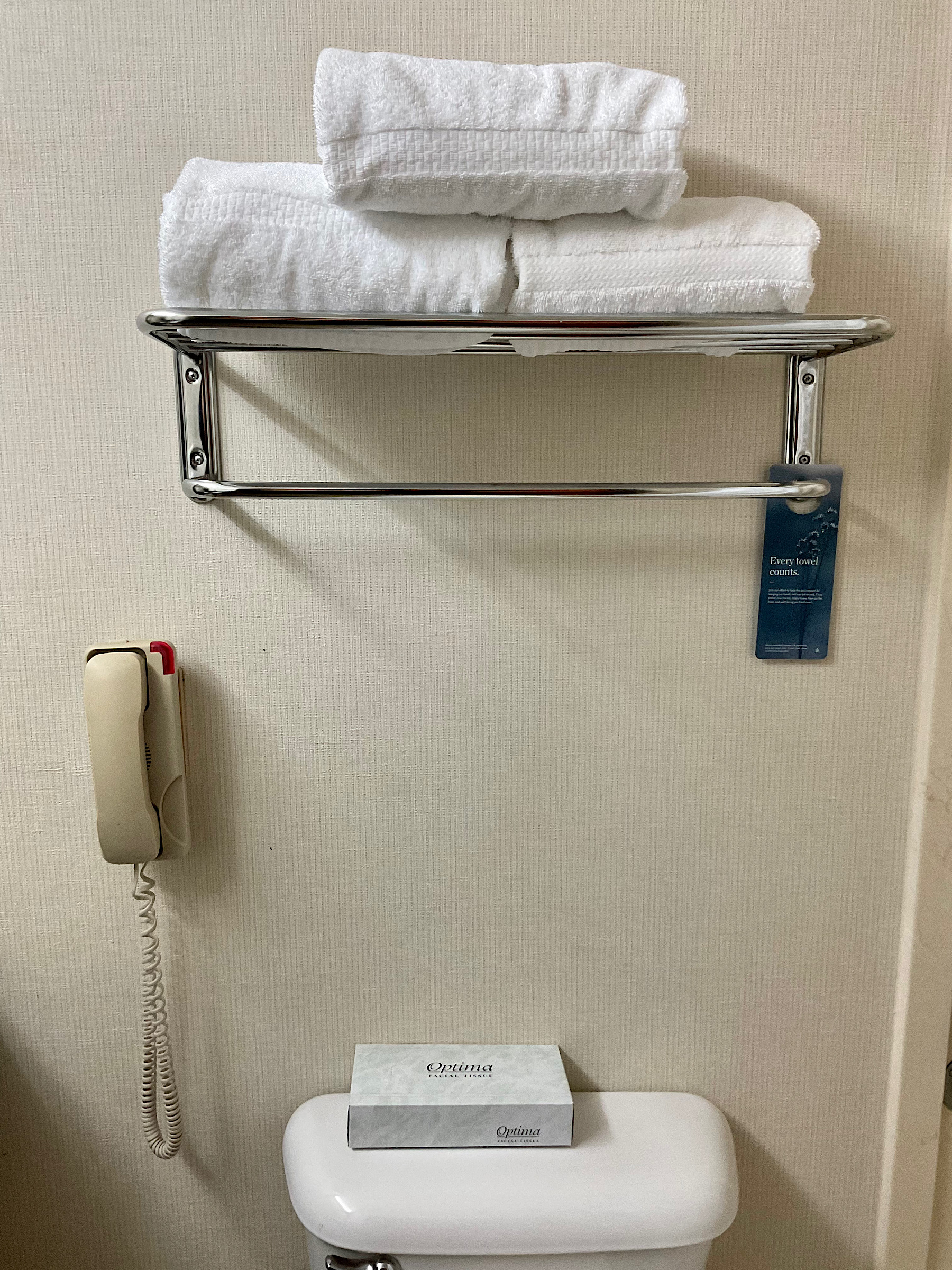
These hotel telephones used to provide a convenient way to keep in touch during hotel stays around the world. With nearly universal access to cell phones and included long distance service, these have lost their utility, but remain as reminders of travel during a less-tethered age.

Our room in Millbrae, near the San Francisco airport, features a desk phone in the sitting area, another in the bedroom, and one mounted on the wall next to the toilet for those calls that were too important to miss.

I’m sure that these once brought a steady income stream to both hotel operators and telephone providers which has now evaporated.

Similarly, newspapers lost much of their financial base when real estate, help-wanted, and auto advertising migrated to less expansive (or free) and more widely viewed online sites. At one time, these sources of income would underwrite the costs of producing the news.

And newspapers are still struggling to find an equivanet, steady income stream in this new and still rapidly changing media environment. When all is said and done, that’s why I don’t blame local newsrooms for failing to meet standards set back when owning a newspaper was a license to print money, and editors could throw lots of bodies at big breaking stories, or invest in long-term projects. It’s a different ball game these days.

Canada’s Vancouver Island promotes tourism makeover

As Hawaii strains to reorient its visitor industry management to better serve the community, British Columbia’s Vancouver Island has been breaking a trail for others to follow.

Their tourism marketing organization, formerly known as Tourism Vancouver Island, has been making news by initiating a remarkable makeover from an organization focused on marketing the area’s visitor industry, to a social enterprise with a new name, 4VI.

From a story published this week by Skift.com, which reports on the hospitality industry:

Tourism Vancouver Island announced in April it was dropping its traditional tourism marketing business model of more than 60 years to operate as a non-profit social enterprise — a business designed to invest all its revenue back into social goals. There’s no doubt this represented a paradigm shift in the debate about the expanded role of tourism boards these last two years, from destination management to destination stewardship and regeneration.

Rebranded as “4VI” to reflect its four key pillars — community, businesses, culture, and environment — this “social enterprise tourism board” appears to be the first such entity of its kind to date.

But of particular significance behind Tourism Vancouver Island’s decision is this: it pulls back on the “why” of a destination management organization and defines what “tourism as a force for good” actually means.

“They’re making an incredibly clear statement of, this is why we are here — we’re not here just to serve tourists, we’re not here just to serve the hoteliers; we are here to improve the quality of life and the tool that we have is tourism development,” said Jonathon Day, associate professor at Purdue University’s White Lodging-J.W. Marriott Jr. School of Hospitality and Tourism Management.

“What you’re seeing is real clarity about the purpose of tourism development in a community: to make it sustainable and benefit the local people,” said Day.

I was struck by the emphasized quote: “…we are here to improve the quality of life and the tool that we have is tourism development.”

Another published article touts the need for new metrics to measure industry success.

According to Janet Docherty, chair of the 4VI board of directors, the focus on 4VI’s four pillars will help to attract educated and respectful tourists who “tread lightly” when they visit. This is because sustainability is becoming increasingly important to residents and tourists alike; people want to come to a destination known for prioritizing the environment and people.

“We’re seeing over-tourism in many places around the world, and there are even shades of it in the Tofino area,” says Docherty. “But the environment is changing, and we need to pay attention.

“We’re not just focused on measuring profitability. That’s important, but we need a more holistic approach. Tourism — and tourists — are demanding it.”

According to another: “Vancouver Island’s bold shift reflects a changing paradigm – managing and marketing tourism towards the primary goal of delivering positive social impact versus a sole focus on economic indicators. I’m confident that 4VI will be a true lighthouse example of systems innovation.”

A roundabout tale of Sumida Farm’s lease extension

Decades ago, we were in Boston for one of Meda’s academic conferences. It was likely 1995 when the American Society of Criminology met there in Boston. We walked around quite a bit, and several blocks from the Boston Commons we spotted an antique shop. This wasn’t not one of those upscale stores with everything clean and polished and high priced, but the kind with rows of dusty things in piles, in boxes, and under foot. We had fun scouring the store, and then spotted an oil painting of a Hawaii scene on the wall.

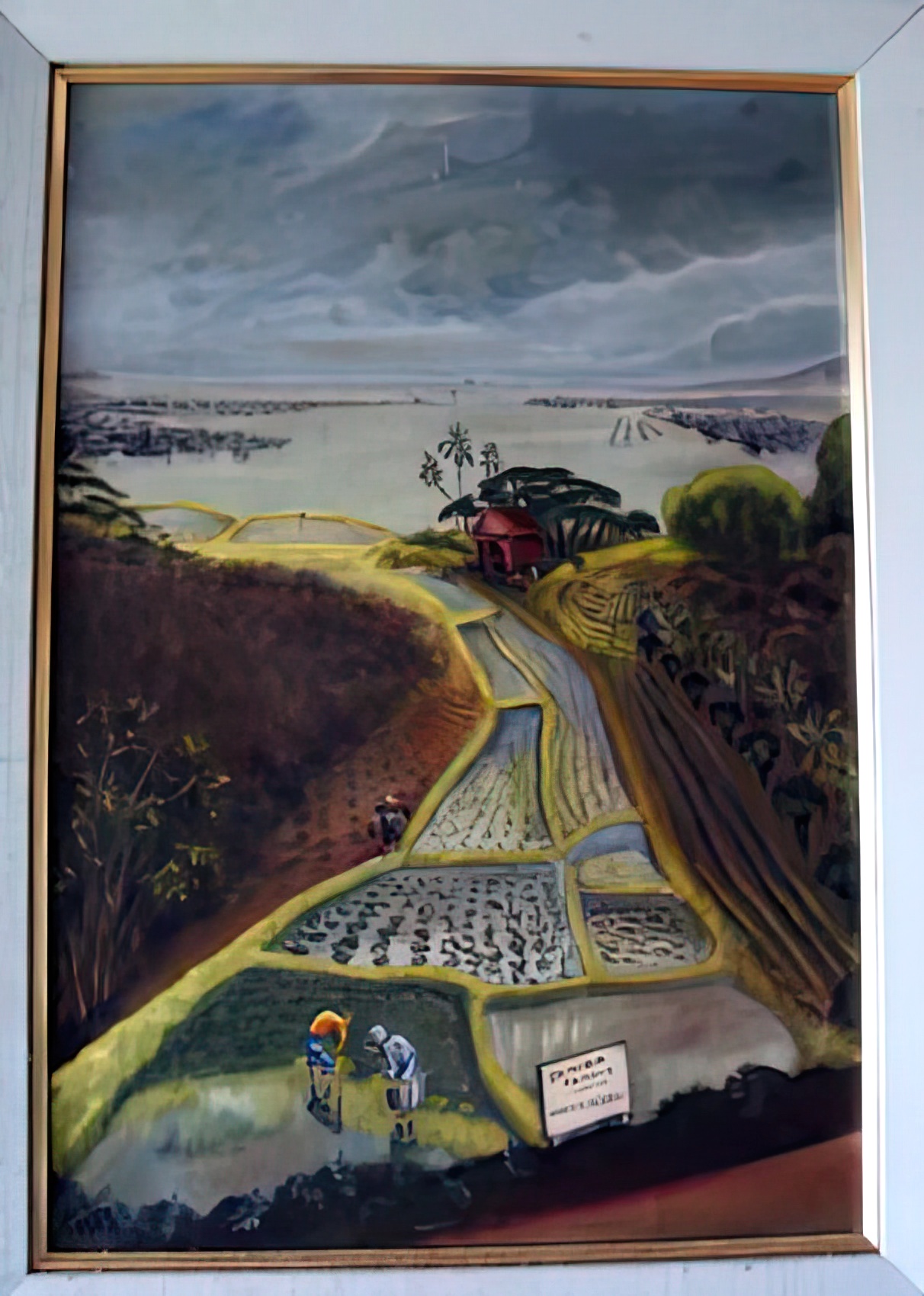
The scene depicted Pearl Harbor in the distance, storm clouds overhead, and in the foreground the Sumida family’s watercress farm, with their fields running down to the shoreline. The farm has been credited with growing two-thirds of HaawaIt was a great find!

The painting was signed “Joe Voges, 1945.”

After a little haggling, it was ours. I don’t remember anything about the flight home, so we must have found a way to stuff it into an overhead bin. And it occupied a central spot on the wall in our living room in our Kaaawa for over 20 years.

I tried several times to locate the artist, and failed. Then in mid-2003, I made another round of phone calls. This time, Bingo!

Continue reading