Monday was December 30. New Years Eve Eve, I suppose you could say.
Monday afternoon, I decided to dig into our freezer for dinner, and came up with a piece of frozen halibut that was given to us by a friend on her return from an Alaskan fishing trip at the end of the summer. Time to get it out of the freezer and do something with it.
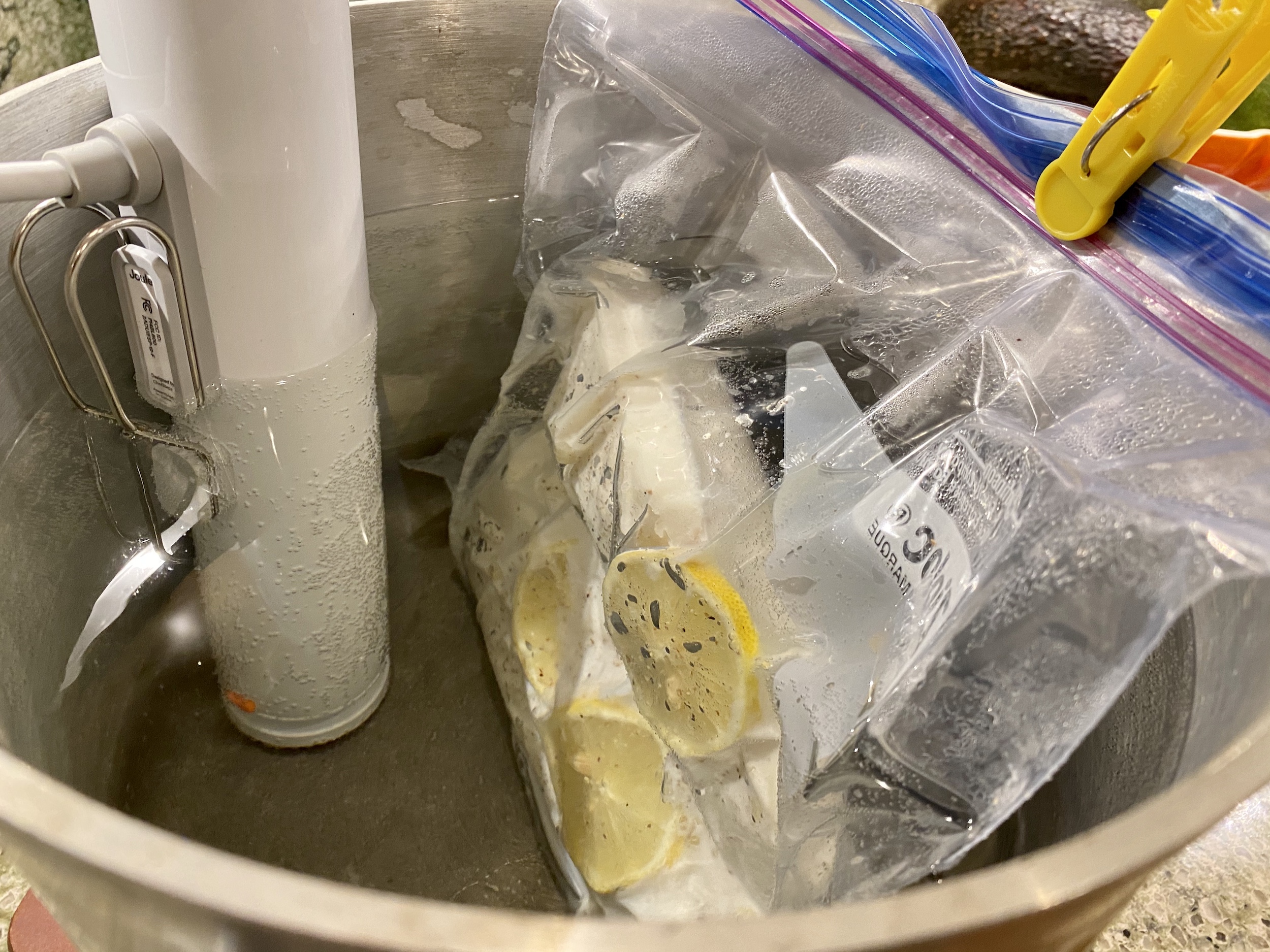
After a little thought about different recipes, I decided to cook it sous vide.
If you’re not familiar with sous vide, it’s a cooking technique in which you place food in a plastic bag, and then put it into a container of water heated and held at your desired final temperature. The food then cooks to that temperature, and in most cases can be held in the heated water for a longer period without being overcooked. In that sense, it is very forgiving.
I bought myself a Joule sous vide tool a year and a half ago, and am still learning. It is supposed to be a very good way to cook fish and other delicate items. I’ve never cooked halibut, but it looked perfect for the sous vide treatment, which also meant that it didn’t have to thaw before cooking.
The initial problem I ran into is that recipes differed on the ideal target temperature. Recommendations ranged from 122 degrees to 130 or higher. And after choosing a basic temperature, it’s necessary to make adjustments for the thickness of the fish and whether it’s frozen or fresh.
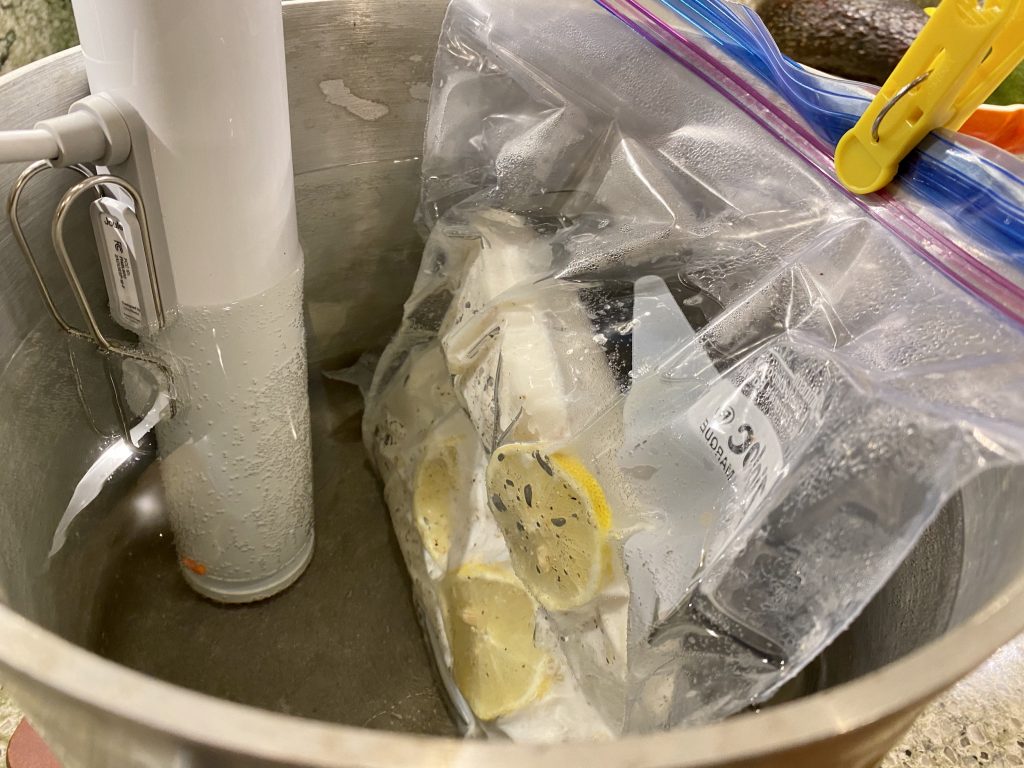
This piece of halibut was quite thick in some places, perhaps 1-1/2 inches, maybe slightly more. Other parts were maybe an inch thick. And it was frozen. I put it in a large zip lock bag, sprinkled with salt and pepper, and added some chopped garlic and slices of lemon. Later, I read another recipe that added butter at this stage, but by then it was too late for this time around.
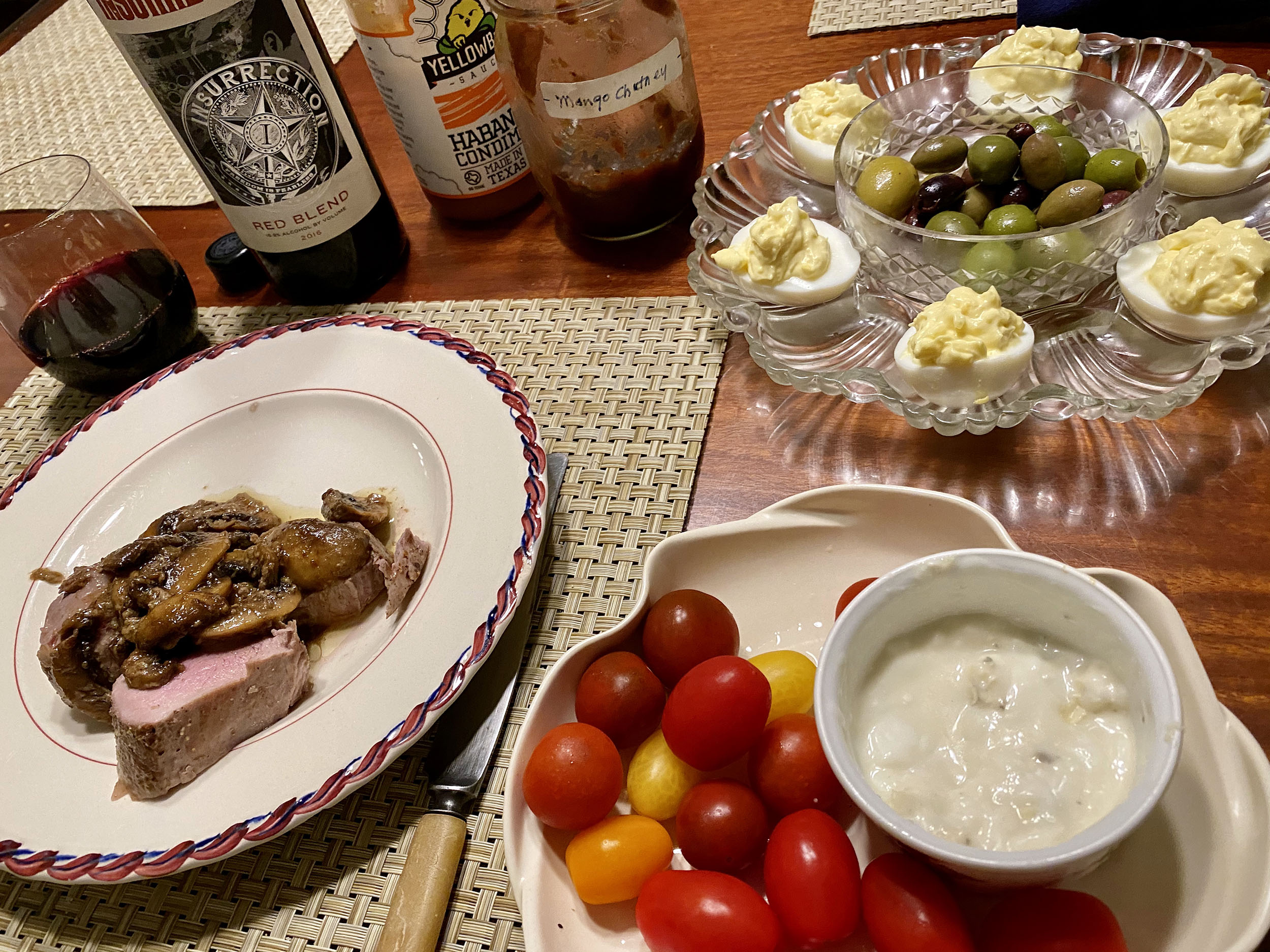
I decided to aim for what I thought would be something in the middle of time and temperature. I set the water for 126 degrees (Fahrenheit), and a cooking time of about 80 minutes. With those decisions made, it was time for a glass of wine while Meda prepared a plate of heirloom tomatoes. Meanwhile, the day’s splurge, a beautiful but expensive artichoke from Whole Foods, went into a pot to simmer for an hour.
I’ll just jump ahead to the conclusion. When it was finished cooking, I dried off the fish while a fry pan with a bit of butter and olive oil heated. Then the fish went in for just a couple of minutes to brown as I basted it with the oil-butter mix.
The fish came out moist, flavorful, and flakey. Too flakey, truth be told. It tended to fall apart while serving, but that was cosmetic. The taste and texture were very good.
I consider the experiment a qualified success, definitely one I will repeat. Next time, perhaps, salmon steaks.
Unfortunately, I didn’t get a photo of the meal after it was plated. We just dug in and feasted!