Category Archives: Law

Prosecutors will seek forfeiture of Buntenbah’s bond

Federal prosecutors have served notice that they intend to seek forfeiture of the bail posted by Michael Buntenbah, also known as Michael Malone, after he was ordered back into detention for violating the terms of his release.

Buntenbah was one of 10 original co-defendants charged along with former Honolulu business owner Michael J. Miske Jr., in a 22-count indictment made public in July 2020. He won release from custody just two months later after securing his $500,000 bond with a mortgage on a Kaneohe home on Popoki Street.

He pleaded guilty in March 2022 to a single count of conspiracy to commit assault in aid of racketeering. The mortgage amount was later reduced to $250,000 by agreement between prosecutors and Buntenbah’s Michigan-based defense attorneys.

The action was taken after Buntenbah and two sons were caught on video attacking a man last month in a Waikiki restaurant/bar (“Defend Hawaii owner back in federal custody after instigating a Waikiki brawl”).

The government notice that it will seek forfeiture was filed Wednesday in Honolulu’s Federal District Court.

The United States advises the Court and Defendant Buntenbah of its position that bail should be forfeited pursuant to Fed. R. Crim. P. 46(f). The United States requests the Court set a briefing schedule for the parties to address the relevant factors in deciding whether to forfeit the bond. See United States v. Nguyen, 279 F.3d 1112, 1115–16 (9th Cir. 2002).

The notice was filed after Magistrate Judge Kenneth Mansfield indicated his “inclination” was not to seek forfeiture, and asked the government to state its position.

The property is currently valued for real property tax purposes at just over $1.7 million.

I’m not a lawyer, but the case cited appears to have involved a defendant who made repeated and active attempts to avoid turning himself in to begin his prison sentence.

The circumstances of Buntenbah’s arrest haven’t been disclosed, but Mansfield’s order noted he had surrendered to the federal probation office. There is no indication in the record, at least not yet, that he made any attempt to avoid or evade surrender.

So it appears the government will have a difficult argument to make in a subsequent hearing on the matter.

Don’t read too much into plea bargains

In response to my last post, “No body? Not a problem,” a reader asked a good question.

So what did Yokoyama plead guilty to? It’s insinuated that he plead guilty to a role in the murder, is that correct?

I initially provided a quick answer.

Not correct. Although documents in the case reported what Yokoyama told others, as well as movements consistent with some allegations, he pleaded only to wire fraud, with an agreement to cooperate. It remains to be seen what he has to say about the murder conspiracy.

The basic point is that it can’t be assumed that defendants are not guilty of certain crimes they had been charged with simply because prosecutors agree to drop those charges as part of an overall plea agreement.

In a pre-trial “motion in limine,” prosecutors tackled this issue of plea agreements and their interpretation head on. It makes for very interesting reaing for non-lawyers.

The motion makes the point that prosecutors necessarily have to exercise discretion in deciding who to charge, and what to charge them with, realizing that some of those involved will not be charged, and the charges will not include every crime the government is aware of or has evidence of. This is expecially true in a case as complex as the Miske prosecution.

In their Motion in Limine #2, filed November 13, 2023, prosecutors sought to “to preclude improper use of charging decisions and plea agreements.”

The motion begins by quoting a 2011 9th Circuit Court decision, U.S. v. Bingham.

“The government may decide to charge or not to charge a suspect in an indictment for a variety of reasons that have nothing to do with his guilt or innocence, taking into consideration the availability of prosecutorial resources, alternative priorities, the expectation of prosecution by other authorities, or any number of other valid discretionary reasons.”

That decision in turn favorably quoted an 11th Circuit case holding that “[c]ertainly, we cannot attribute the government’s decision not to prosecute to an independent determination that the defendant is not guilty.”

As in many other cases, the government in this case was required to make decisions about what charges to bring, when to bring them, and what individuals to charge. The government also made extensive efforts to resolve charges against several charged co-defendants through plea agreements.

It would be inappropriate for the defense to argue (or even imply) to the jury that there is any factual significance to these discretionary charging decisions, and the Court should now rule that the defense are precluded from making any such inappropriate argument. For example, the government exercised its discretion to charge a RICO conspiracy count, but not to charge substantive RICO; it decided to allege that violations of the Federal Insecticide, Fungicide and Rodenticide Act (FIFRA), 7 U.S.C. § 136, were part of the RICO conspiracy, but not to charge FIFRA offenses in separate substantive counts. Furthermore, while the government charged many defendants in this case, it did not charge other individuals who the evidence at trial will show — also participated in the charged enterprise’s criminal activities. Also, different investigations over the years did not (at those times) result in charges against defendants who are now charged and proceeding to trial. The defense should not be allowed to suggest to the jury that it should give any factual or legal significance to these decisions.

Using an example from the Miske case, prosecutors refer to the plea agreements with two co-defendants, Dae Han Moon an Jarrin K. Young.

As part of these plea agreements, prosecutors agreed to drop the racketeering conspiracy charge that each of them faced. Instead, they entered guilty pleas to other charges. Moon admitted he was guilty of taking part in a murder-for-hire conspiracy and carrying a firearm during a drug-trafficking crime. Similarly, Young admitted to taking part in a drug-trafficking conspiracyd.

Prosecutors then commented: “There is no basis to suggest that this reflects any belief on the part of the government that those defendants are not guilty of that offense….”

Judge Derrick Watson agreed with prosecutors on this point, and granted the government’s motion “to the extent Defendants may not argue that the government’s ‘charging decisions’, such as who has been charged and the fact that certain charged were “dropped” in plea agreements, have legal or factual significance in this case.”

No body? Not a problem.

What happens when someone is charged with murder, but the victim’s body was never found?

That’s the situation in the case against Michael J. Miske Jr., the former owner of Kamaaina Termite, M Nightclub, and several other local companies, whose trial on federal racketeering charges is expected to begin next week following jury selection, which wrapped up today. Several of the charges against Miske alleged he directed and financed the disappearance and apparent murder of Jonathan Fraser, a close friend of Miske’s late son, Caleb.

Fraser disappeared suddenly from a Keokea Place apartment in Hawaii Kai at the end of July 2016. He was never seen again, and his body was never found.

The government alleges Miske directed a conspiracy in which others took part in planning, and carrying out, Fraser’s kidnapping and murder.

Defense attorneys have repeatedly pointed to dozens of purported sightings of Fraser in the months after his disappearance, warning that prosecutors will have to prove “beyond a reasonable doubt” that he has actually been killed and is not simply a missing person.

If they are successful in mustering enough circumstantial evidence of his death–he left a pregnant wife, a dog that he loved, and he never again contacted those who he had kept regularly in touch with, etc.–then they will have to present evidence of Miske’s involvement.

But that doesn’t appear to be as much of a problem for prosecutors as it was previously, due in large part to the rise in DNA evidence and, as in this case, the ability of prosecutors to trace a person’s digital life, piecing together data showing movements and communications, from simple things like past text messages, emails, photos, contacts, and social media sharing, to more complex things like location tracking of cell phones, records obtained from cell phone provider databases, information extracted from cell phones related to a case, and so on. These types of data can be combined into sophisticated recreations of the communications between conspirators and the physical movements of suspects at key moments.

A former federal prosecutor, Tad DiBiase, who now maintains a blog that reports on “no-body” murder cases (including several from Hawaii), says no-body cases now have a higher conviction rate than all murder cases, perhaps because prosecutors know they have to have rock-solid and convincing evidence to move these cases forward. According to his review of 576 no-body cases he had identified as of early 2023, the conviction rate in no-body cases was approximately 86%, while the overall conviction rate in all murder cases is about 70%.

Fraser was last seen about 9:30 a.m. on July 30, 2016.

Continue reading

Miske properties targeted for forfeiture

The government intends to seek the forfeiture of more than $11 million in cash and property belonging to former Honolulu business owner Michael J. Miske Jr., who is accused of controlling a racketeering organization behind the facade of his several businesses. A list of the properties the U.S. seeks to have forfeited was filed in Honolulu’s Federal District Court on Monday, December 4.

The government wants to seize the properties if Miske and his three remaining co-defendants are convicted in their upcoming trial, scheduled to begin on January 8.

The property includes cash held in business bank accounts, a million-dollar cashier’s check, Miske’s luxury home in Portlock and a small home in Enchanted Lake, five vintage cars (including a 1951 VW) along with a 2017 Ferrari F12 Berlinetta, artwork and other items, all owned by Miske or his companies.

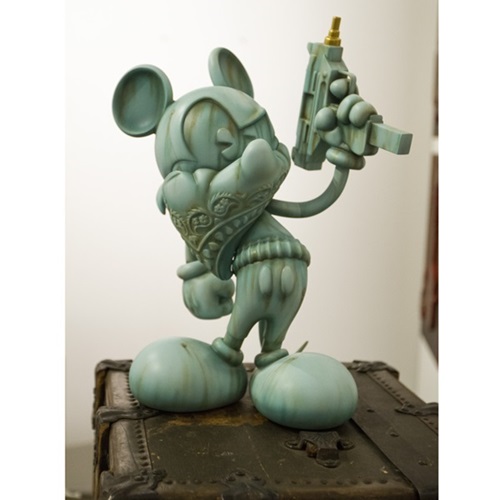
Among the art is a version of this sculpture, “Uzi Does It,” by Los Angeles graffiti artist OG Slick, who was born and raised in Hawaii. Also on the government’s list is a Hawaii Longline Limited Entry Permit held by the Miske-owned fishing vessel “Rachel,” and Painkiller, a 37.5 foot Boston Whaler, which was damaged when searched by the FBI in 2017.

The document was filed in federal court on Monday, December 4.

Bill of Particulars for Forfeiture of Property by Ian Lind on Scribd