Category Archives: Vintage Hawaii

A roundabout tale of Sumida Farm’s lease extension

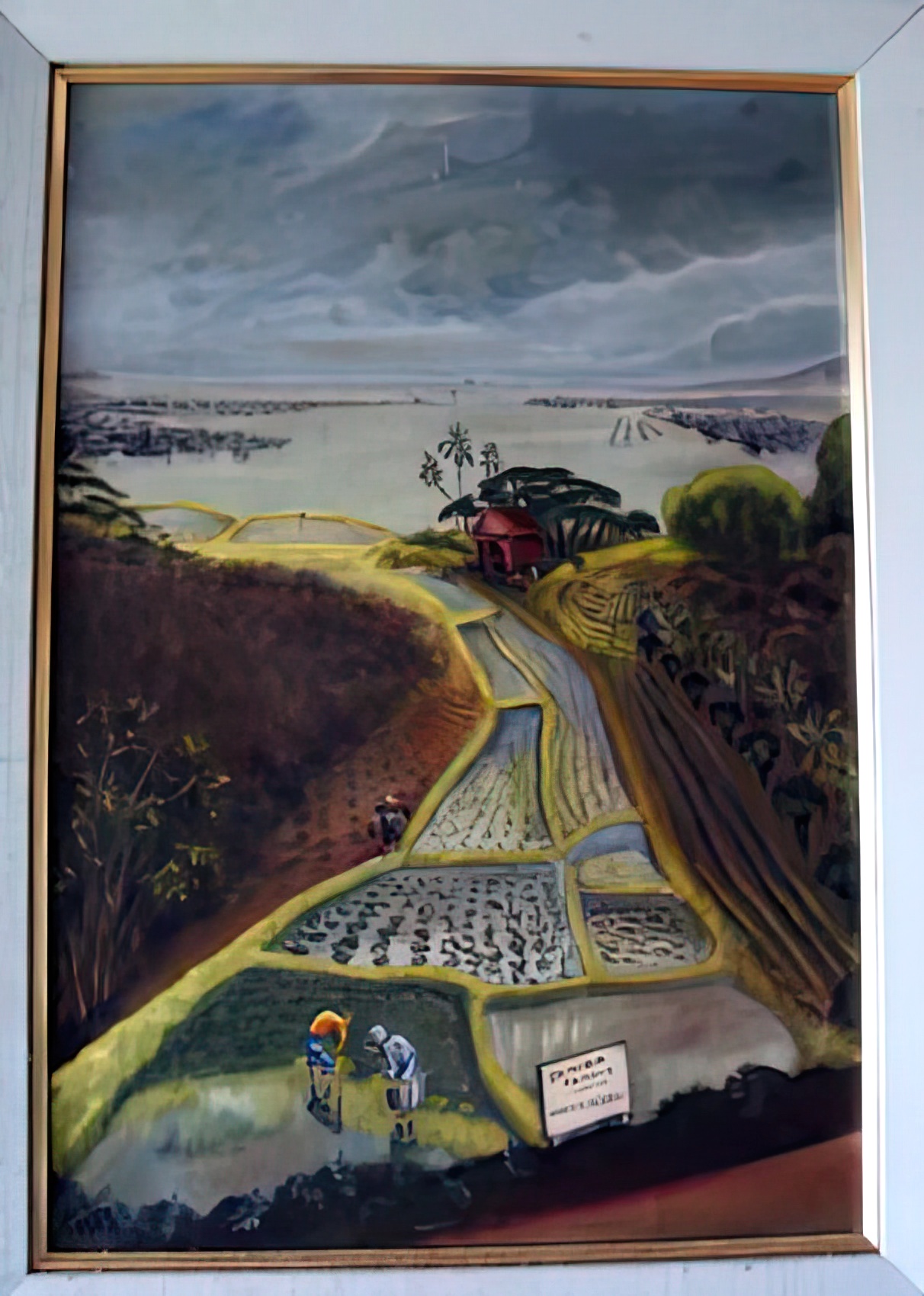
Decades ago, we were in Boston for one of Meda’s academic conferences. It was likely 1995 when the American Society of Criminology met there in Boston. We walked around quite a bit, and several blocks from the Boston Commons we spotted an antique shop. This wasn’t not one of those upscale stores with everything clean and polished and high priced, but the kind with rows of dusty things in piles, in boxes, and under foot. We had fun scouring the store, and then spotted an oil painting of a Hawaii scene on the wall.

The scene depicted Pearl Harbor in the distance, storm clouds overhead, and in the foreground the Sumida family’s watercress farm, with their fields running down to the shoreline. The farm has been credited with growing two-thirds of HaawaIt was a great find!

The painting was signed “Joe Voges, 1945.”

After a little haggling, it was ours. I don’t remember anything about the flight home, so we must have found a way to stuff it into an overhead bin. And it occupied a central spot on the wall in our living room in our Kaaawa for over 20 years.

I tried several times to locate the artist, and failed. Then in mid-2003, I made another round of phone calls. This time, Bingo!

Continue reading

Another dose of family history

Here’s another dose of history, personal/family history that also reveals a lot about life in a long-gone period of Hawaii history.

I ran into it yesterday, a three-part oral history interview with my mother, Helen Yonge Lind. These were recorded in November and December 2000, when she was 86.

I’ve been digesting part 1, in which she is asked about her family background and early life. She describes her life as a young girl, living in Waipahu, as a student at St. Andrew’s Priory, then public school while living for two years in Haleiwa, and then at Kamehameha School for Girls. I’ve learned things here that I didn’t know about that part of her life.

In part 2, she talks her time at the University of Hawaii between 1931, when she entered, to about 1942, when she “retired” from a position in Home Economics. And I haven’t checked out part 3 yet, so can’t give you a preview.

If you’re interested in what it was like growing up in the 1920s and 1930s in Hawaii, you might want to wade through these interviews.

A few tidbits…

She describes her father’s mother as “the only American grandparent I had…”

Her paternal grandfather was from England, and on her mother’s side, her grandmother was Hawaiian, and her grandfather was from North Ireland.

Then, in response to a question about her grandparents, she went on.

Well my father’s father was from a very old, old family in Plymouth, England and his father was a doctor and was studying medicine in Germany. [He] was already married, and he was studying medicine in Koblenz. And that’s where my grandfather was born, but he was not German. So he lived there until about the age of six or seven, maybe. Then they went back to Plymouth and he was educated, I guess in what would be equivalent to our high school, in France. I don’t know where in France, but he spoke both German and French fluently. He went to Australia to visit his cousins about 1863, or thereabouts, and he was on his way home. He didn’t like it in Australia, and this was the time of the industrial revolution, and he was looking for something else to do, some other profession or occupation. He didn’t like it in Australia, so he was on his way home and he came across-sailed in a ship–across the Pacific. And in San Francisco his brother had come from England, and was living in California. And so he went there and while he was there, about the first couple of years he met a young girl, an American girl. She was only sixteen and her mother wouldn’t Jet her get married. He waited two years and married her, and she was American about oh, four or five generations back. Her ancestors were in Virginia before the American Revolution. They all participated in some way building America. They moved down into North and South Carolina, and to Tennessee. This was when everybody was migrating someplace, to new land. And her parents were married in Missouri and then they came in a wagon train across the plains to California (in 1857 when she was only three months old).

The sweep of history in one long answer!

Her father served as station agent for the OR&L Railroad, first an Puuloa, and later at Waipahu. The family lived up stairs in the station. She was asked what was nearby, and mentions an opium den, which was a place of mystery for the children.

Across the street was a Japanese store and then there was another place where I have this vague memory of seeing men lying down. It was a dark room, a small room, and dark and I learned later that it was an opium den. Men went to smoke opium, and there were like benches in two layers and they were lying down there smoking opium. That was on one side (of the railroad station), and then on the other, the makai side, there were a number of stores. And oh, there was a rice mill. That whole area was rice. Everywhere you looked there was rice. And every once in a while was a rice mill, so there was a rice mill across the railroad tracks from the station. My sister and I spent a lot of time with the girls in the rice mill.

And at another point, she described her parents as “sharecroppers.” They lived on a lot that was part of Kalakaua Homesteads, established long before the Hawaiian Homelands program was established, and were able to purchase the 4-acre parcel. They built a house on about a half-acre, and Ewa Plantation grew sugar on the rest of the property.

He was a sharecropper and that was what-the money that came from the harvest of the cane is what put us through the university. I’m not exactly sure how much the tuition was then, but it was only like maybe a hundred dollars or something. And we paid also, I’m quite sure we paid, to go to Kamehameha.

She said her father “was the only haole in the neighborhood for a long time,” until the Adams family moved in to a cottage owned by Mutual Telephone Company. Mrs. Adams was pure Hawaiian, but her husband was haole. “So we had (another) haole there,” she commented.

About the Adams family, she added:

Now you read about Marie McDonald, the lei maker that published the book [Ka Lei], that’s her family. They were there before, when she was about a youngster they moved to Moloka’i, so she tells more about living on Moloka’i than in Waipahu, but that’s where they were from.

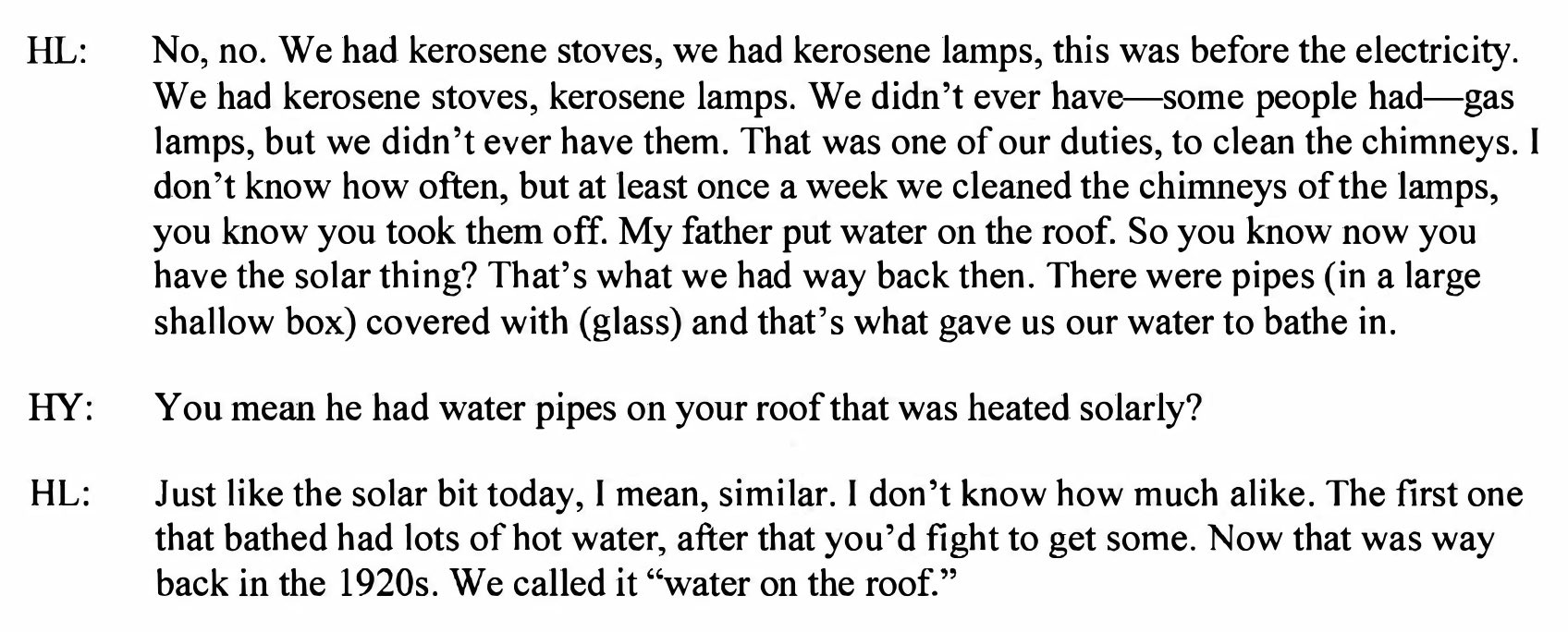
She describes living off the grid, growing all of their own vegetables except watercress, which they purchased from the Sumida watercress farm, which still appears to be our main source of watercress. They didn’t have electricity, but had an icebox, and believes they purchased blocks of ice from the Sumida family as well. They and other homesteaders had water pumped from a well about a mile away. They had kerosene lamps and a kerosene stove, and even had solar hot water.
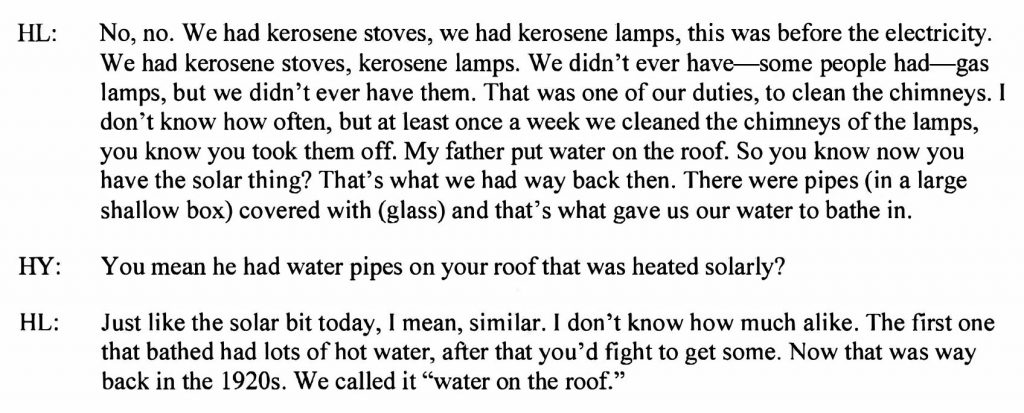
In any case, there’s a lot more here, and I know many of you will find it very interesting. Lots of tidbits to discover.

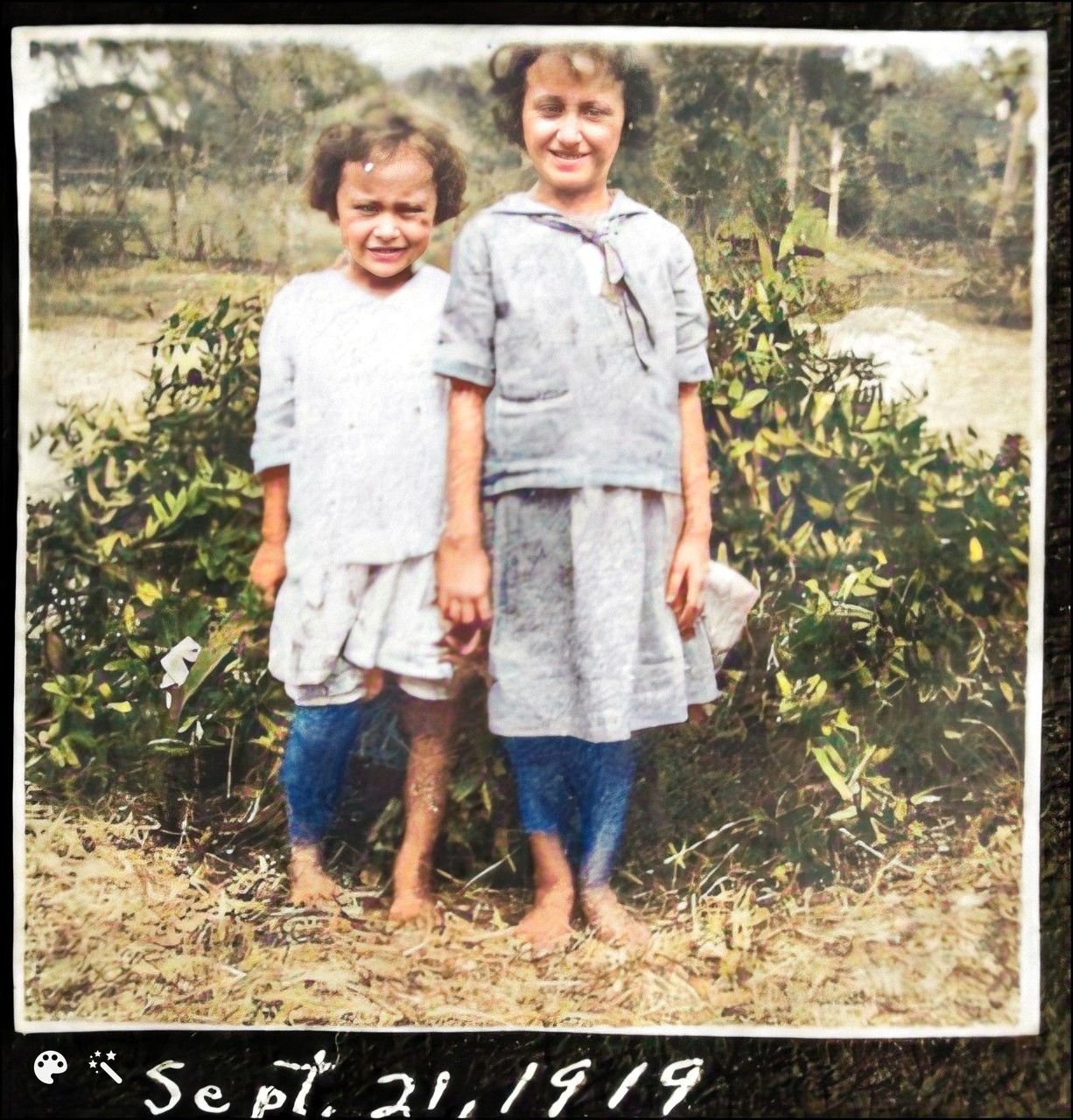
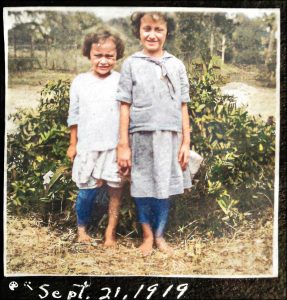
By the way, here’s a photo of my mother and her older sister, Marguerite, in 1919. It’s been colorized and enhanced by the genealogy website, myheritage.com. [I just noticed that what appear to be blue jeans are not there in the original B&W photo, their legs are bare. So this is apparently an artifact of the colorization software.]
Coelho Way named for a prominent Hawaiian figure

My recent post about the house at 91 Coelho Way got me wondering about the history of the name.

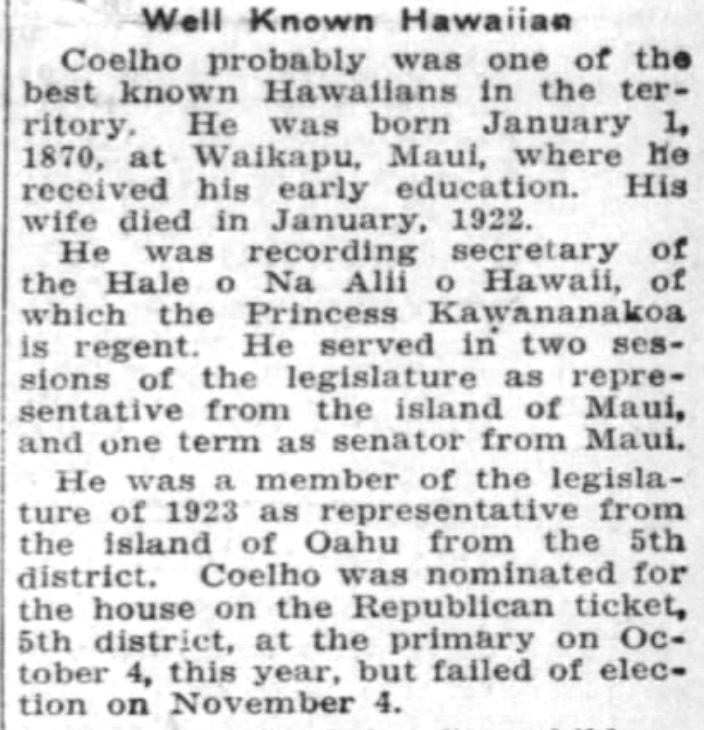
It turns out to be named for one of the most well-known Hawaiians of his day, William Joseph Coelho, who was born on Maui in 1870, and died of injuries received in an automobile accident in November 1924.

According to news accounts, Coelho was a passenger in a car driving through Kipapa Gulch on the way back to Honolulu from Schofield the evening of November 11, when it skidded out of control and overturned. Coelho was trapped under the car and suffered serious injuries. He was first driven to Tripler Hospital, then moved to Queen’s Hospital, where he was operated on overnight. He died at 10 am the following morning.

Coelho served two terms in the Territorial House and one term in the Senate, was a well known musician, a lecturer on things Hawaiian, and introduced the bill in 1907 that created the College of Agriculture and Mechanic Arts of the Territory of Hawai‘i, predecessor of the University of Hawaii.

This from the website, Discogs.com:

William Joseph Coelho
Hawaiian musician and composer, later Territorial Senator (born January 1, 1870 at Waikapu, Maui, HI – died November 12, 1924 in Honolulu, Oahu, HI)

A graduate of St. Louis College, Coelho was part of a large group of Hawaiian musicians managed by Mayor John H. Wilson that performed for sixteen weeks at the Pan-American Exposition in Buffalo, NY, in 1901. Later, he became Recording Secretary of one of the four royal Hawaiian societies, the Hale O Na Alii O Hawaii (est. 1918), and served in the territorial legislature of Hawaii, twice as representative, once as senator from Maui. He died as the result of a car accident.

Composed “Lei Poni Moi” (Wreath Of Carnations), “Kilakila O Haleakala” (Majestic Mt. Haleakala), and “Roselani.”

And this description was included in a Honolulu Star-Bulletin story on the accident that took his life.

Digging through old newspaper clippings, I found Coelho acquired a lot in the area in Nuuanu then known as Niolopa, and acquired a second parcel in 1911.

In 1923, a name change notice was publlished in the Honolulu Advertiser:

A column by Donald Billam-Walker with the story behind the name change appeared in the Honolulu Star-Bulletin on August 12, 1941.

In 1911, according to Walker, it was first proposed the small roadway be named for William Coelho, whose home was located along the road.

Coelho, however, declined, and instead suggested it be named “Ku Lane” in honor of his newborn son, who was known within the family as Ku, rather than by his long Hawaiian name, Kukailimokunuiakeaenaikalani. “Accordingly, the roadway was renamed Ku lane in 1911,” Billam-Walker reported.

However, “an odd set of circumstances arose.” The family home of George Waterhouse, a vice-president and assistant manager of the Bank of Bishop, the predecessor of First Hawaiian Bank, was also located on Ku lane. His daughter’s name was Julia, which was Hawaiianized as Kulia, according to Billam-Walker, leading some of her friends to call it Kulia Lane.

“In order to guard against possible loss of the name of this street to the Coelho family through the term ‘Kulia’ creeping into use, it was decided in 1917 to rename Ku lane as Coelho lane (since changed to ‘way’) in honor of Ku’s father, W.J. Coelho.”

Looking through old newspapers, Coelho Lane and Coelho Way seemed to have been used interchangeably through much of the 20th. However, since 2002, all the published references have used Coelho Way.

Just as an aside, my mother was outraged by the continuing snub of Coelho by the University of Hawaii. She felt the failure after more than a century to name a building after the Hawaiian legislator whose bill created the university was another sad example of casual (or not so casual) anti-Hawaiian prejudice. It’s hard not to agree.

Throwback Thursday: Honolulu 1939

[Encore: First posted September 28, 2008]

What was it like getting off a ship in Honolulu for the first time back in 1939?

In a word: “Swell.”

At least that’s what my father wrote to a woman back home in Long Beach, California, just about a month after he stepped off the boat to start a new job in the islands.

He arrived with a new Dodge, he wrote, “with two (surf)boards on the top of it, a trunk hanging out the back end and with the sunburn I aquired on the trip.”

The letter is an interesting peek into the past.

It wasn’t among my dad’s accumulated papers. It was discovered by a friend who is now living in the Seattle area. She sent it as a Christmas gift several years ago after finding it among boxes of letters and postcards in a Seattle collectibles show. She had no idea the writer was my father, but just thought I would enjoy seeing something written about Hawaii by another “Lind”.

You can imagine how surprised I was to unfold the pages and start reading. It’s a very small world, indeed!

I was able to track Marjory Beck, who married a James Marsh in Long Beach. She died in Auburn, Washington, in December 1991.

Letter from John Montgomery Lind dated June 6, 1939, describing his first weeks in Hawaii. Lind arrived from California on May 1, 1939 to work in the Honolulu office of Dohrmann Hotel Supply Co.

[Click here to see the original handwritten letter]

June 6, 1939
Honolulu, T.H.

Dear Marjory,

To say I was surprised to receive your very kind letter sailing day is putting it mildly. Its a funny thing, with all the letters, etc. received about that time yours was outstanding. It seems good to have the feeling that, one, Marjory Beck remembered me at the departing date, especially after not having seen or spoken to you after so long a period.

My job in Honolulu is much to my liking. I am the only white person in the employ in our branch out here. Mr. Wong, a Chinese, is managing the store. He is about sixty years of age now and the secret of this move is that if I fill the bill and if I like the country I will automatically work in. So as it is I’m just and still a flunky although I’m enjoying the association with the orientals. In our branch here there are two chinese men, two hawaiian men, one japanese man also a chinese girl and a japanese girl. All are very fine people and speak english except when among their own kind.

The island is swell, not what the magazines make it but there is something about it that gets one. It is warm night and day, not too warm but very comfortable. The business condition is very good here, not too much competition and people do not argue about prices but if a price is quoted it is taken and liked. (this is true in the majority of cases but the percentage of chiselers is low.) There are many fine people here. I have made some fine acquaintances already, am a member of the Jr. Chamber of Commerce, Surfing club and am very much at home in my new abode.

The tropical foliage all over the island is beautiful. The coconut trees, banana trees and all the tropical fruits and flowers add much to the color of the place. I was amused to see so many beautiful flowers worked in the hawaiian lei. A very popular lei is one of gardenias. One may purchase as many as they might care to at two for twenty-five cents (a lei will have about thirty gardenias in it.) Orchids are also popular.

Surfing is swell. I brought two boards over with me along with a few trunks, a new dodge and all. People apparently thought I was an old timer when the boat docked because here was my car with two boards on the top of it, a trunk hanging out the back end and with the sunburn I aquired on the trip. I was taken for an old timer a couple of times.

The boat trip was fun. The firm sent me first class all the way and it was mighty interesting. I say all the way because for 90 days before I sailed I had been in San Francisco at their expense.

In other words I like the company and hope I will be able to do the job they expect of me here.

I will enjoy hearing from you again, Marjory, at your convenience.

Sincerely,
John Lind –