Category Archives: Hawaiian issues

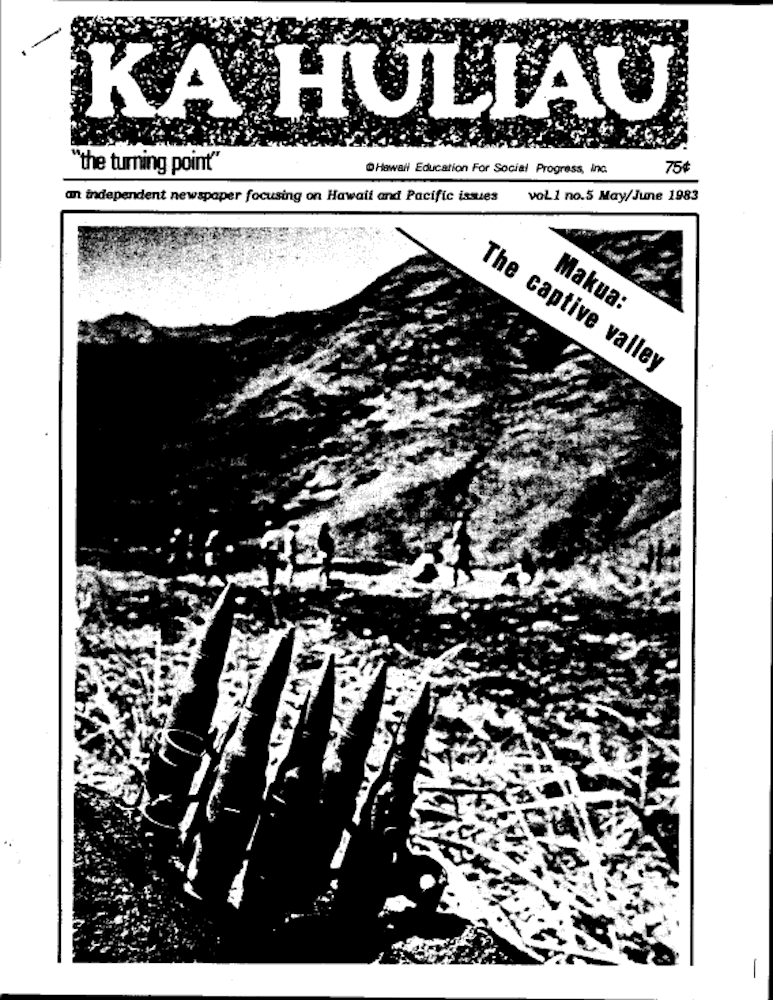
After Kahoolawe, there was Makua

The January 4, 1976 protest landing on the island of Kahoolawe made news and continued to regularly continue to make news over the next several years.

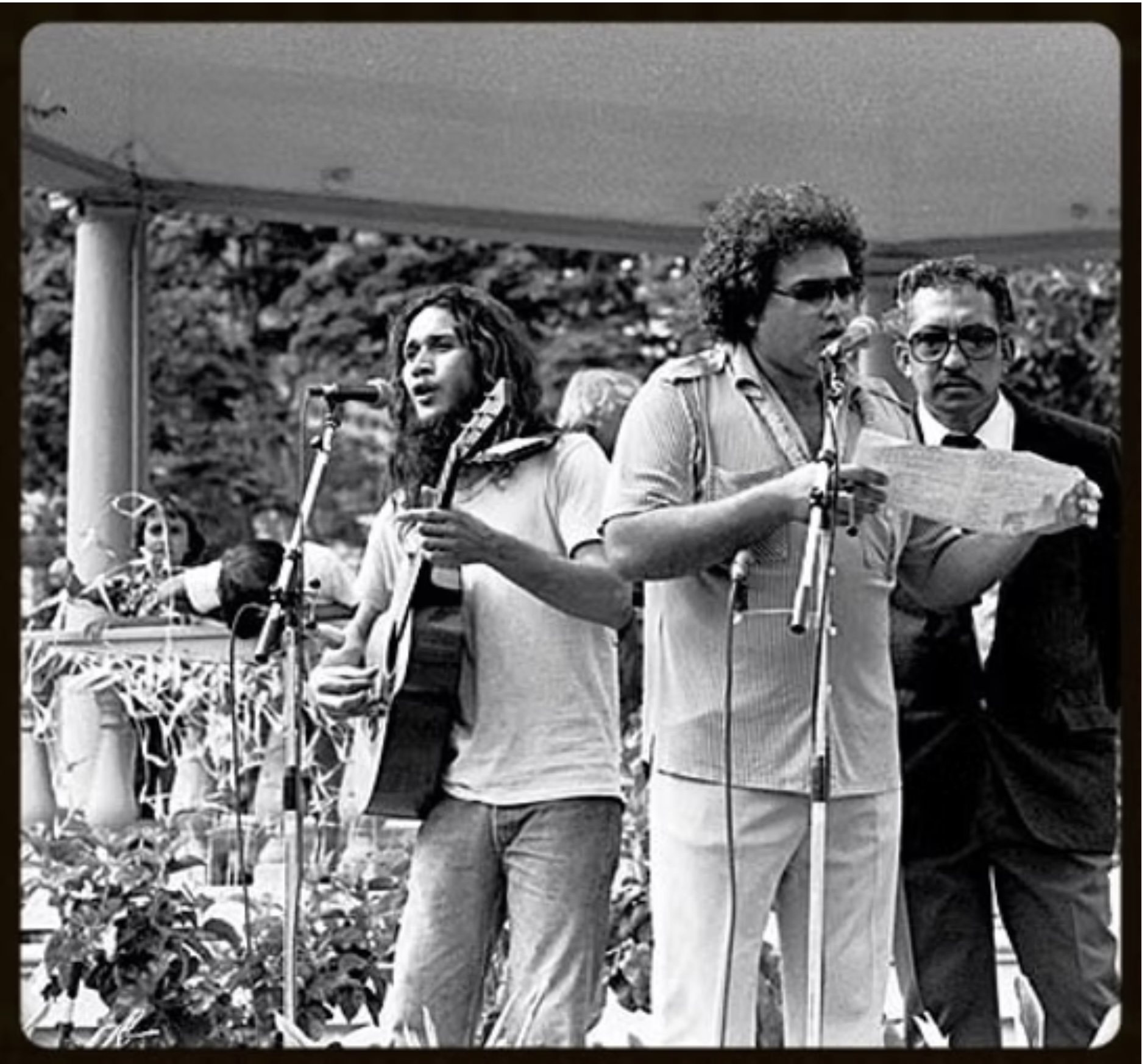
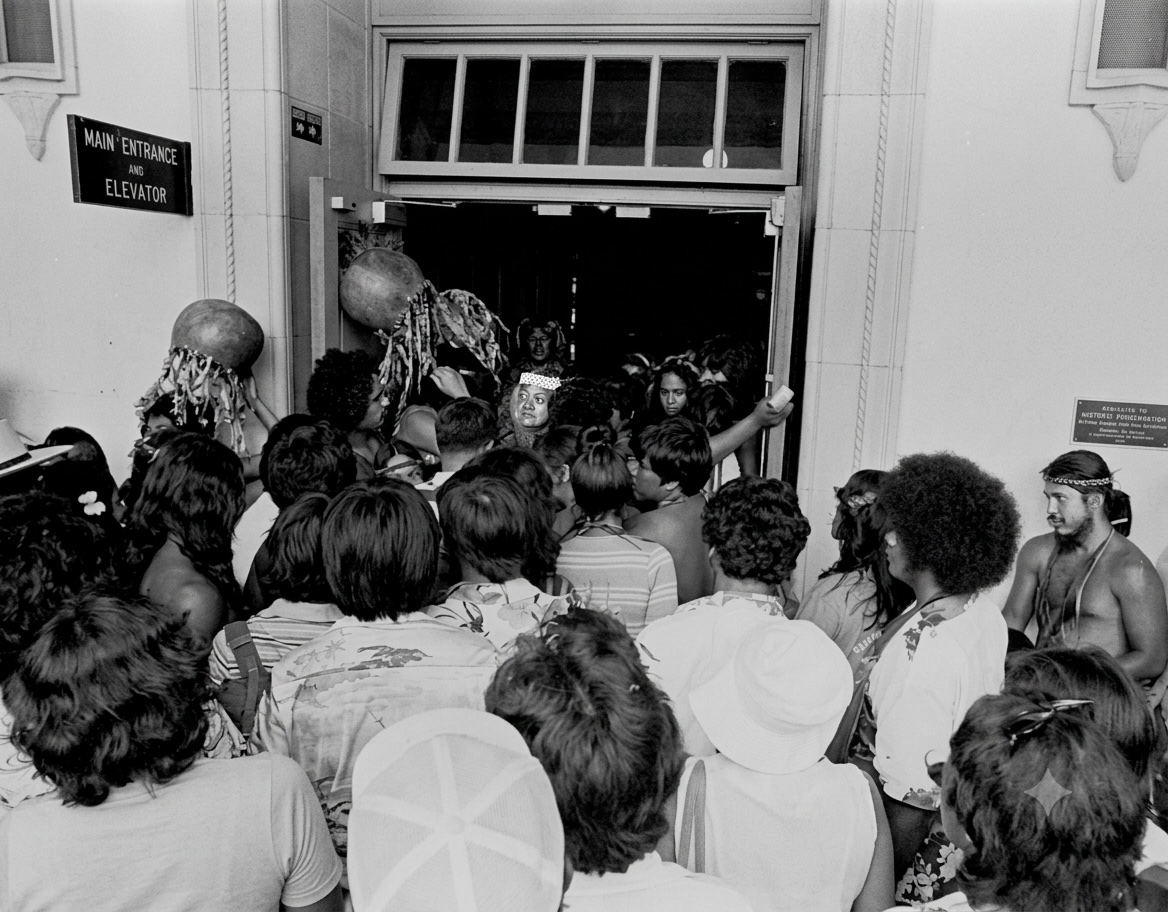
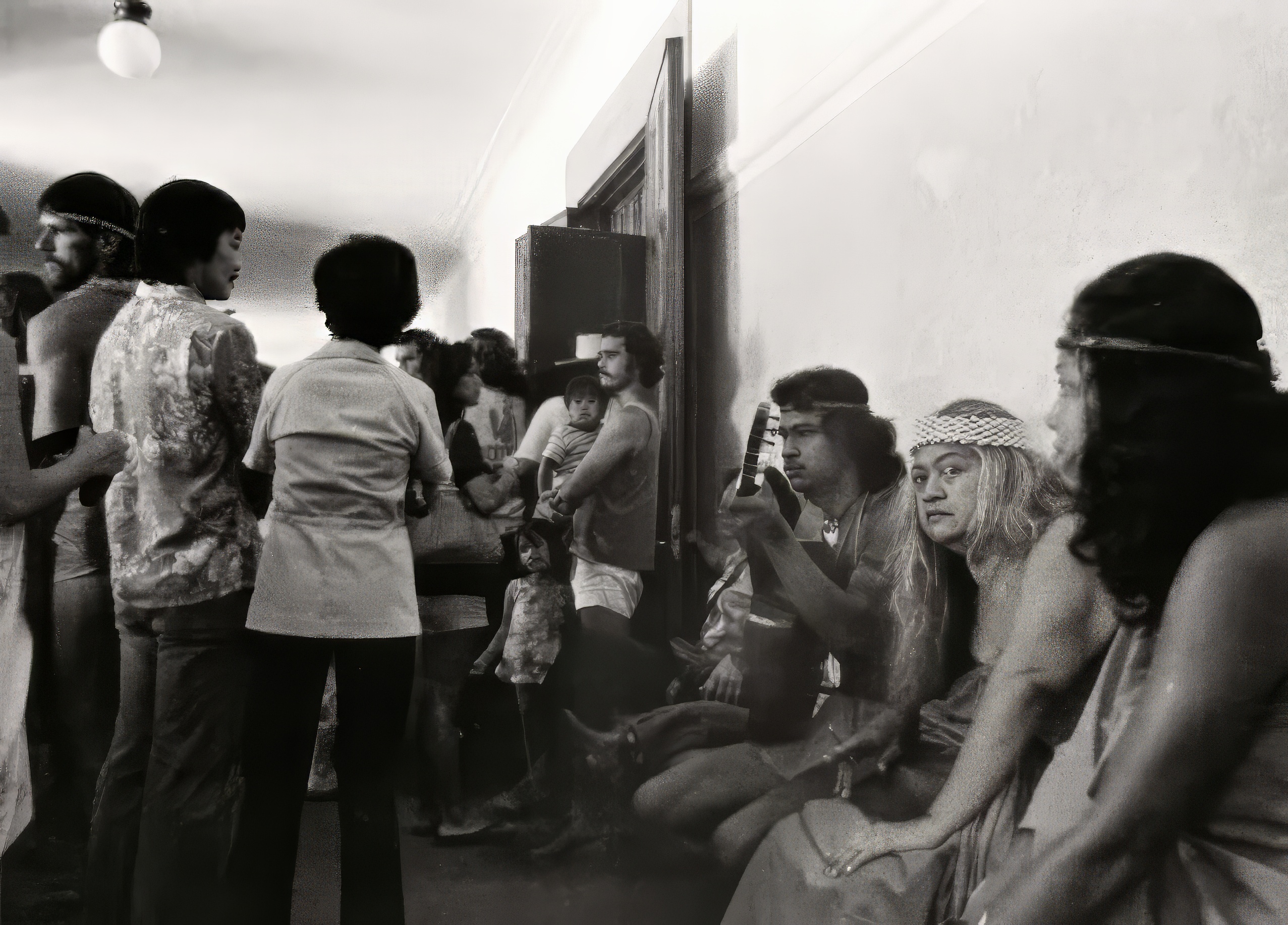
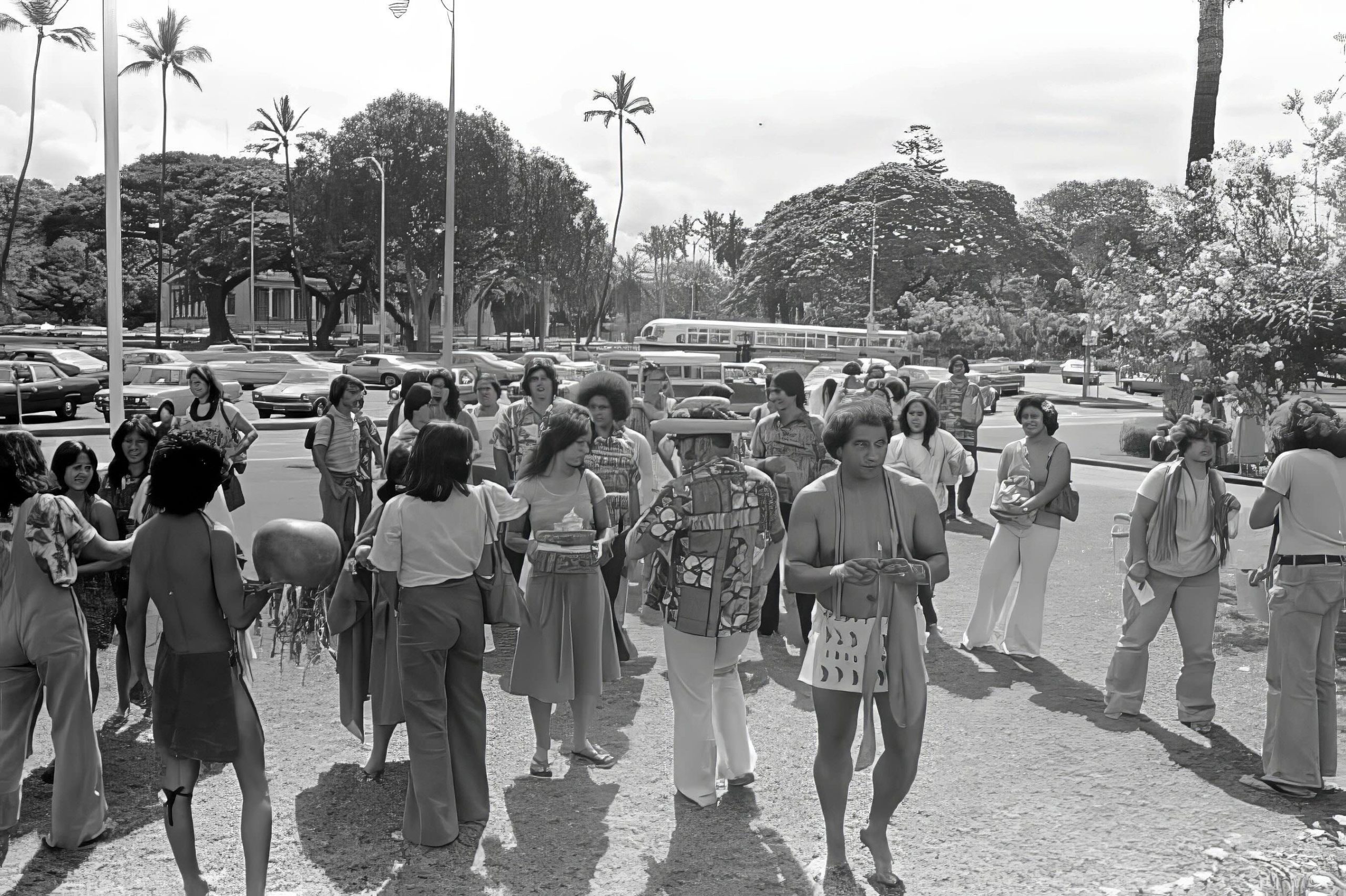
Then on Saturday, February 28, 1976, a day-long rally was held to protest the U.S. Army’s continued control and use of Makua Valley for military training. The rally was organized by the Hawaiian Coalition of Native Claims. The group’s director, Gail Kawaipuna Prejean, had been in the small group that had illegally landed on Kahoolawe the previous month in the first of many public protests against the Navy’s continued bombing of the island.

The rally was held on the makai side of the road across from the 6,600 acre Makua Military Reservation. It was a day filled with music, speeches, prayers, and more, reflecting the new and growing political and cultural activism of Hawaiians.

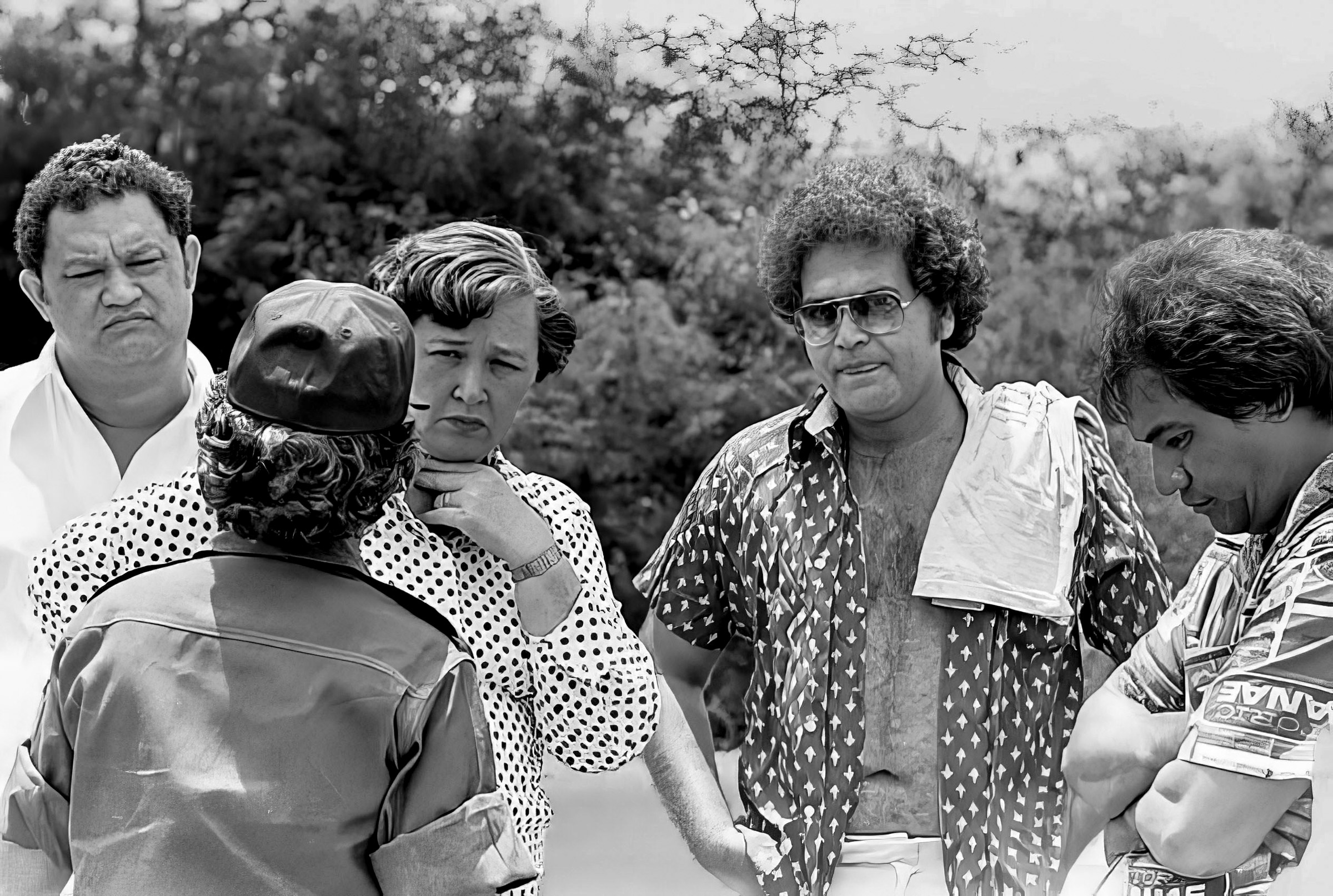
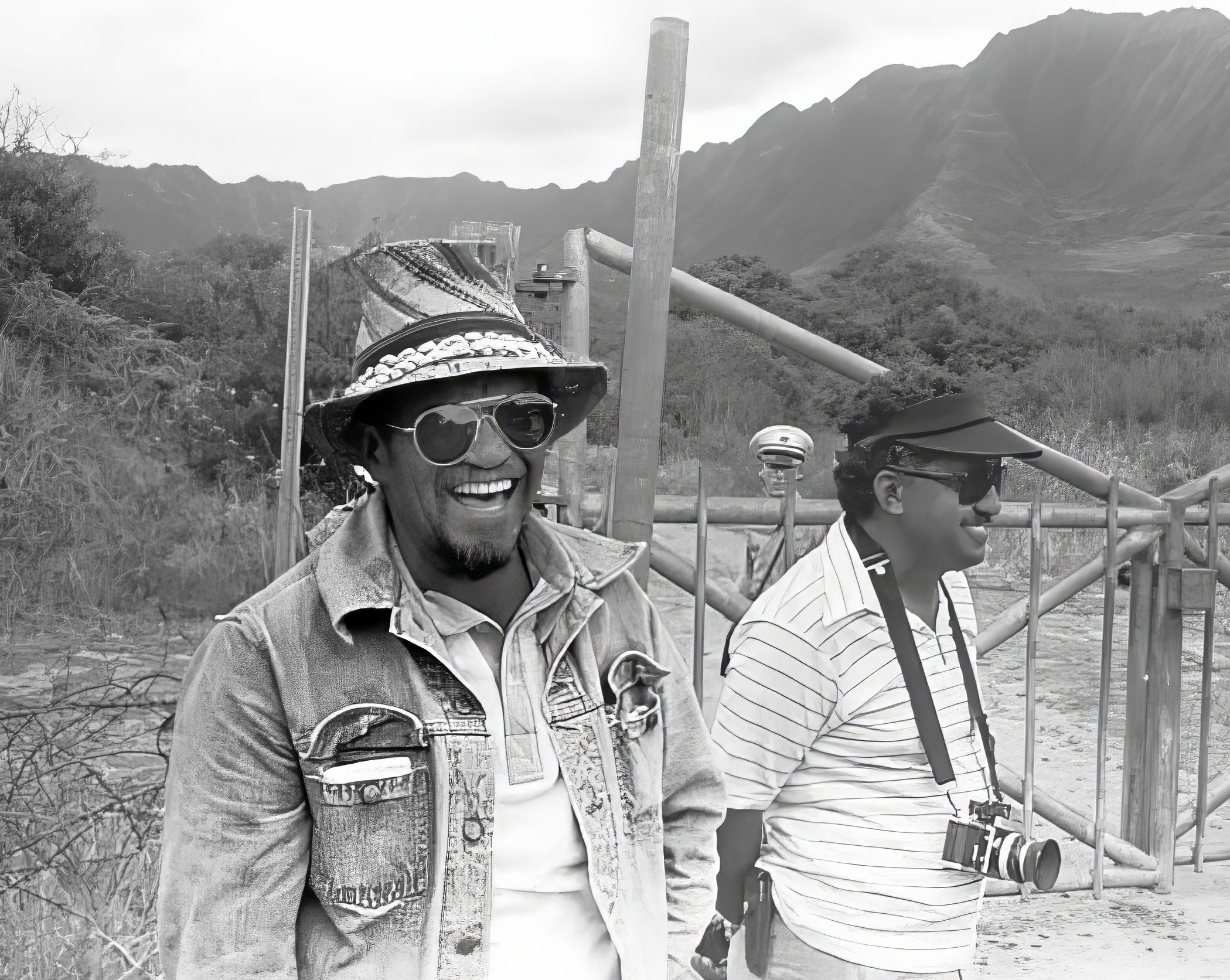
Late in the day, a splinter group crossed the road, ignored the Army’s “No Trespassing” signs, climbed a fence, and proceeded up a small hill where they planted a protest flag. Everyone was in high spirits.

For whatever reason, this public protest failed to capture the public’s attention in the same way that Kahoolawe did.

But I did capture some memorable moments. Click on either photo to see a larger version.

More of the photos that I could that day can be found here.

How long is fifty years?

It’s an excruciatingly long time. Looking back, I can recall the key events as well as the twists and turns of life within each of the past five decades. So much life lived, so many things observed. But I can close my eyes and place myself back in certain events from 50 years ago, sense memory takes over, and I can almost relive those events again in my mind.

And today marks one of those long-ago events. It is the 50th anniversary of the Sunday, January 4, 1976 when I was part of a small group landing on Kahoolawe, later dubbed the Kahoolawe Nine, as a protest envisioned as a way to put the issues and concerns of Native Hawaiians on the national agenda at the start of the American Bicentennial. It started as the brainchild of Charlie Maxwell to highlight a bill in Congress to authorize reparations to Native Hawaiians for their loss of native lands as a result of the overthrow of the Hawaiian Kingdom in 1893 and its subsequent transition to a U.S. territory.

It’s sobering for me to realize that at least five of the original Kahoolawe Nine did not live to see this 50th anniversary–George Helm (d.1977), Kawaipuna Prejean (d.1992), Emmett Aluli (d.2022), and Stephen Morse (d.2025). The Maui News story about the Kahoolawe Nine in 2006 (see link below) reported Ellen Miles had died previously, although I couldn’t find a published obituary or other available record. Walter Ritte is the only other one of the original nine quoted in current news stories.

Maui Now published a story about the anniversary today, as did the Honolulu Star-Advertiser. For more of the story, I suggest Maui News reporter Kekoa Catherine Enomoto’s excellent story to mark the 30th anniversary in 2006, and my own Civil Beat column in advance of the 40th anniversary a decade ago. And SFGate.com did their own story for the 50th anniversary, providing a bit of national coverage.

That’s a photo of me on the beach during our relatively brief time on Kahoolawe in 1976. Lots of my other photos of that first landing have also been posted online for several decades. Someday I`’ll get around to reposting better versions of those photos, but for now they’ll have to do.

Afterthoughts

Here are a couple of suggestions that I wanted to pass on.

First, “The Music of George Helm: A True Hawaiian,” recorded before his death in 1977, is available on Apple Music and, I expect, other streaming services as well. George was more than just one of the Kahoolawe Nine. He was a driving force in bringing Kahoolawe’s message to the public as he criss-crossed the state collecting music and stories as he constantly sought to expand his musical knowledge. It was, as I recall, recorded live at the Gold Coin lounge in downtown Honolulu and, as a result, is a bit rough around the edges in a few places. He was lost far too young.

I would would be remiss if I failed to recommend Steve Morse’s self-published memoir, “First Landing: Story of the Kaho`olawe Nine,” available in paperback on Amazon for just $8.99. I checked Powell’s Books, and Alibris.com, a used book site, in search of alternative sources but didn’t find any. It’s an easy read, based primarily on Morse’s personal recollections, but also placing events in a personal and political context. My copy of the book suffers from the choice of a very light typeface which makes reading a bit more difficult, but that shouldn’t deter you from reading Morse’s account.

And the University of Hawaii Press has republished “Na Mana‘O Aloha O Kaho‘Olawe: Hawai‘I Warriors—Love For Land And Culture,” the diaries of Walter Ritte Jr. and Richard Sawyer, written in 1977, “a day-to-day record of their thoughts and reflections when the two men occupied the island of Kaho?olawe for thirty-five days, using their bodies as shields to stop the bombing and desecration of the island by the US military.”

Also see:

Early days of the Protect Kahoolawe Ohana, February 1976

Walter Ritte on Trial 1976

Sovereignty Sunday, January 1977

PKO at the Federal Courthouse in Honolulu, 1977

Aloha Aina Newsletter 1978-79

Waipahu c. 1947 (Part 2)

Did my grandparents lose their longtime home and property when the federal government condemned a number of Hawaiian homesteads in Waipahu for military purposes after the end of WWII?

That’s the unexpected question that presented itself as I was following up on my post earlier this week that included a short family film of my grandparents’ “new” house, which they moved into late in 1947, about the time I was born.

Believed to be part of my grandparent’s property behind St. Joseph Church .

To fill out the history, I then went looking for information on their “old” house, located next door to St. Joseph’s Catholic Church, a Waipahu landmark. And that led to an unexpected find, a series of stories published in the Honolulu Advertiser in 1946 reporting on the impact of what they termed a military “land grab” of more than 15,000 acres of land, including the Navy’s attempt to take lands near Pearl Harbor for “security reasons.”

The first story in the series reported that although the government’s offers of compensation were far below the land’s market value, about 70% of the land owners accept the offers for “patriotic” reasons or due to fear of challenging the government.

The third article in the series (August 20, 1946) noted that several dozen Hawaiian homesteaders were particularly hard hit. And I was totally surprised that my grandfather, Duke Yonge, was listed among those in the West Loch district.

Currently more than a score of
families at Wahiawa, Waipahu,
Waikele and the Pearl Harbor
West Loch area are concerned in
Navy condemnation proceedings
Started almost two years ago.
They received warning notices
that their lands, homes, and
homesteads were “to be taken
for security reasons.” Several
have retained Oliver Kinney as
their attorney….

In the West Loch district, the
following are affected:
Mrs. Kapeka Baker, Mrs. Eliz-
abeth Ching, Mrs. Adeline Ikeka
Sara Kaaiahuale, Mrs. Lau Kiu
Len Yee, Duke Yonge, Napahue-
la Estate, Mrs. Martha Keala,
Mrs. Rachel Mariano, Tatsuichi
Ota, Magoon Bros. and the Ro-
man Catholic church.

My late sister, Bonnie Stevens, tracked down this photo showing the church and the adjacent open lot being used as a garden. She understood that this was part of my grandparent’s property. And I was able to find a land grant in his name to Lots 4 and 4A in the Pouhala Homesteads, located next to St. Joseph Catholic Church along Farrington Highway in Waipahu. Based on that information, I looked up modern property records of a home now in that approximate location, and its deed showed it had indeed been part of the Duke Yonge homestead grant.

However, I was unable to find any further information (at least in my online search) to indicate whether he and my grandmother were among those represented by attorney Oliver Kinney, or were among the majority who sold under pressure and simply accepted the Navy’s offer.

I’m guessing they accepted the Navy’s compensation offer and used that money to buy the nearby property where their “new” house was built. The house was finished and they moved in around Thanksgiving 1947.

Although I’ve written about the military’s taking of land during that period, I was previously unaware that the process impacted our family so directly. But to track down more of their story, I’ll likely have to do some in-person digging at the Bureau of Conveyances, and then locate the federal court file from their condemnation case that’s probably stored in the federal archive in San Bruno, California.

The attack on Kamehameha admissions reflects an outdated viewpoint

Now that a conservative group is preparing for a legal assault on admission policy of Kamehameha Schools, which favors students with “Native Hawaiian ancestry,” I thought I would share my own perspective.

The phrasing of the group’s challenge makes it sound as if Kamehanmeha uses the “Native Hawaiian ancestry” criteria to create an ethnic barrier to entry for those with other ethnic backgrounds, a sort of educational apartheid.

In reality, that is simply not the case. And Kamehameha’s student body confounds attempts at categorization that rely on traditional understandings of ethnicity and race.

I went searching for a statement of what “Native Hawaiian ancestry” means. In my day, I remember being told you needed to claim something like 1/32 Hawaiian blood, based on genealogy. I couldn’t find any statement on Kamehameha’s website about a current blood quantum.

Apparently that’s because this metric is no longer used, if it ever actually was, according to Google’s review.

Ancestry requirement, not blood quantum. Applicants must submit documentation verifying they have at least one ancestor who was Hawaiian before 1959. Unlike the Hawaiian Home Lands program, which has a 50% blood quantum requirement, Kamehameha has no minimum blood quantum.

What does this mean?

Recall that Hawaiians had a very high out-marriage rate of any ethnic group going back 200 years, meaning that a large percentage of Hawaiians married non-Hawaiians beginning soon after western contact. Hawaiian women married or had childrfen with non-Hawaiian men at a high rate.

Hawaii’s census originally categories were simply “Native” and “non-Native.” Early in the 1800s, outmarriage by Hawaiians quickly gave rise to the term “hapa-haole” to refer to those of mixed Hawaiian and European or American ancestry. This later was turned on its head and “part-Hawaiian” became the term for a mixed family background.

Whatever the terminology, the result of a century of dramatic decline in the Native Hawaiian population as a result of introduced diseases, coupled with high outmarriage, has left painfully few “Hawaiians” today who are not also a multitude of other ethnicities, with Hawaiian often being a relatively small part of their overall ancestry.

In high school, I had a girlfriend who graduated from Kamehameha. She looked Hawaiian, but would proudly chant down her heritage, and I recall it went like this: “Hawaiian, Indian, Dutch, Scotch, English, Irish, Chinese, Portuguese, German.”

I’m guessing this is relatively typical, although the specific ethnicities might be different today.

When you look at Kamehameha students as a group, visually they are as multiethnic as you can imagine. There are haole-looking blonds, those who appear asian, and Hawaiians, both those who look stereotypically Hawaiian and those who do not. If you had a large group of Kamehameha students and asked, “How many of you are [fill in the ethnic group]?” a lot of hands would go up. Call out any ethnicity, the response would be the same.

So it’s just wrong to look at Kamehameha as being based on some kind of ethnic segregation. In practice, it is quite the opposite, it’s hard to find any group that has been excluded. Kamehemeha has created probably the most diverse group of students to be found anywhere, rich in a variety of ancestries. It’s a mix that confounds traditional ways of viewing and understanding race and ethnicity, inclusion and exclusion.

The big question remaining, I suppose, is whether the law can accommodate such an understanding.