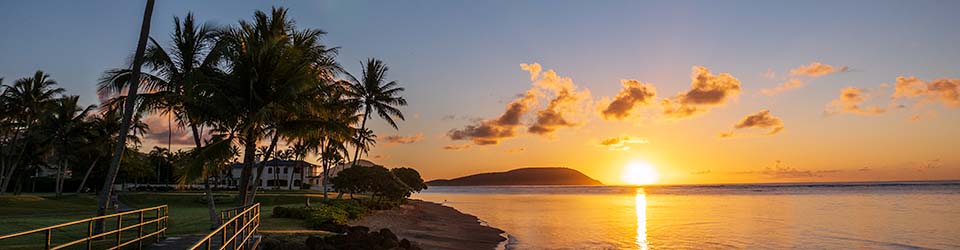
Kauai is much in the news this week due to the disastrous flooding.
So here’s a little gem of Kauai and Hawaii history that started life a century and a half ago on the Hanalei plantation that was named “Princeville.” It’s one of several papers that my grandfather, Duke Yonge, found in a trunk in a Pacific Heights home where he lived after first arriving in Honolulu in 1908. I came across it yesterday while looking for old photos to post for Throwback Thursday.
The document is a handwritten note addressed to Her Majesty Queen Emma, wife of Kamehameha IV. It was penned in beautiful longhand by R.C. Wyllie on October 19, 1860.
Robert Crichton Wyllie served as Minister of Foreign Relations for the Hawaiian Kingdom from 1845 until his death in 1865, serving under Kamehameha III, Kamehameha IV and Kamehameha V.
According to an online biography:
Robert Crichton Wyllie, was the founder of Princeville at Hanalei.
In 1860, Wyllie hosted his dear friends King Kamehameha IV, Queen Emma and their two-year-old son, Prince Albert at his estate for several weeks. In honor of the child, the most beloved ali’i of all Hawaii, Wyllie named the plantation the “Barony de Princeville”, the City of the Prince.
The note dates to that Royal visit.
The front of the note reads:
“Extraordinary feat of strength of the Prince of Hawaii on the 19th of October 1860 when he was only 2 years, 4 months and 29 days old.”
It was written and dated the same day, and signed by Wyllie.
Princeville
Hanalei.

The handwritten note recounts how Prince Albert, accompanied by two other youngsters, “walked without any help, without panting or resting, eating a Guava all the way, in twenty five minutes from the gate at the foot of the mountain, zig zagging up its steep and slippery ascent, to the top without showing any appearance of fatigue whatever.”
Also noted as being on the walk was “Madame Namakeha,” a reference to the young Kapiolani Namakeha, who was the nurse to Prince Albert.
Three years later, after the death of her husband, Bennet Namakeha, Kapiolani married David Kalakaua, then the Kingdom’s first Postmaster General. When Kalakaua was named King, Kapiolani became Queen Kapiolani.
But back to Wyllie’s wonderful note.

The moment was recounted again a year later in a letter by Sophia Cracroft published in the collection, “The Victorian visitors: an account of the Hawaiian Kingdom, 1861-1866,” by Alfons L Korn.
Cracroft wrote:
Another day we went up the river and rode up a hill some 400 or 500 feet high, rising abruptly from the plain (seeming from the verandah like a mere knoll in front of the dark ranges behind) and called by Mr. Wyllie “Mount Rooke,” after the Queen’s adopted father. From this we had a fine view and here my Aunt planted a tree, to be named after her, this mount being the spot where bonfires are lighted on fete days—such as the little Prince’s last birthday, on account of his having performed the really remarkable feat of walking up to the top, entirely unassisted, at the age of two and a half years on his visit here of last year. Mr. Wyllie’s pride in this feat (at which he assisted) is insatiable and he is constantly talking of it. Of course I had to run the gauntlet of comparison, which I decided in favour of riding up and down instead of walking.
Discover more from i L i n d
Subscribe to get the latest posts sent to your email.
Wow! Outstanding! Thank you, Ian.
Perhaps the most interesting thing about the note is that its written in English.
What a treasure. I was thinking this is something that should be in a museum…but then we all would have never had the privilege of seeing/reading it.
I think of your family often when passing Yonge street here in San Diego.
A great treasure! There seems to be a lot of historic debate over the circumstances of the death of Prince Albert. Some records suggest a bout of appendicitis while others reference possible abuse by his father by immersing him in ice water as punishment fro some transgression. Would welcome your thoughts/comments on this as the death of the Prince was a pivotal moment in Hawaiian history.