
Hawaii News Now reported this week that the “state Attorney General’s office has launched an investigation into public corruption at the Oahu Community Correction Center following a fireworks bust.” HNN had reported earlier that a corrections officer was suspected of having several boxes containing nearly 100 pounds of illegal fireworks mailed to himself at the prison mailroom in the name of an inmate. Now the AG is probing the incident as an example of public corruption
But this is apparently not the only investigation of prison corruption underway.
What has been described as an ongoing investigation into drug smuggling into the Oahu Community Correctional Center appears to have been a spinoff of the long running federal pursuit of former Honolulu business owner Michael J. Miske’s alleged racketeering and drug trafficking organization.
One of the beneficiaries of this smuggling operation was Dae Han Moon, 26, who is one of Miske’s remaining co-defendants and awaiting trial in that case.
In mid-2018, Moon was in custody at OCCC awaiting trial on 2nd degree murder charges for the shooting death of Stevie Feliciano at Ala Moana Center on Christmas 2016 that appears, in retrospect, to have stemmed from his involvement in Miske’s drug distribution ring.
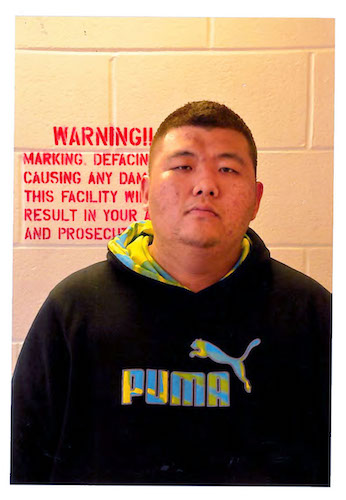
Dae Han Moon (2016)
Smith was a known drug dealer and experienced martial arts fighter who had been an active participant in Miske’s organization since 2015. In addition to drug dealing, Smith was paid to be “on call” to assault victims targeted by Miske, often in Miske’s presence. Smith pleaded guilty in November 2020 to being part of Miske’s racketeering and drug trafficking conspiracies, and is cooperating with prosecutors. He is presently awaiting sentencing, which has been postponed until after he appears as a witness at Miske’s upcoming trial.
After making the deal with Smith, Moon called Timothy Taboada, a Kaneohe drug dealer who was supplied by Smith, to arrange delivery. Moon provided Taboada the contact number for a woman who would be picking up the drugs. She was, as Taboada understood, a corrections officer who had a “romantic relationship” with another prisoner housed in the same module as Moon. A later database check by federal investigators confirmed she was working as an adult corrections officer. A few minutes after the call from Moon, Taboada received a call from Smith, who confirmed details of the deal with Moon.
Taboada and his girlfriend, Catherine Zapata, then drove to Macy’s parking lot at Windward Mall about 7:30 p.mm. and waited to make the drug handoff. The woman was about 20 minutes late, but finally arrived in a gray or silver SUV and paid $300 cash for the meth.
Less than a week later, Smith, Taboada, and Zapata were arrested on federal drug charges, and their phones reviewed pursuant to federal search warrants. Just over two weeks later, Taboada began providing investigators with details of the meth deal with Moon and his drug contacts with Smith, Hunter Wilson, and Lance Bermudez, who were all associated with Miske’s drug network.
Taboada pleaded guilty in November 2019 to selling meth, with most supplied by Wilson and Smith. Taboada told investigators he “was aware that some of the methamphetamine Smith provided to him came from robberies of other drug dealers that were committed by Smith, Bermudez, and others,” and that he later help sell the stolen meth to others, according to his plea agreement filed in federal court. He is now serving a 10 year sentence at the Federal Correctional Institution at Lompoc, California. He is scheduled to be released in March 2027, and will on supervised release for five years.
Moon was convicted on the murder charge and several other counts, and eventually sentenced to life in prison with the possibility of parole.
In February 2019, a confidential informant told the FBI that Moon was still using a cell phone to obtain money and arrange drug deals while being held at OCCC.
The following month, FBI investigators obtained a court order approving the use of pen registers and “trap and trace” devices on the phone used by Moon. These gadgets identify the phone numbers or IP addresses of calls or texts to or from the target phone, but do not access the content of those communications. At about the same time, the same confidential informant told investigators Moon was letting another prisoner in his module use the contraband phone. The phone was used for multiple text and voice calls to numbers on the other prisoner’s approved contact list, according to data collected in the court-approved monitoring of the phone. It was also used to call the number of the female ACO who had picked up the meth for Moon, with approximately 55 calles during a six day period in March 2019.
Moon was one of 10 original co-defendants charged in the federal racketeering case against Miske in July 2020, at which point Moon was transferred into federal custody at Honolulu’s Federal Detention Center.
Last year, a search warrant concerning the Moon-Smith drug deal at OCCC was among 70 sealed cases related to the Miske investigation that were reviewed by Judge Derrick Watson, who is handling the Miske case. In an October 20, 2022 ruling, Watson said this warrant, along with a handful of others, should remain sealed because they “involve ongoing, pre-indictment criminal investigations.” The rest of the 70 warrants were unsealed in whole or in part, and are publicly available in court files.
To date, no charges have been filed against Moon or others who were part of the drug pipeline into OCCC but, based on Judge Watson’s review of the documents, the investigation is considered active and ongoing.
Discover more from i L i n d
Subscribe to get the latest posts sent to your email.
Another interesting wrinkle: HNN reported that the fireworks were intercepted at OCCC after “the jail was tipped off by an inspector from the U.S. Postal Service,” which suggests that 86 pounds of illegal fireworks shipped to a prisoner at a state correctional center wouldn’t have otherwise been discovered. The implicated deputy allegedly stated that he had already picked up an earlier shipment of unspecified size addressed to the same inmate. If it’s true that (1) absent the tip off, a deputy could walk into a mail room at the jail and pick up mail addressed to an inmate who is no longer even locked up there, and carry the mail off with no verification, oversight, or accountability, then (2) exit the jail with the mail undetected and with enough confidence to soon return with the intent to retrieve large boxes of illegal fireworks addressed to the inmate, then there is an astounding lack of basic security and procedural integrity at OCCC, on top of any alleged corruption.
On another note, HNN reported last night on a judge’s surprising decision to vacate a conviction in the notorious Dana Ireland murder case, claiming repeatedly that defendant Albert Ian Schweitzer had been “exonerated,” which simply isn’t true. A ruling that evidence does not support a conviction is just that. Exoneration is another matter entirely. The judge made no finding that Schweitzer was innocent. In fact, the judge dismissed the case “without prejudice,” which means the same defendant theoretically could be charged again, although that seems unlikely at this juncture. Is he factually innocent of the crime? Quite possibly, yes. But HNN is clearly outrunning the facts, and it’s not the first time. They previously reported that flamboyant former Delaware death row inmate Isaiah McCoy was “exonerated” of a murder charge before coming to Hawaii, where he was later convicted of robbery and is now serving a ten-year sentence. In fact, his Delaware murder conviction was thrown out, he was tried again years later with a different prosecutor, and a judge found him not guilty, which simply means the judge determined that the evidence did not support a conviction. Was he innocent of murder? Possibly. Was he exonerated? Not at all.
Good points. Thank you.
I frankly believe Schweitzer is innocent, but much of the reporting on this story did make sizable leaps, such as declaring that the lack of a DNA match with a short found at a crime scene “ruled out Schweitzer as the murderer,” along with the two other suspects. It did no such thing, and the case never hinged entirely on that piece of clothing that is assumed to belong to the killer. Virtually unreported was the fact that the prosecution argued against the extraordinary remedy of overturning a jury verdict, or the reasons why. I agree with the ruling to set Schweitzer free, but after all these years of twists and drama I sure wish the media would get their facts straight.
From whatever case the state thought they had against the defendants in the murder of Dana Ireland, now subtract the perjured testimony. If that doesn’t entirely exonerate the Schweitzers, it doesn’t entirely exonerate you or me either. The unknown person whose DNA was found on the sweater may or may not be guilty but will have some explaining to do when they’re identified.
Well, if you subtract the assumption that the very specific and convincing admissions were “perjured” and consider that Pauline only changed his tune after it became clear that he had badly fumbled his snitching and instead implicated himself, you can see how two juries came to their conclusions to convict. But yes, without those admissions the case seems very weak. Perhaps two juries were wrong. DNA on a shirt found at a crime scene is powerful evidence of who wore the shirt, and that person certainly has some explaining to do, but that evidence alone doesn’t necessarily prove guilt of murder and certainly doesn’t prove innocence of someone whose DNA was not found on the shirt. There are lots of plausible explanations, but the bottom line for now is that a conviction has been thrown out but nobody has been “exonerated” of anything. It does seem very unfair, but a ruling that available evidence could not prove guilt beyond a reasonable doubt, and that new evidence is exculpatory, does not by itself exonerate anyone, despite some continuing flawed, breathless, and incomplete reporting to the contrary. Perhaps we’ll never know the whole truth, but it’s out there somewhere. It’s a very tragic case.
It was almost comical watching HNN yesterday triple down on the claim that Schweitzer was “exonerated” and state as fact the total falsehood that a judge ruled “that he could not have murdered Dana Ireland,” then in literally the same breath concede that the judge did not actually make that ruling or find Schweitzer innocent, which is why he can’t collect money from the state unless he’s pardoned by the governor or found factually innocent by a future ruling.
I get it. The whole thing looks like a miscarriage of justice, and maybe it really was. But the simple truth is that the judge granted a defense motion to vacate a conviction, and made the somewhat convoluted judgement that new evidence and other factors “conclusively prove that in a new trial, a jury would likely reach a different verdict of acquittal.” What he didn’t rule is that it was conclusively likely that Schweitzer could never be found guilty under any circumstances, or that he could not be tried again on the same charges. Maybe that ruling is coming, but it’s not here yet.
To be fair, HNN is not the only media outlet falling in love with the story and proclaiming its own mistaken interpretations as fact. But after three days of this, credibility is really starting to suffer.
I heard from my husband’s co-worker that Moon was not only receiving drugs, but was getting McDonald’s and other fast food in prison. He had cell phones, drugs, and pretty much whatever else he wanted. PSD and ATG should investigate more than just the named individuals. It seems that it may be systemic.
Public Workers and Legislators in positions of trust and authority should face extended sentencing for rare prosecution. Credibility of State “Officers” including ACO’s – Adult Corrections Officer and State Sheriff’s that will become State Police Officers combining several agencies in a new Department this year. Ethical performance has been in contention for nearly a decade. The State’s complete failure to garner accreditation is pathetic, despite State Laws requiring it.
Creating a duly elected State Attorney General via long overdue State Constitutional Convention , to provide “Ethical Conformance” is essential to balance the Governors Authority with unobstructed Justice.
OCC should have security cameras monitored by an offsite entity that is not in contact with the prisoners and guards. That would remove an avenue of corruption. It would also be interesting to know how many working cameras are at the prison.
In a recent case involving sexual assaults on female inmates, a key finding is that many cameras were out os service and had been for some time, creating dead zones where there was no surveillance.
I have been voicing these corruption concerns with my spouse. I know from first hand knowledge that management and those in positions to act on misconducts, DON’T!. It’s a buddy system with high ranking officers including the Chief of Security. No accountability, i hope the FBI gets involved with this Public Corruption investigation. I don’t have confidence in the State AG to forward these into court actions.