
A Honolulu Police Department’s Special Services cadaver dog detected the scent of possible human remains in five specific spots in an undeveloped field in Waipio during a search requested by the FBI in February 2021, according to testimony this week in the racketeering trial of former Honolulu business owner Michael Miske.
 The search area was along Waiawa Prison Road between the Waipio Costco and Mililani Memorial Park, according to several exhibits admitted into evidence. The approximate area is outlined in red in this satellite image from Google Maps.
It was a tantalizing hint, but neither its relevance to the Miske case, nor whether it led the FBI to any evidence, was disclosed.
Brad Heatherly, who at that time was a sergeant assigned to the K-9 Unit in HPD’s Special Services Division, said he did not know why the FBI had requested the search, how they had identified the suspect area, or whether they had collected any forensic evidence during a subsequent investigation of the five locations flagged by the K-9 officer. Heatherly said he was not involved in the FBI’s investigation beyond the K-9 search.
During cross examination, Heatherly said was not aware that the information leading to the search had been received by the FBI three years earlier, in 2018. He acknowledged that the lengthy delay would have made it less likely to find evidence still in place.
Several of Miske’s associates were in custody in 2018 and were cooperating with investigators, although whether any of them was the FBI’s source has not been disclosed in the public court record.
Heatherly said the dog had not alerted to any sites in a similar search of a nearby area two weeks later.
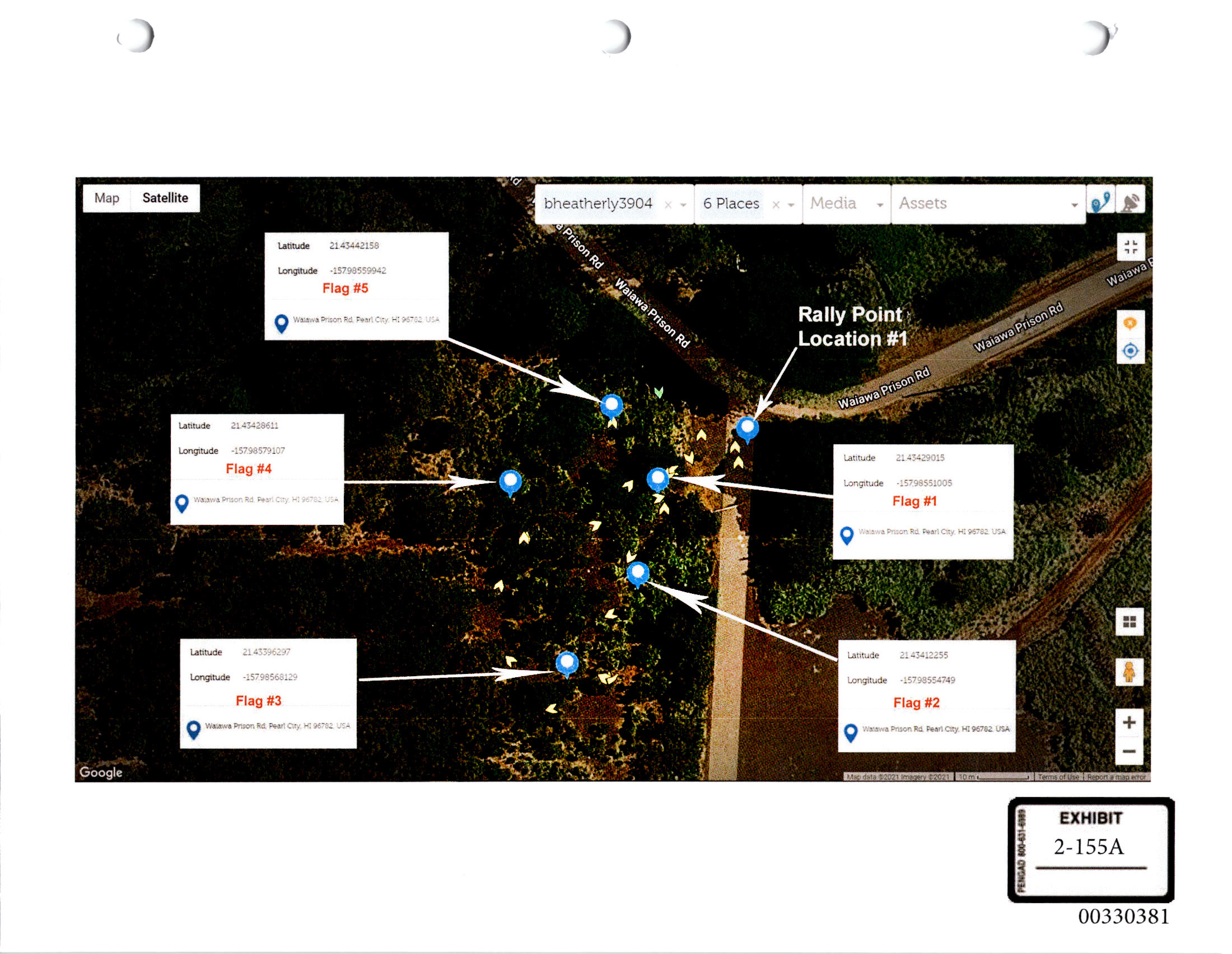
Heatherly explained that they do not take a dog to a specific place, but instead run with the dog in a pattern within a larger area. He said when the dogs get a general scent, their behavior changes and they get excited. Then, if they “alert” to a specific spot, they are trained to stop, sit, and wait for their human partner to flag the spot and use GPS to record its location before continuing the search.
Although the dog is trained to alert to the scent of human remains or chemicals produced in decomposition, there are many sources of error, including dead animals, and actual remains may be washed away by rain or carried away by pigs or other animals, Heatherly said.
Heatherly said he had supervised seven or eight teams, each consisting of a dog and an HPD officer. Each dog is trained in a specialty (finding narcotics, drugs, search and rescue, human remains, etc), is issued a badge, and is also considered an HPD officer.
This map accepted into evidence shows the locations where the dog alerted to the presence of suspected human remains.
Discover more from i L i n d
Subscribe to get the latest posts sent to your email.