
Federal Judge Derrick Watson, the trial judge in the case against former Honolulu business owner Mike Miske, publicly expressed his frustration several times this week with the Assistant U.S. Attorneys handling of the case.
On Monday afternoon, Watson criticized prosecutors for failing to provide supplemental exhibit lists on a timely basis, giving defense attorneys inadequate time to review and prepare. As a result, Watson ruled that the latest round of proposed exhibits could not be used when questioning any upcoming witnesses.
On Sunday, May 19, government attorneys had filed their 29th Supplemental Exhibit List, which contained several eye-catching items, including the application for a search warrant targeting the home of Jordan Kipi, then a surveillance specialist employed by the FBI.
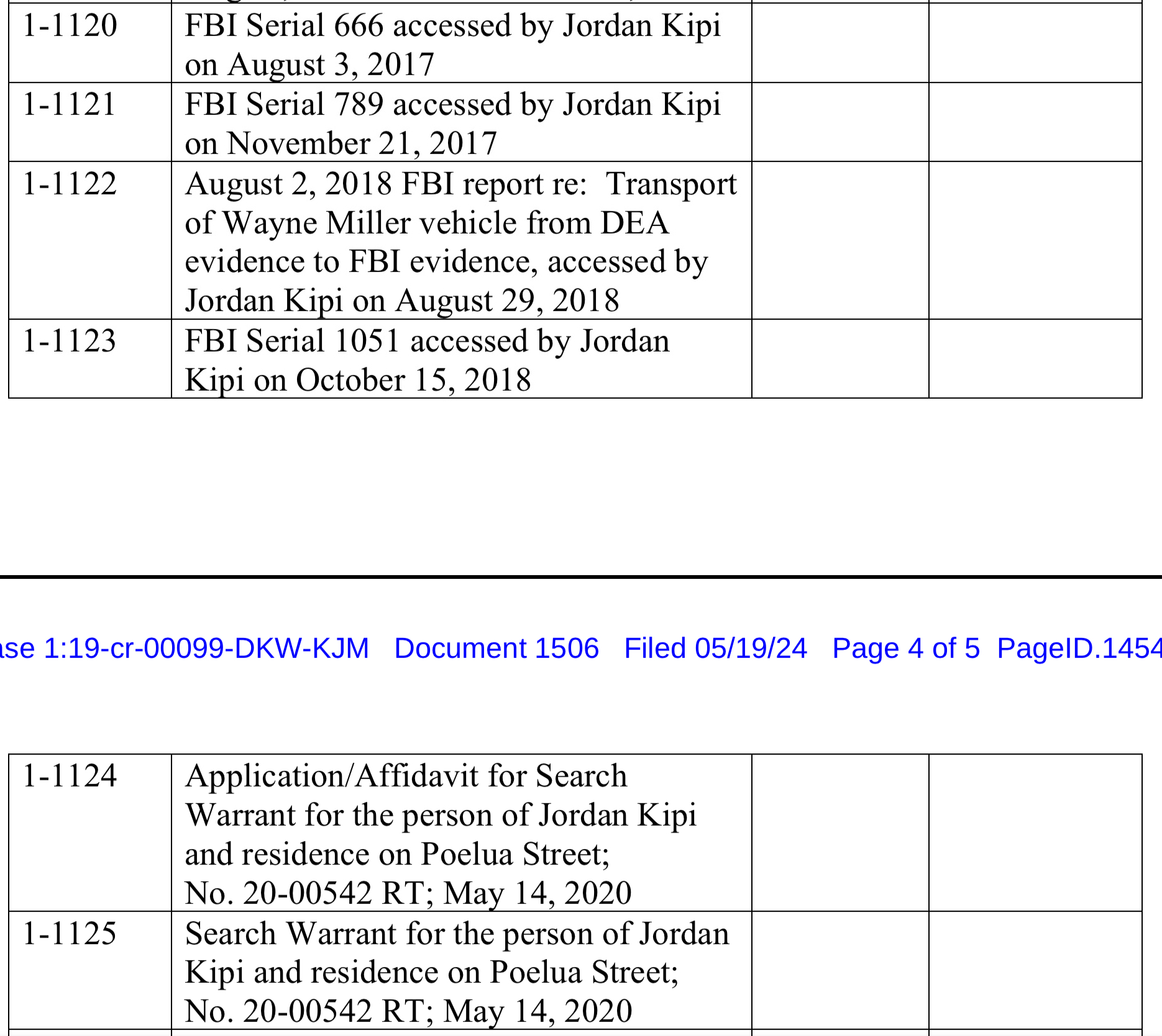
Two search warrants targeting Kipi’s phone and home were inadvertently disclosed earlier, but this is the first public reference to them.
Watson then chided both sides over the increasing number of objections being raised, and told them to put their continuing objections in writing for him to consider. Watson said he would rule on the written submissions and would not take further arguments.
Then, during a break on Tuesday, Watson again blasted prosecutors for filing eight supplemental witness lists, naming additional witnesses to the more than 900 potential witnesses it originally identified. Watson said he was not sure where the government got the idea it would just add witnesses in this manner.
Watson said he would allow those additional witnesses named to date, but the government will have to file a motion if more witnesses are proposed and will be required to show “good cause.” And, Watson warned, they will have to meet a “high standard.”
On Wednesday, Angela Varnadore, a former employee who was once one of Miske’s girlfriends, was asked whether Miske had sources of information inside government agencies.
P: “Did Mr. Miske ever bring up his federal investigation to you?
W: “Yes.
P: “Did he ever bring up any law enforcement personnel that he knew?
W: “Yes, he said he knew people in local law enforcement, ATF, and FBI and that he would get information about the federal investigation from them.
This seems like it would have been a point to introduce one or more of the proposed exhibits related to Kipi, but the government appears to have been prevented from doing so by Watson’s earlier order concerning the supplemental exhibits.
Then on Thursday, after the jury was excused, Watson blew up at prosecutors again. After somewhat tedious questioning of witnesses over accounting records, he told prosecutors they need to streamline things. Watson said it had taken the 50 minutes to get information when it should have taken about 30 seconds, and he proceeded to suggest how he would have done it.
Watson called it “a colossal waste” of time for him and others. His parting shot was that if prosecutors didn’t streamline their approach, he would do it, potentially a warning that he would cut off excessive questioning. Watson then abruptly stormed out of the courtroom.
Despite getting on the wrong side of Judge Watson, prosecutors did elicit some telling testimony during the week. But it was unfortunately overshadowed by the reaction from the bench. Fortunately for prosecutors, the judge’s comments were not made in the presence of the jury.
Discover more from i L i n d
Subscribe to get the latest posts sent to your email.
So Watson has prevented the jury from learning about Miske’s sources inside local law enforcement and the FBI.
And covered it with a hissy fit about prosecutors taking too much time.
Actually, Judge Watson directed prosecutors to provide adequate notice.
Do you ever get worried about reporting on Miske? People I know won’t even let me mention his name. I know you’re just documenting the facts, but I would be scared myself. I appreciate your articles so much, so I’m glad you do it! 🙂
Elderly are off limits in the prison world so Ian is safe.
Not necessarily, see Whitey Bulger.
That’s a sad commentary –
Is this kind of behavior from the bench normal, with a judge explaining to the prosecution how he would have gone about questioning a witness? I’m not sure if a courtroom is the right venue for that kind of feedback.
Interaction from the judge to the lawyers anyplace outside of the courtroom is ex parte communication. That’s not allowed. If I were the prosecutor I would listen carefully. At least the prosecutor now knows the possible consequences of the conduct the judge finds objectionable.
Do I smell a mistrial?
i bet his gov/state/feds friends are sqeezing their asses right now, hoping their names don’t get mentioned during court.