
Category Archives: Food

Scorpions for 20–A vintage recipe

Just in time for the holidays, another “find”, this time what appears to have been the beginning of a recipe book of mixed drinks. My mother, Helen Yonge Lind, chose a nice notebook, collected a few recipes, and then the project was set aside and apparently forgotten. I’m guessing this dates from somewhere shortly after my parents were married at the end of 1939. Perhaps it was the war that intervened? Who knows.

But you never know when a traditional recipe for “Scorpions for 20” might come in handy!

We’re in the final stages of clearing out my parents’ old house in Kahala. Things are almost all sorted into piles. Give away. Throw away. Bulky item pickup. Put into storage somewhere (mostly old genealogy notes my sister will eventually sort through). Possible garage sale. Disperse among the family.

Even among the mess, the handmade cover caught my eye.
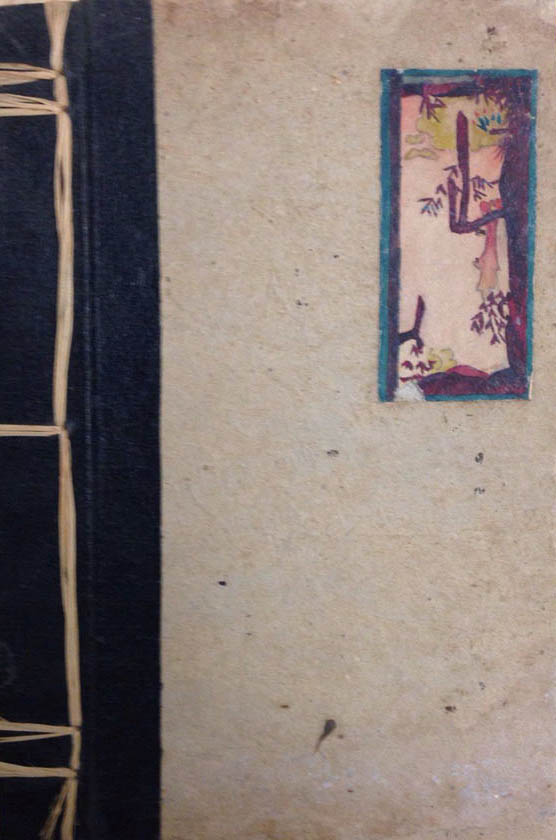
Drink recipes

I carefully turned to the first page.

Manhattans for 4.
Manhattan special for 2.
Scorpions for 20 people.

I was hooked.

You can click on the page below to read the recipes in my mom’s handwriting. But here’s the basic scorpion recipe that she recorded.

It starts with a gallon of oke or whiskey. That tells you something right there–Okolehao was apparently much more readily available than today. Then gather a dozen juice oranges and 1-1/2 dozen lemons. Thinly slice half the fruit. Squeeze juice from the rest.

Then combine everything, add one or two cups of sugar and a couple of bunches of mint (chopped), and let stand “at least 48 hours.”

When ready to serve, strain out the fruit, then combine in a large bowl equal parts of the fruit mix, sparkling water, and ginger ale.

Add twenty people and you’ve got a party!
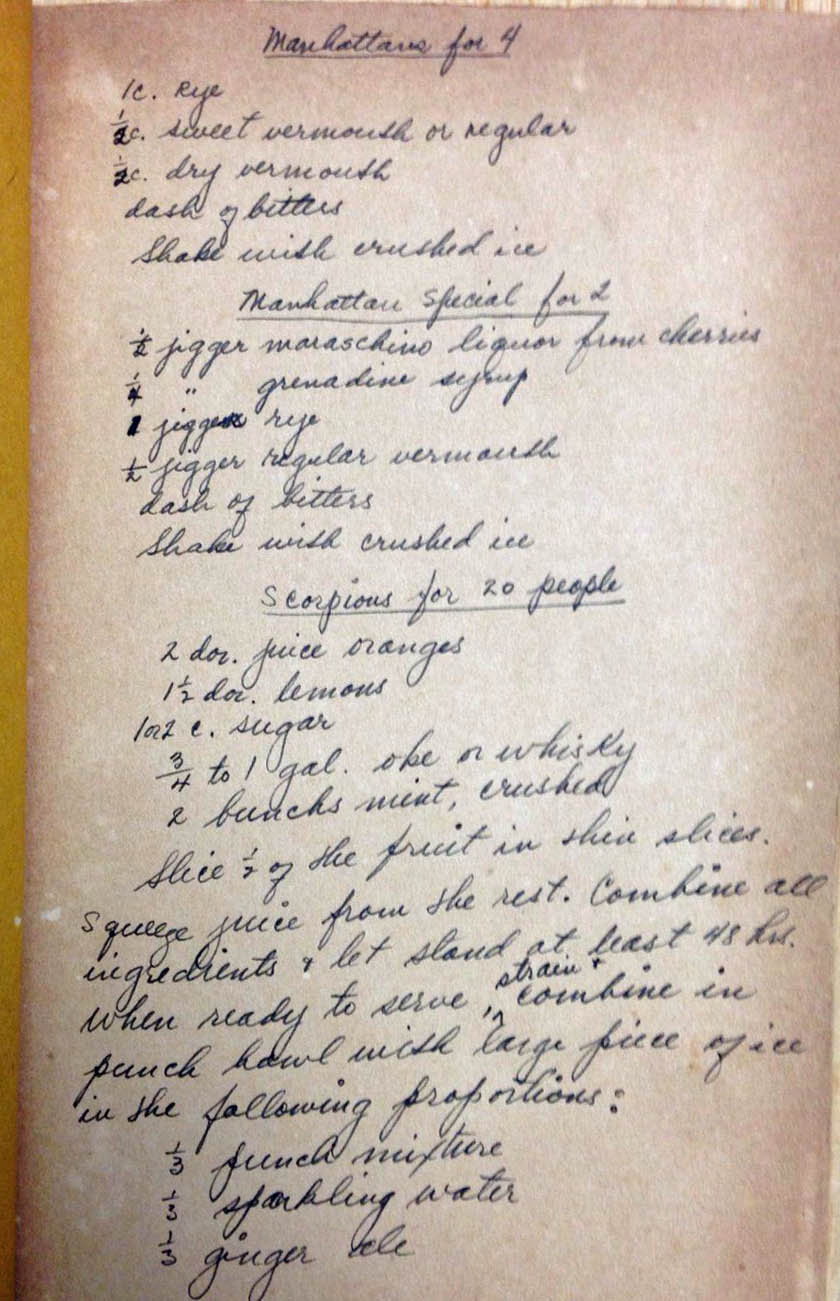
Scorpions

There’s also a recipe for a Christmas wine punch, and a couple of clippings suggesting alternatives to martinis.

Story on fishing quota missed crucial perspective

Pat Tummons, editor of Environment Hawaii, an independent newsletter, commented on post, “Monday Meda Quibbles.” Her comment raises some serious concerns, so I’m posting it here today for more visibility.

Thanks to you, I just read the KHON report on possible cuts to the longline quota. And, apart from the ghastly writing, there are some real problems in the fact that the reporter quotes only people very closely tied to the industry.

In point of fact, the quota of 3,763 metric tons (I’m relying on memory, so this may be off a few hundred tons) is meaningless. For the last two years, the longline industry has been allowed to continue fishing even after the quota is reached by ascribing the excess part of its catch to American Samoa, which enjoys no limit on bigeye (it is regarded under the international — not U.S. — commission as a territory that is developing its fishing industry). This excess has amounted to hundreds of tons — although the exact amount is not easy to find out.

So no crocodile tears from me for the commercial longliners. Even when the rest of the member countries to the WCPFC were told to cut their catches by 30 percent in 2008, the Hawaii longliners escaped with just a 10 percent cut.

Altogether, the story on KHON is distressing — and not just for reasons of the cringeworthy language.

More info on Hawaiian foods

Here are two more sets of notes about Hawaiian plants and foods. I found these in files containing research notes belonging to the late University of Hawaii Professor Carey D. Miller.

First, there are two pages of typewritten notes based on conversation with Mr. & Mrs. C.C. Conradt. They described the feeding of babies (sometimes nursed for three years), including baked sweet potato and poi.

• restrictions on what women could eat “were very strictly kept. And baby girls were not allowed food tabu to women.”

• Why didn’t they eat more chicken? Not many raised. no place for them.

• Common people and chiefs ate the same food. “Quantity varied, not quality so much.”

Then there are another two pages dated 1957, “Notes taken in conversation with Mary K. Pukui and Mr. Wm. Meinecke.

This consists mainly of a list of foods eaten regularly or occasionally.

Ka’u people were sweet potato eaters. Taro was down only on the edge of the forest and breadfruit only mauka. The land in general was too arid for anything but sweet potatoes.

Hilo people were taro eaters, “Hilo ai luau” is the phrase. They had an abundance of water and didn’t eat many sweet potatoes.

People of Mokapu area were the fishing group [land pieces were part of the large ahupua’a on the windward side (Kailua, Kaneohe, and Heeia)] and other pieces of the land area provided abundance of taro.

The sweet potato eaters of Oahu were the people inhabiting the area from Makapu’u to Kokohead.

Act of cutting hair and knocking out teeth, tattooing tongue–all done in grief to show aloha for the ali’i–was called manewanewa.

All quite interesting.

Leftovers become Sunday dinner

On the way to Feline Friday, I noticed this picture taken last Sunday.

It started as leftovers.

We had dinner on Saturday in Kaneohe at a good friend’s house. He roasted a chicken (vegans, you are excused from the room).

When we were cleaning up after dinner, we asked what was going to happen to all the bones. Turns out he was going to just dump them in the garbage. Instead, took them home.

The next day, they went into a pot of water with some salt, garlic, onion, and a bit of thyme. I brought to a boil, then simmered at length. The chicken looked a little sparse, so I went digging in our freezer and came up with a turkey drumstick, a leftover that likely dated to last year some time. I dropped it into the mix. I guess this transformed it into “turken” soup, although the chicken flavor seemed dominant.

It cooked for hours, and by the time the drumstick thawed and cooked, the chicken was just right. By late afternoon, I scooped out the bones. About an hour before I wanted to serve, I added several potatoes, quartered, several handfuls of carrots, some celery, a few sprinkles of hot pepper, a bit more thyme. When the vegetables were cooked, the soup was served with a green salad and some hot bread.

Not bad for a leftover meal.

As usual, click on the photo to see a larger version.

Soup