December 7.
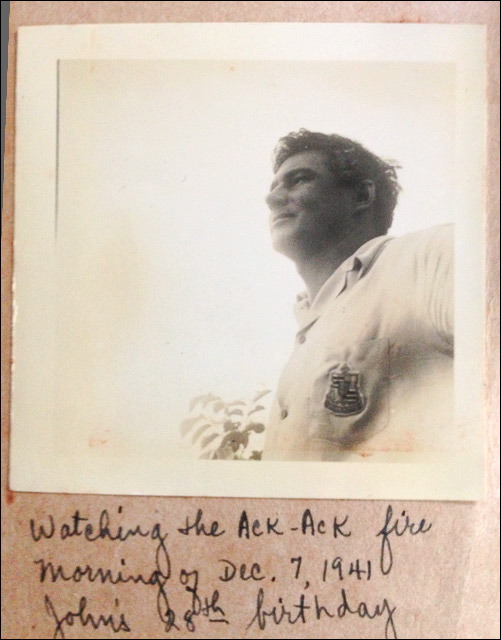
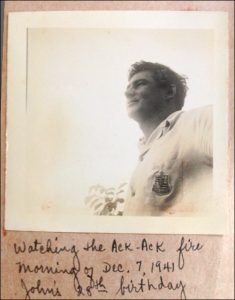
Yes, I know. It’s also the 84th anniversary of the bombing of Pearl Harbor. Through the rest of his long life, those two events–his birthday and the attack on the Pearl Harbor naval base–were inextricably intertwined.
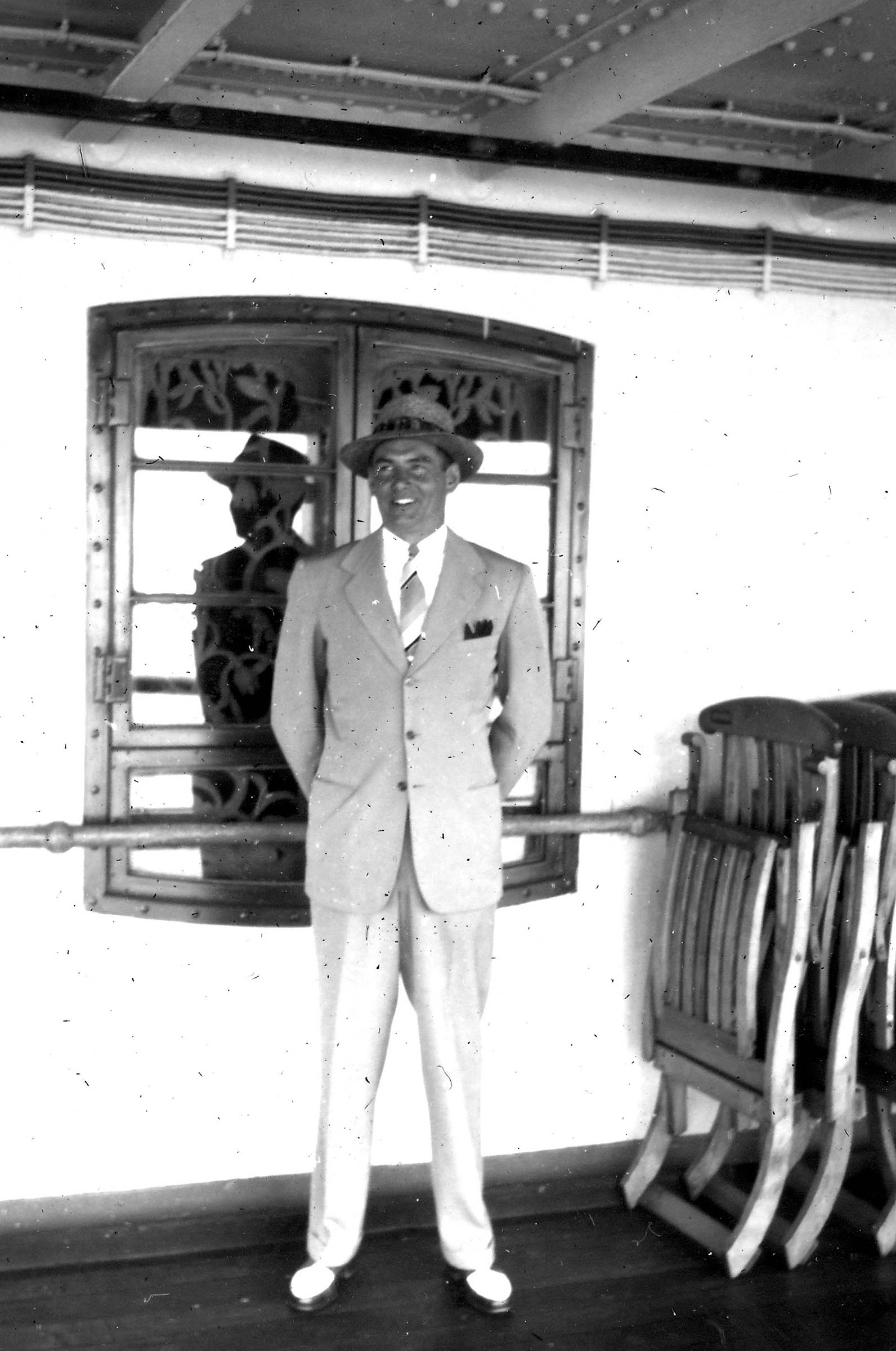
My dad, John Montgomery Lind, was born in Berkeley, California on this date in 1913, the son of immigrants from Scotland. A few years later, the family moved to Long Beach as his father sought work in the Long Beach shipyards.
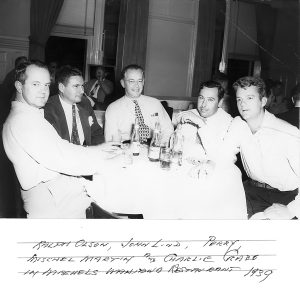
He arrived in Honolulu around May Day in 1939 after he landed a job in the Honolulu office he was working (more on that below). He traveled the islands making sales calls, and well before the end of the year he had established ties with several men who would later become well known in Hawaii’s restaurant scene (including renowned chef Michel Martin and the Weaver brothers, Spence and Cliff, who formed one of Hawaii’s legendary brands, the Spencecliff restaurants). He brought together a group that formed the Hawaii Surfing Association, and he got married to a local woman. It was, you would say, quite a year in his life.
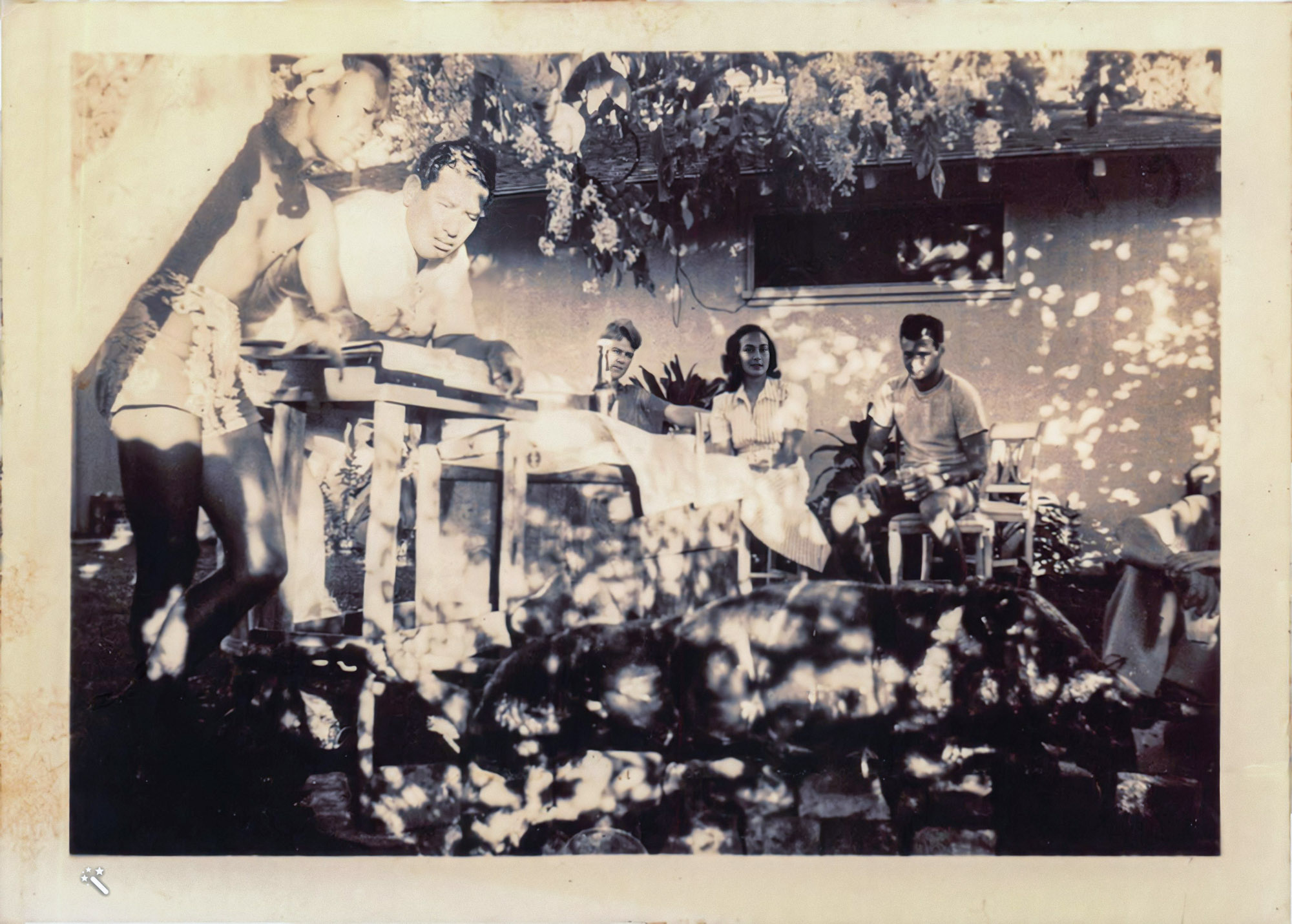
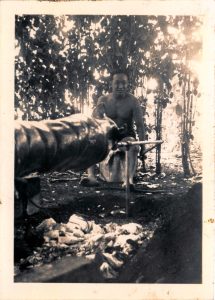
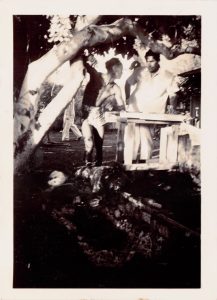
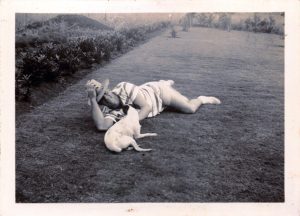
In the first photo, my dad is second from the left, and Michel Martin second from the right. The second photo is my dad with the Weaver brothers in their first food venture.
-
-

-
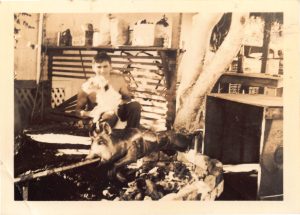
That’s my dad on the right, with Cliff and Spence Weaver, Spencecliff founders.
The story below, some of it told in his own words, first appeared here several years ago. I think that retelling it is a fitting birthday recognition.
————
I received an email last week from an author working on a book about beach culture during the Great Depression and World War II, to be published by the University of Illinois Press. He was seeking permission to use a photo from my dad’s collection, which I gladly provided, along with a higher resolution version of the file.
A couple of days later, he responded with an attachment.
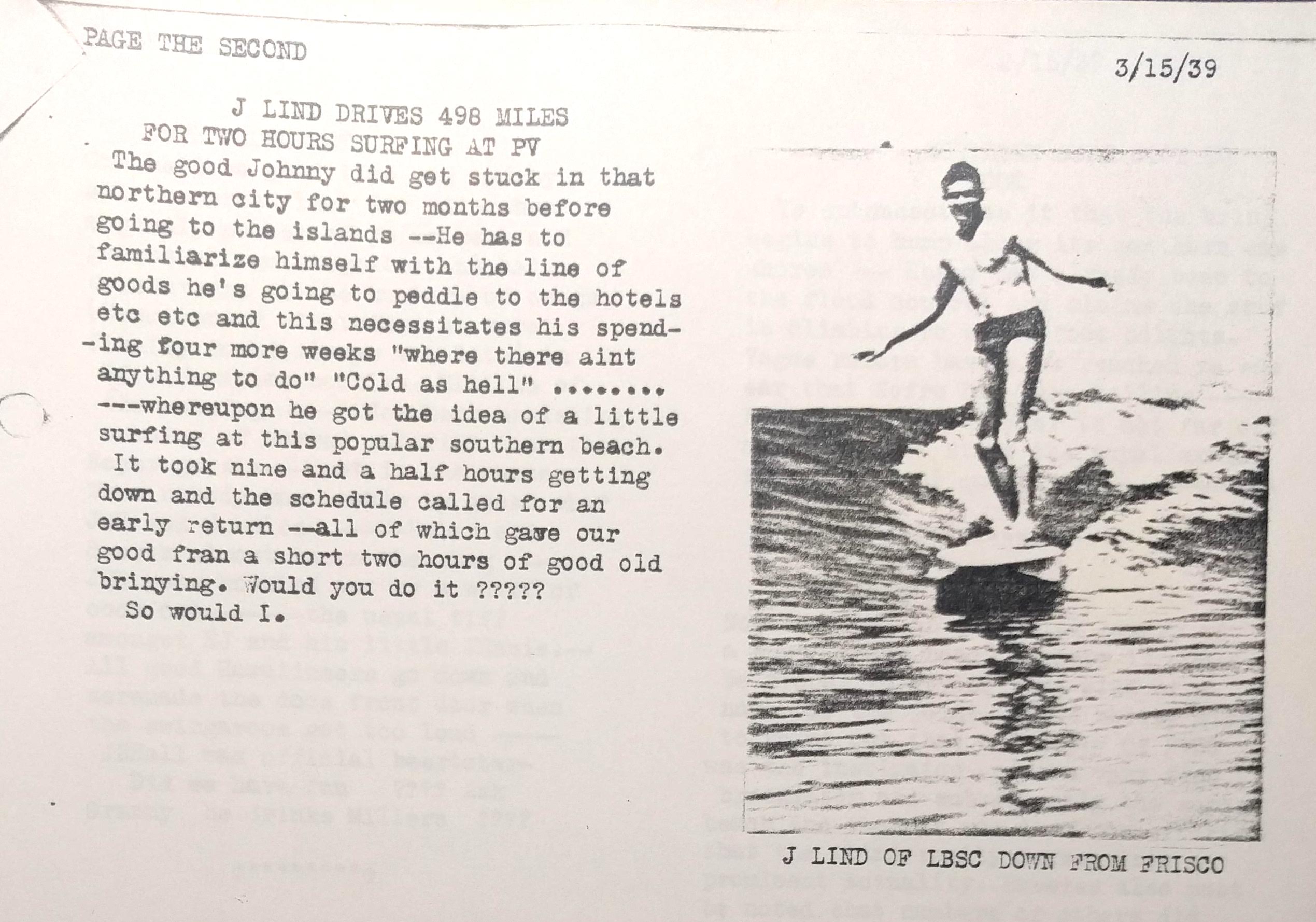
“While I was doing research for my book, I started reading through Doc Ball’s newsletter for the Palos Verdes Surfing Club. In one issue from March 1939, he mentions your father and took a picture of him surfing Bluff Cove in Palos Verdes. But the story is even better: Lind drove all the way from San Francisco for a session, then drove back.”
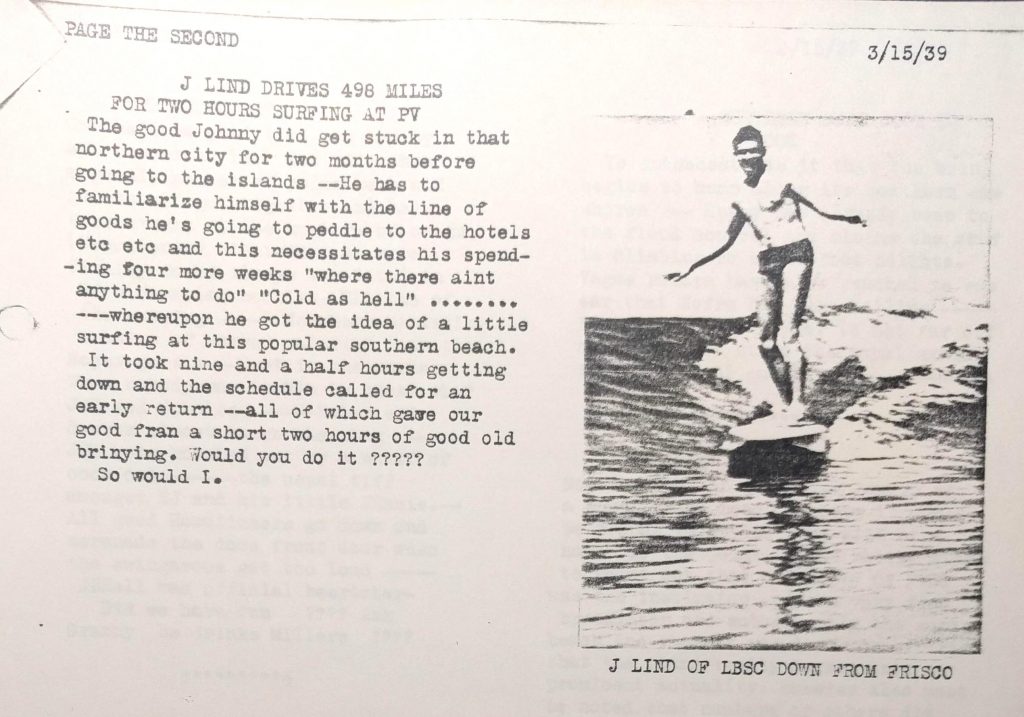
Here’s a bit of background to that story, drawn from rough notes my dad wrote in 2003, seventy years after he started working for the company that took him to San Francisco and, in a few months, to Honolulu.
After graduating from high school in 1932, my dad–John Montgomvery Lind– spent much of a year as an oiler on a freighter that made its way down the west coast, through the Panama Canal, and then up the east coast, and back.
Then in 1933, in the depths of the Great Depression, he landed a job with the Long Beach branch of the Dohrmann Hotel Supply Company, a large company based in San Francisco. He started as a stock room clerk in 1933, then became a delivery driver, and through a lucky break got into sales. He was apparently a good salesman, and did whatever he could to get ahead. He credited joining the Junior Chamber of Commerce with providing new skills and contacts which, along with his hard work, paid many dividends.
In 1938, got a tip from a factory representative of the Hobart Company that Dohrmann was was looking for someone to assist the manager of its store in Honolulu.
So my dad decided to write to the president of the company, a Mr. Sullivan, requesting an interview, using the a speech about the company he worked for as part of a Jaycee’s group he had joined.
Writing that letter to the head of the company was a big deal for him, and he knew he needed help. He turned to “a college graduate” he had met on his salesman’s rounds, Barbara Chadwick, the cafeteria manager and dietician for the Chadwick School in Palos Verdes.
She was college graduate from Boston who, when learning of my inquiry, volunteered to check it over. The letter was finalized, and as a p/s, she suggested adding, “if you ever need assistance in your Honolulu store, I would appreciate consideration.” Within a week after the letter was mailed, a phone call had been received by the Long Beach office requesting I be at the San Francisco office for an interview with the company president. This meant an overnight train trip to San Francisco that was hastely arranged. I spent about two hours with Mr. Sullivan and as a result was told to return to Long Beach and wait for further instructions.
He ended up being offered the Honolulu job, but to prepare himself, the company wanted him to spend three months in San Francisco learning about all the parts of the business. So off he went.
The supposed 90-day training period turned out to be over six months. My main assignment was to work in every department of the company, a week or so in each department. I doubt if any young employee had ever received such a break and opportunity, but I was anxious to move on and made every effort to gain as much knowledge as possible.
Incidentally my speech at the Jaycee Forum was surprisingly well accepted.
My salary did not cover my living expenses in San Francisco, but I was able to squeeze by without asking for more money. My parents had close family friends in San Francisco who arranged to make a room available for me, assuring me of a safe place to reside while in training. Dohrmann officials were also very gracious and kept me entertained on week ends as the work day was 7:30 AM till 5:00 p.m. daily.
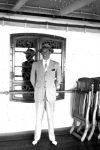
It was a great experience and following the training period I was given a one way first class ticket to Honolulu on the liner S.S. Lurline. I was able to spend the last week in at home in Long Beach and sailed from the docks in Wilmington.
I had purchased another new 1939 Dodge at the factory in Detroit but arranged to have a friend living in Birmingham, Michigan, and another friend, drive the new car across the country to California. When the car was loaded on the Lurline it had two surfboards tied on to the top, and a trunk and suit case in the boot of the car. That was it, bag and baggage, and I was twenty-five years old and moving on to a strange new environment.
The voyage on the Lurline called for dress at dinner, with white coat. A rare treat as I had n ever been in a tux beffore . It was a five day trip and one of the greatest experiences any one could possibly enjoy.