
 In a recent ad from the real estate site Redfin.com, I recognized a house listed for sale on 12th Avenue in Kaimuki.
The large 6-bedroom, 3-bath house on a 5,000 square foot fee-simple lot has a partial-ocean view across Kapaolono Community Park to Waikiki and beyond, and is being offered for $1,788,000. In one of those “small world” coincidences, the listing agents are Bruce Coppa and Kathleen Kagawa. Coppa, you may recall, was #2 on the list of top individual contributors to state and local candidates during 2021. Real estate record confirm he has held a real estate salesperson’s license since 2001, and since at least 2013 has been with Hawaii 5-0 Properties, Inc.
In any case, I recognized the house as soon as I saw the photo. Meda and I were guests there on New Year’s Eve nearly 50 years ago, invited by the owner, Dr. Dai Yen Chang. At that time, the circular front entry was painted a festive bright red, a popular color for Chinese symbolizing luck, joy, and happiness.
Dr. Chang also owned the Circle Jade Apartments, the round high-rise building on 9th Avenue just off of Waialae, built on the site of Chang’s previous home. We had moved into one of the Jade apartments in the fall of 1969 after getting married and returning to Hawaii for graduate school. We lived there long enough to get to know Chang, and one of his sons, Luther Chang, who did maintenance chores in the building.
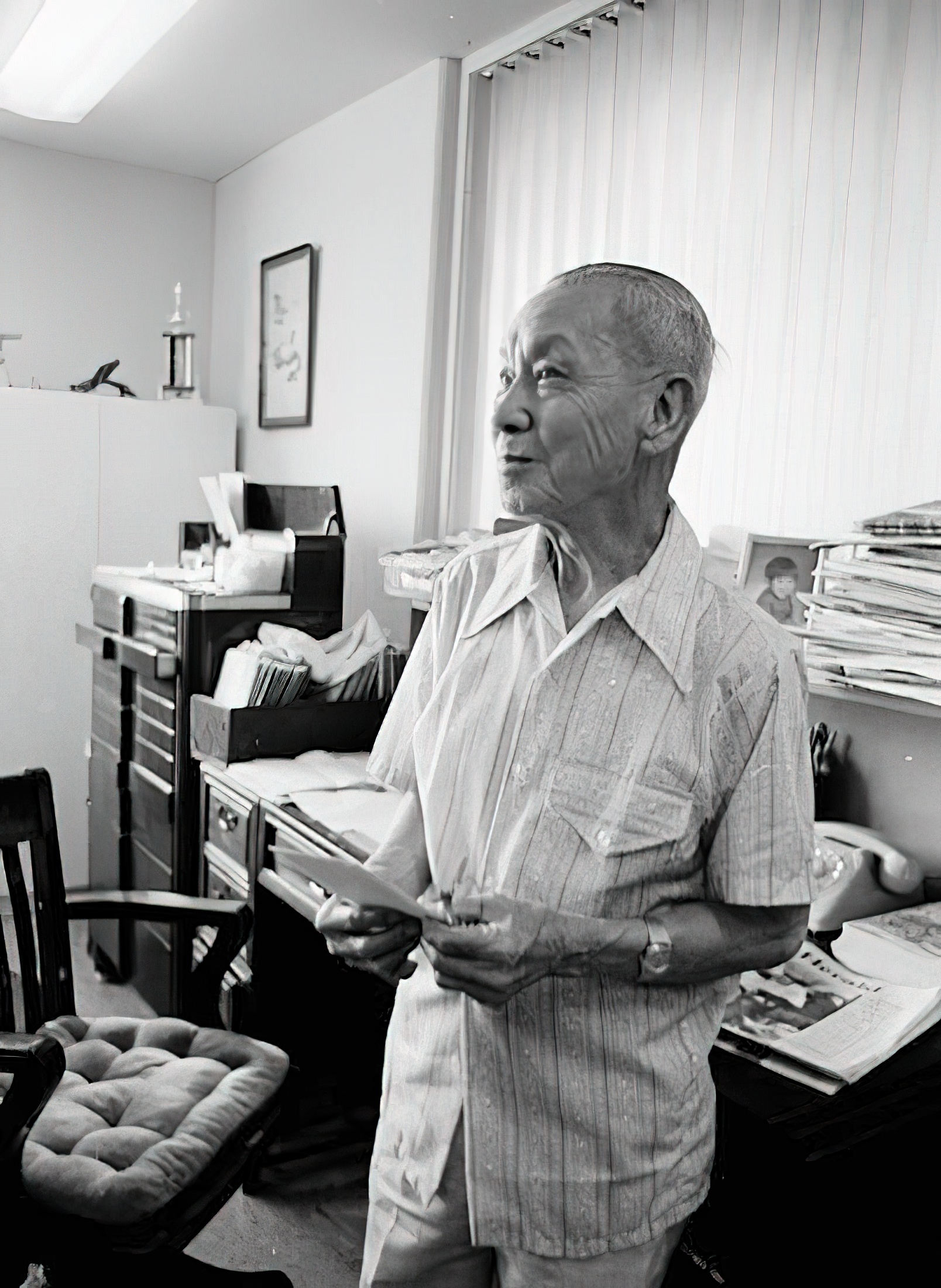
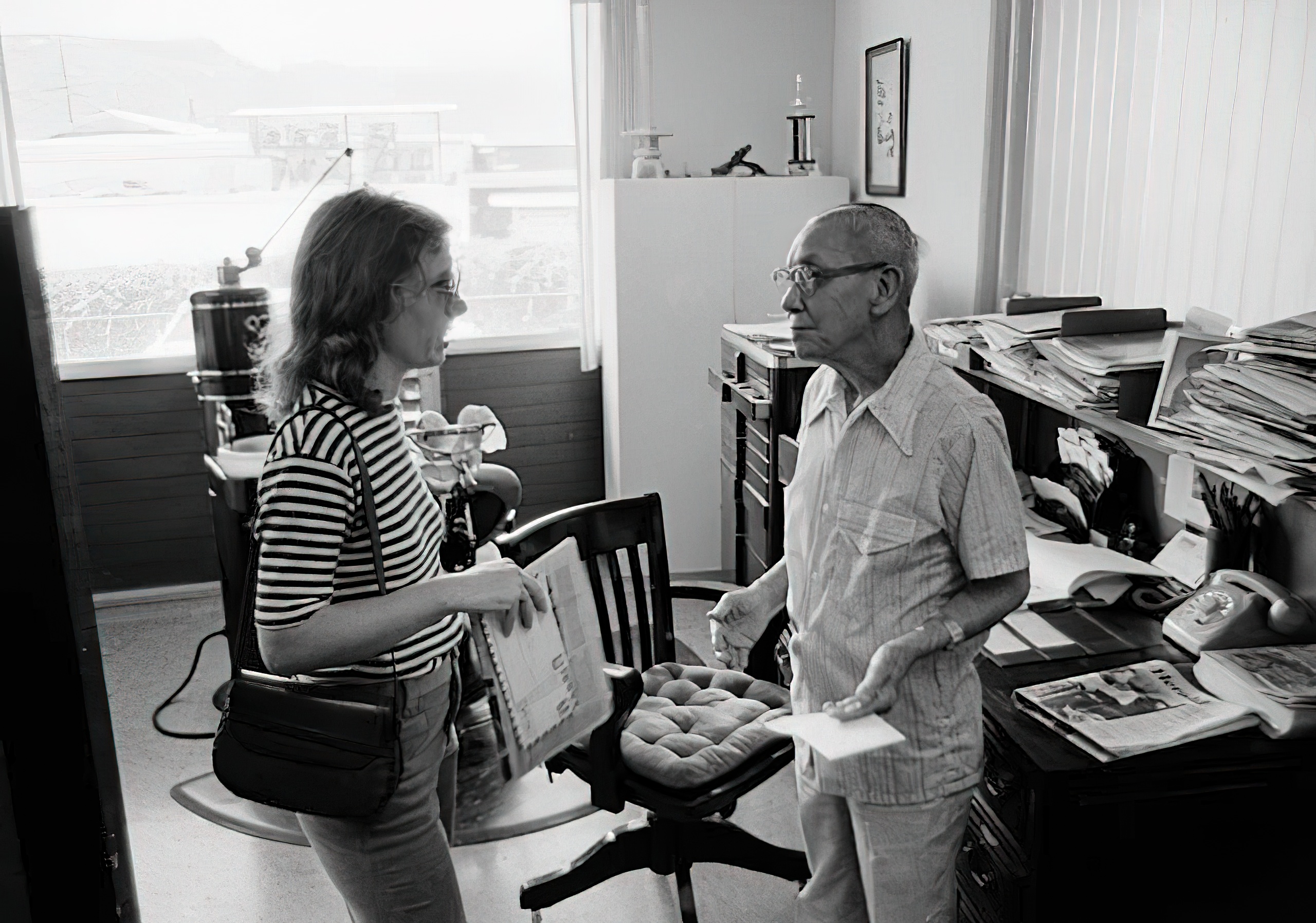 At first, we knew Dr. Chang simply as the building owner and retired dentist who had an office on the ground floor of the Jade building directly across from the elevator, complete with a vintage dental chair in which he still saw an occasional patient, usually an old friend or relative.
But it didn’t take us too long to realize that he was part of Honolulu’s history.
Chang was born in 1888, the same year as my grandmother. He was among the first students to attend Kaiulani Elementary School, which opened in 1899, and later attended the University of Southern California, before graduating from Northwestern University School of Dentistry in 1911, and returning to Hawaii, where he quickly established himself.
A book of short biographies published by the Honolulu Star-Bulletin in 1925, described Chang as a practicing dentist, and as “president of the Union Syndicate, a $100,000 realty corporation; vice president and director of the Fidelity Investment Co., dealing in real estate and securities, a director and partner in the Dewdrop Inn, has extensive private realty holdings and owns the Park Theater.”
Dr. Chang has also been prominent in civic and club affairs, being a former president of the Chinese Students’ Alliance and the Chinese University Club, and is now president of the Hawaiian-Chinese Civic Assn., a member of the executive committee of the Chinese United Society, and a member of the American Dental Association and the Pan-Pacific Club. He was formerly dental surgeon of the Kamehameha Schools.
Dai Yen Chang was a vice-president of the Pan-Pacific Club, which was part of the larger Pan-Pacific Union, established by Alexander Hume Ford to establish peaceful relations among the varied people and nations of the Pacific. Newspaper clippings show Chang worked closely with Ford in support of friendship between different races and nations. Ford is also remembered as founder of the Outrigger Canoe Club.
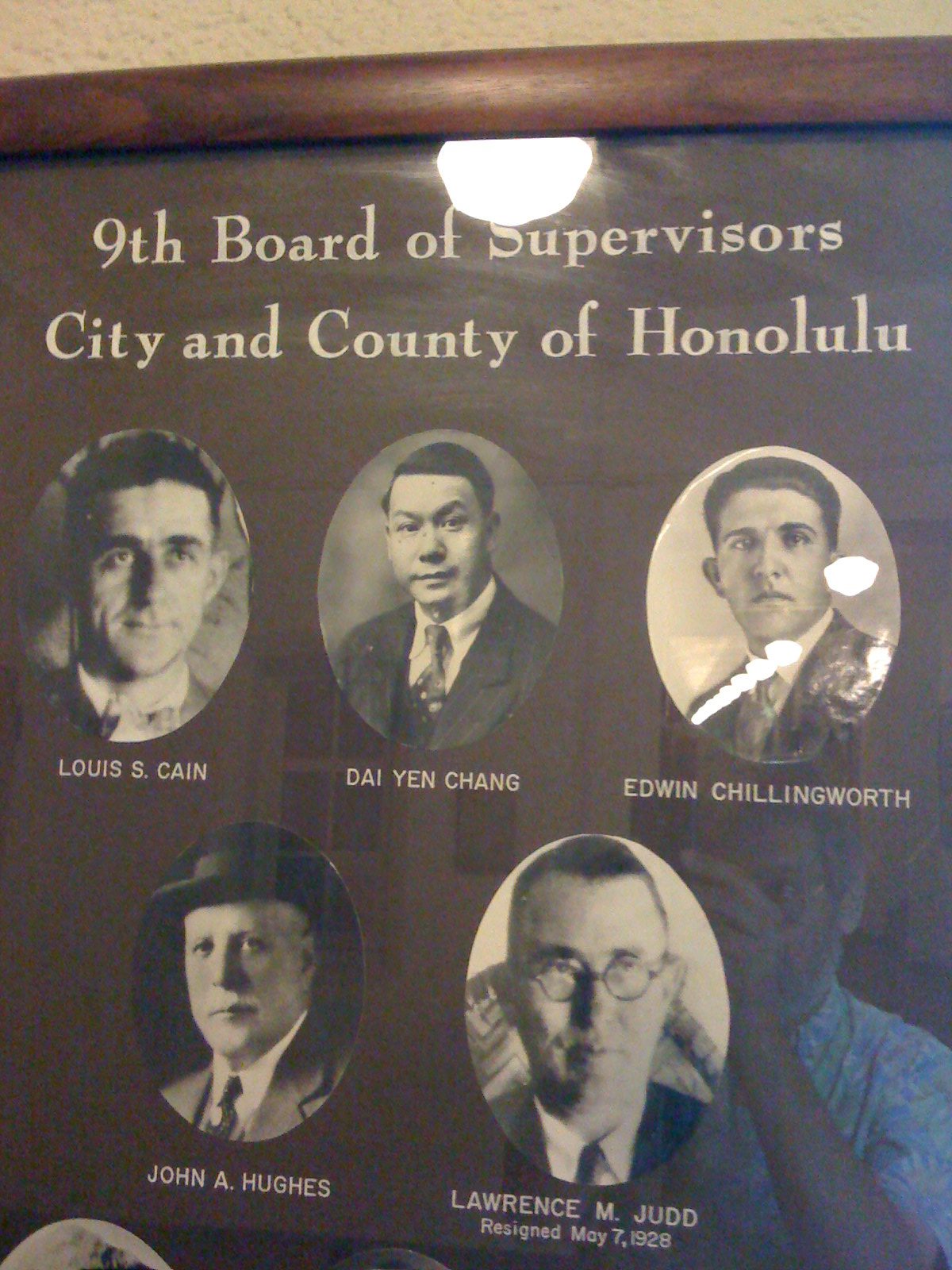 In 1926, Chang became the first candidate of Chinese ancestry to be elected to the Honolulu Board of Supervisors, now known as the Honolulu City Council. Chang, who ran as a Democrat, placed fourth among the seven winning candidates, and was just one of two Democrats elected to the board that year.
During the campaign, Chang spoke in favor of “fair play” for all nationalities. He supported creating small parks and playgrounds throughout the city so that children would not have to risk their lives by playing in the streets. He argued that this would create the greatest good for the greatest number. At one campaign rally right before the general election, the Honolulu Advertiser reported Chang had addressed a rally in Hawaiian, and followed with a speech in English.
A Honolulu Star-Bulletin article at the time described Chang as “one of the most widely-known men in Honolulu of Oriental stock,” who served on the executive committee of the United Chinese Society, the board of the Nuuanu YMCA, was chairman of the Chinese Students’ Alliance Building Fund, and treasurer of the Hawaiian Fish and Game Association.
While serving on the Board of Supervisors, Chang promoted the establishment of a municipal golf course in Palolo Valley, which opened in 1931, just a few months after the Ala Wai golf course. The Palolo course was closed when the site was taken over temporary housing during WWII, and never reopened.
Chang lost a bid for reelection in 1930 by just over 300 votes. Republicans swept six of the seven seats on the Board of Supervisors.
During most of the 1930’s, Chang had taken part in fundraising efforts for medical and famine relief to China. Chang, whose parents were from China, first visited the country in 1915, and later spent three months traveling throughout China in the first half of 1937.
After his return from China in 1937, he became chairman of a major fundraising campaign for China aid supported by prominent members of the Chinese community and dozens of community organizations. He also made the news with public calls for the US government to provide aid following Japan’s invasion of China in the summer of 1937.
However, he later described seeing misery, poverty, corruption, and opium in China under the rule of Chiang Kai-shek, and as a result was reportedly an early financial supporter of the Chinese revolutionary movement.
In 1972, Chang, then 83, became one of the first Americans to be invited to travel in China, where he was repeatedly feted for his past efforts in organizing aid to the country. Not long afterwards, he hosted a large banquet at the old Hon Kung Restaurant in Kaimuki in honor of his birthday, where family and friends heard him speak about his travels and were treated to many of the photographs taken during his recent travels.
In 1962, the city planning commission approved a rezoning Chang’s property at 1139 9th Avenue in Kaimuki to allow construction of a 16-story apartment building with businesses on the ground floor. Construction on the $1 million project got underway in 1965, and the building opened the following year.
Chang’s political connections probably gave the project traction, and it remains the only high-rise in Kaimuki.
Dai Yen Chang died on January 28, 1976, at age 87. After his death, the Jade building was sold and converted to fee-simple condominiums.
In any case, that’s a long-winded tale associated with Chang’s former home on 12th Avenue. Hopefully the eventual buyers will appreciate the history of its former owner.
Discover more from i L i n d
Subscribe to get the latest posts sent to your email.
Thank you for a wonderful story.
I lived on Kilauea between 11 and 12 Aves for many years. There it was, an intriguing house on 12th Avenue and now I know why. Fascinating story. Na mahalos for the history lesson!
Great job Ian. Realizing that i grew up and worked and played in the same district, all these details bring back a flood of memories. Never knew of Dr. Chang but he was one of the Hawaii people that accomplished a lot over their lifetime. Also note that many movers and shakers influence land zoning and development in positive and negative ways back from whatever date you want to start from and now and into the future…
Having lived on 9th Ave. in Kaimuki I find this fascinating. Thanks Ian !
I love history. Thanks for the lesson.
Mahalo Ian, fascinating history lesson. I too lived in the Kaimuki area (Matsonia dr) n love that little community!! Dr Chang was a great man.
Nice story. I” ve always wanted a round doorway. Alas, it is not in my range.
Mahalo for this story! Sooo interesting; I grew up a few blocks down Maunaloa Ave and always wondered about that house. Also always wondered about that lone “high rise “ in Kaimuki town. Didn’t realize the connection.
P.s. recently found your blog and enjoying it; your cats are so cute ?
I live on Kilauea Avenue between 9th and 10th, and this home has always fascinated me! I hope the new owners will keep the structure and not do a tear-down and build a Monster Home!
Tonight i felt like reviewing my genealogy and decided to google my great great grandfather Dai Yen Chang which led me to your article. Luther is my great grandfather. Mahalo nui for sharing this precious story and making my night. I hope his famous Kaimuki home ends up in the right hands.
I hope you found the 1970s photos of Dr. Chang, Luther, etc. If not, let me know and I’ll send you links.