
Magistrate Judge rejected second motion asking him to reconsider a 2020 decision requiring one of the co-defendants charged along with accused racketeering boss Michael J. Minske, Jr. to be held in federal custody until trial.
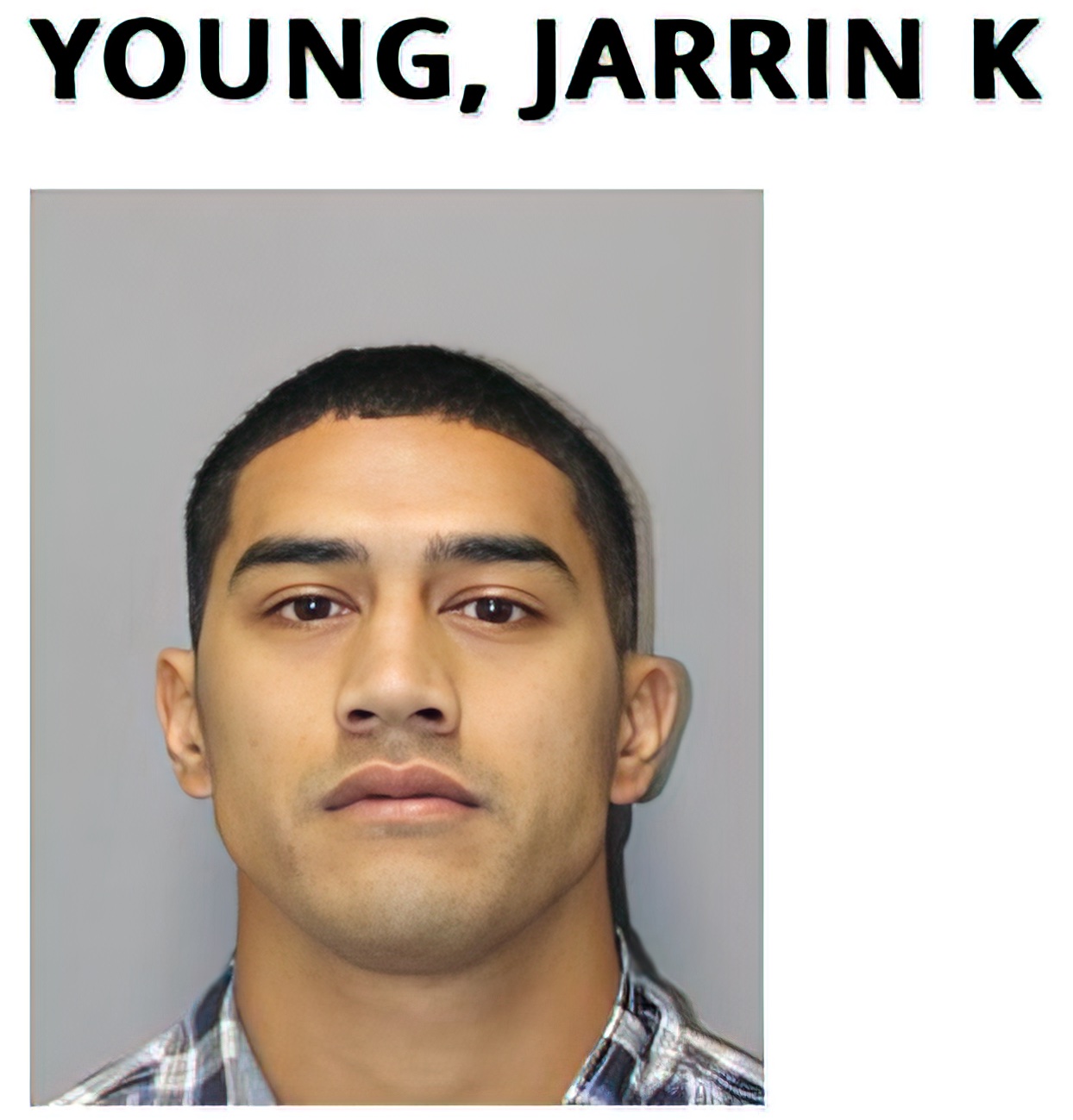 Jarrin Kalani Young,28, has already been a resident at the Federal Detention Center in Honolulu for more than 31 months since his arrest in July 2020 along with Miske, Jr. and nine other co-defendants.
By the time the trial begins, currently set for mid-September, he will have been held for 42 months.
He faces charges of participating in a racketeering conspiracy directed by Miske, conspiring to distribute methamphetamine and cocaine, and carrying a firearm during a drug trafficking crime.
Only three other defendants in the case are still in pre-trial detention, Miske, his brother, John Stancil, and Dae Han Moon, although several other defendants have pleaded guilty and remain in custody pending sentencing.
On February 9, attorney William Shipley Jr. Filed a motion asking the government to reconsider whether he should be released pending trial, now scheduled for September. Shipley said “continuing to detain him pending trial is a violation of his right to due process under the Fifth Amendment to the Constitution.”
This is Shipley’s second attempt to gain Young’s release. The first request was filed in August 2022, and was denied by Magistrate Kenneth Mansfield on September 29, 2002.
The drug trafficking conspiracy charge carries a legal “rebuttable presumption” that detention until trial is warranted, unless there is sufficient evidence provided by the defense to overcome the presumption by showing that Young is not a danger to the community, nor a flight risk.
Shipley argued this extended detenion should only be considered “reasonable” and allowed “so long as confinenent does not amount to ‘punishment of the detainee.’”
In addition, Shipley argued that the government’s argument in favor of continued detention was light on specific evidence to support the conclusion that he remains a potential danger to the community.
“ The Government nakedly claims that Defendant Young “is alleged to have participated in a racketeering enterprise that spanned many years.“ But it offers not one specific factual allegation with supporting evidence against Defendant Young himself. Not one instance of actual use of a firearm by Mr. Young in relation to the charged offense(s) is identified by a reference to actual evidence,” Shipley wrote.
In addition, Shipley said a spot in a transitional residential program “has become available” constituted a “release plan” that supports an end to detention.
The government’s reply in opposition to Shipley’s motion was direct. It argued that nothing significant had changed in Young’s case since the decision last September.
Further, the government quoted from Mansfield’s order at that time:
While the length of Young’s pretrial detention in this matter weights in favor of the defendant’s claim, the Court finds that any delay resulting in Young’s extended detention is not imputable to either party. Rather, the court finds it is the extraordinarily voluminous nature of the discovery produced by the Government in this matter—possibly not onlyh the largest in the history of this district, but also one of the largest discovery cases currently in the country—and the defenses need to review that discovery, which has cause any delay.
The government’s opposition also noted that Mansfield’s previous order “considered Young’s criminal history, drug use, and record of repeated and recent probation violations.”
And the “new plan” presented by Shipley is, according to prosecutors, nothing more than a vacancy in transition housing, without evidence that Young would be eligible to take that opening, and no plan for a third-party custodian to step in when he is later released from the transition housing.
In short, the government argued, it was not really a “plan” at all.
At the hearing held on Friday, March 3, Mansfield took less than 20 minutes to reaffirm his earlier ruling, holding once again that there is “no condition or combination of conditions that will reasonably assure the appearance of the defendant as required and the safety of the community,” and that the motion for release was denied.
Young was returned to custody at Honolulu’s Federal Detention Center.
Discover more from i L i n d
Subscribe to get the latest posts sent to your email.