Category Archives: Economics

We’re back home and now facing new issues

We arrived in Honolulu a few minutes ahead of schedule Tuesday night.

I have a scheduled meeting with my Honolulu oncologist next week to set up the schedule for chemo and immunotherapy. That’s where the rubber hits the road, I guess.

And now a series of new decisions have thrust themselves into my immediate attention.

Here’s an example.

Our lease on a 2024 Nissan Leaf expires in September, which entails a choice. We can buy the vehicle outright at a price set in our original lease. We can sign a new lease on a new vehicle, which the dealers are always happy to
accommodate. Or we can just turn the car back to the dealer and walk away. Or, of course, shop for the best deal on a new or used EV from other dealers.

And here’s the problem.

I can no longer assume that I’ll be around to see the end of a new 3-year lease, as things could take a bad turn for me during that time frame. I’ve been handling our financial affairs, including keeping track of car expenses, etc., and I would want to leave the least possible mess for Meda to have to deal with if I were not here or no longer able to manage these affairs.

Buying the car would not be wise, since EV prices have dropped since 2024 and today, meaning we would be paying too much if we purchased pursuant to our original lease contract.

So do we need a car or not, given the uncertainty about my own future? We don’t drive much at all, not more than 4,000 a year. But we do have good friends in Kaneohe and in Kaaawa, and having a car makes it possible us to visit them somewhat regularly.

To complicate things, Meda basically stopped driving several years ago as I took on our routine chauffeur duties faster she retired from UH. So if I were gone, leaving a car in the garage would create a big headache for Meda to sort out.

We could go carless, but it’s not a simple decision. At least one of our closest friends made this move several years ago. With ride share and delivery services, and our central location in Kahala, it would probably work, although I’m not sure how we would continue to see our windward friends.

I haven’t done even a rough assessment of whether going carless would save or cost us money compared to a new lease or purchase of another vehicle.

And giving up a car is a wrenching rite of passage to a different lifestyle with lots of psychological and social implications.

Meanwhile, the clock on the soon-to-expire lease is ticking.

Next step for me is to solicit your advice. Please feel free to share by commenting here or via email ian(at)ilind.net.

Then I’ll likely talk to the dealer and find out how they see our options.
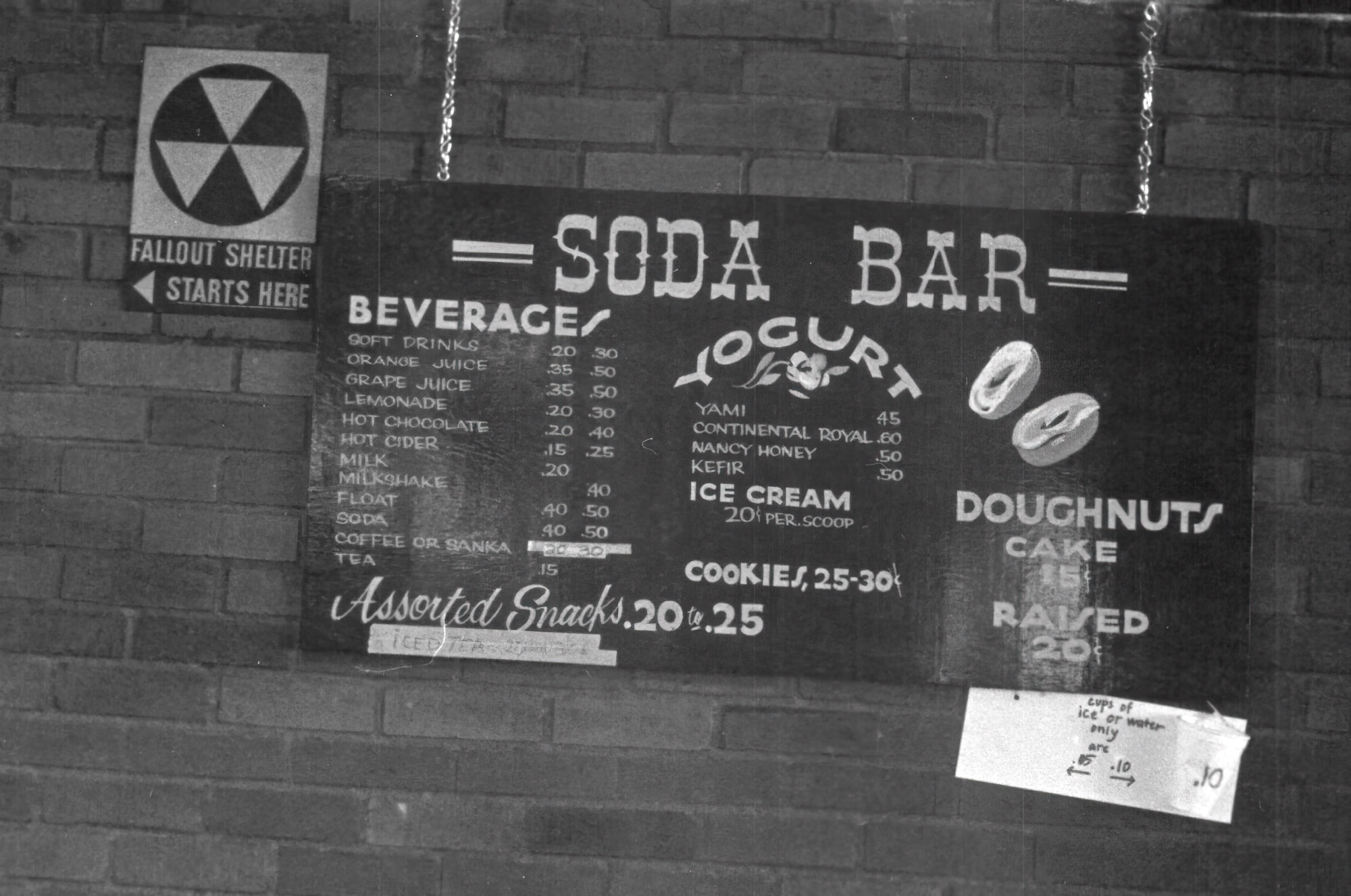
Check these prices from about 50 years ago

I’m having fun digging back through previously scanned vintage photos, which are now much easier to improve through digital processing.

Here’s a stand-alone photo, a menu board in a shop in or near Eugene, Oregon, somewhere around 1977 (give or take several years).

Hard to believe the prices!

Click on the photo to see a larger version.

Understanding the impact of increasing inequality in the U.S.

“The Last Class” is documentary film released earlier this summer that follows the last class taught by Robert Reich at the University of California Berkeley before retiring after 40 years of teaching.

The class, “Wealth and Inequality,” offers “a deeper look at why inequalities of income and wealth have widened significantly since the late 1970s in the United States, and why this poses dangerous risks to our society.”

Besides his long career as a university professor, Reich is a well-known social activist and commentator, and served as Labor Secretary in the Clinton administration.

Here’s the movie’s official trailer.

This morning a friend let me know that Reich made the entire class–all 14 lectures, each about 1-1/2 hours long–available to watch for free on YouTube.

What an amazing resource!

It would be a big investment of time to work your way through the class lectures, but undoubtedly well worth the price of entry!

Here’s his introduction to the first class session.

Welcome to my undergraduate course on Wealth and Poverty. This is the first of fourteen classes.

The questions we’ll focus on today: Is some inequality both inevitable and necessary? At what point, if ever, does it become a problem? What’s the difference between income and wealth inequality, and which is more important? How do income and wealth inequalities overlap with race and gender? And the real puzzle: why did these inequalities begin to widen so dramatically starting in the late 1970s and early 1980s, and continue widening since then?

Even though this isn’t a real classroom and I’m not with you in person, I hope you find this both enjoyable and challenging. Don’t expect to learn by just watching and listening, though. I want you to be an active learner — which means answering questions I pose and putting various puzzle pieces together. I’m not going to tell you what to think. I’m going to try to provoke you into thinking harder and more deeply.

If you wish, I’ve shared some select readings from the syllabus for you. They’re available at: https://robertreich.substack.com/p/fi…

Ready to dive right in?

Here’s Class #1. Links to each of the lectures can be found using the link earlier in this post.

Honolulu is also losing 20-somethings

The San Francisco Chronicle has a feature story today trying to decipher why young adults are leaving the city (“Why 20-somethings are abandoning San Francisco — even when they can afford it“). There may be a pay wall, but I’m not sure.

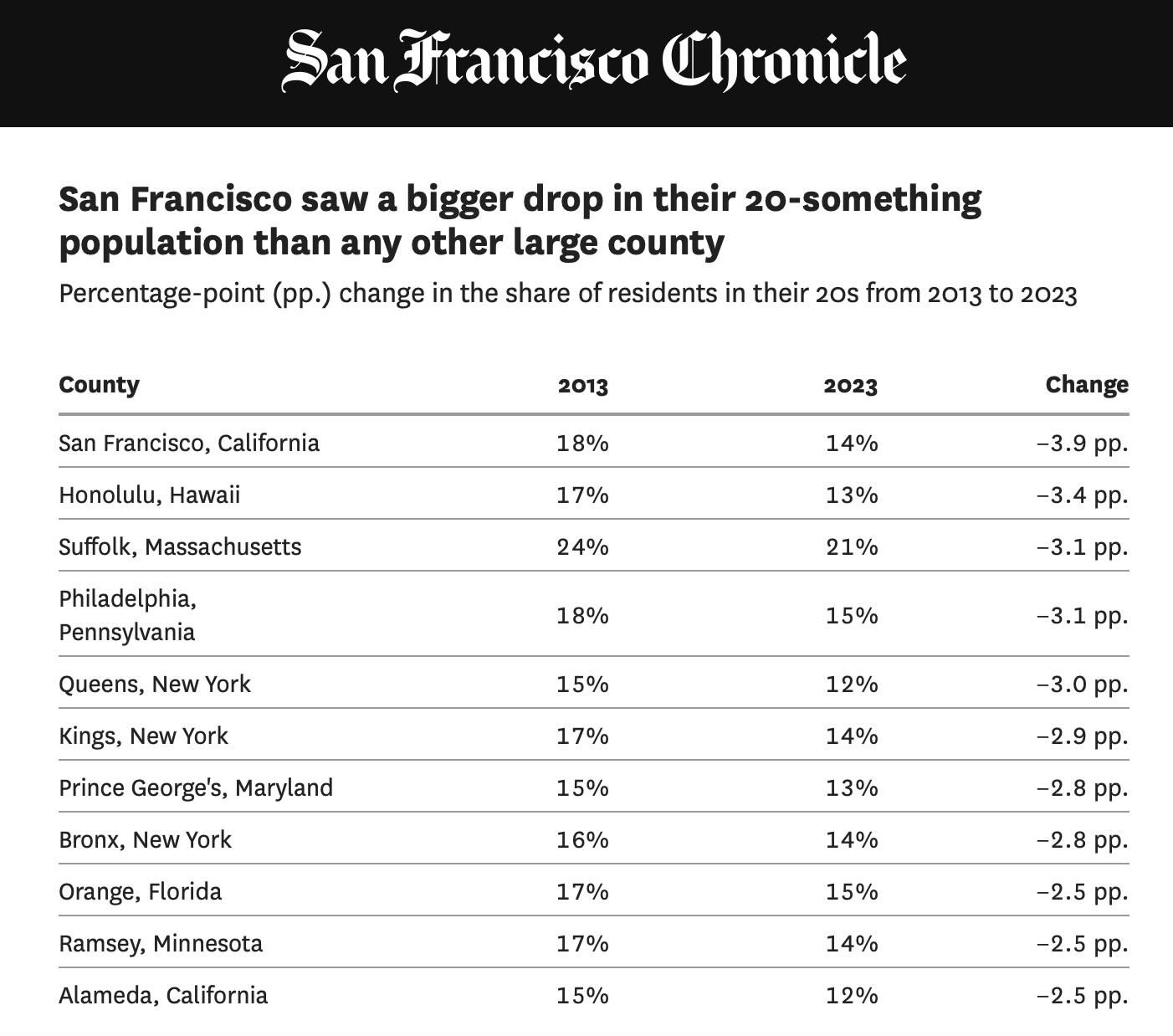
Overall, from 2013 to 2023, the share of 20-somethings in San Francisco County dropped from about 18% of the population to about 14% — the largest such decline of any major U.S. county and nearly quadruple the national drop. The data prompts a big question relating to the city’s economic future: Is this the mere ebbs and flows of San Francisco’s demographics at play, or the start of something much grimmer?

Here’s the relevance to us here in Honolulu. The article includes a table showing the decline in the 20-something population across 11 cities, with San Francisco at the top of the list with the greatest decline.

But second on the list, only slightly below SF, is Honolulu.

It appears we have a similar problem.