
Category Archives: Genealogy/family

Another installment of Eleanor Knowlton’s Memoirs: Reaching California

More from the…

MEMOIRS OF MY GREAT-GREAT GRANDMOTHER,
ELEANOR HOWARD (THOMAS) BRITTAIN KNOWLTON
November 1834 – August 1908

Preparing for another attempt to cross the Sierras. Eleanor says she enjoyed the frontier life. She did not entirely trust Uncle Sam’s soldiers. The men bring graybacks from the soldiers’ camp.They arrive in Placerville, California, then continue on to Sacramento.

MRS. THORNTON was a woman of refinement and wanted to go back to her people in New York so the Vigilance Committee sent her and her son back there. The boy was only seventeen years old. His mother died soon after reaching New York. It was better so, for whenever her mind clouded she raved over the terrible deeds her husband had committed.

With the hanging of THORNTON and EDWARDS and with ADAMS banished from the territory the vigilance felt that they had pretty well broken the gang up. They still had to get the two men who had traded with me at Lawson’s Meadows and afterward we had caught with our cattle. They were LUTE OLDS and JIM LILLY. Lilly was caught stealing after Nevada became a state and put in the states prison there. Well, I do not want you to think that I am an egotist when I tell you that I was the only woman the Vigilance took into their confidence. Before I go on with the rest of my story I want to tell you what became of BILL THORNTON. [Note by Bonnie Stevens: The typescript copy says “Bill Thornton”, but we already know that Bill was the father who was executed. Three paragraphs above Eleanor calls the son “Jerome Thornton”. That is likely the person she is referring to here.]

Not long after his mother’s death he came back to Nevada and became a gambler. At her parents home he met a MISS MELICE TRUE. She was a nice and pretty girl. She often stayed with me and helped me with the children. Thornton fell in love with her and per parents objected to her marrying him. They sent her to California to a boarding school and as soon as she was of age he came to the school and stole her away and married her. I do not know what became of them after that. Her parents came to California to live.

It is now late in the fall of 1858 and we are going to gather our cattle and make another attempt to cross the Sierras. WILLIAM BOYD is going with us again and if we are successful in getting ourselves and our cattle across and into California, my trip across the plains will be finished. I will not be sorry although I must say that I have enjoyed the frontier life and have always enjoyed traveling.
Continue reading

Anniversary 2024, Part 2

Our Auckland visit has turned into a family affair.

Friday, August 16, here in Auckland was the 15th, our anniversary, back in Honolulu.

Meda and I had celebrated the night before, but celebrated again on Honolulu time with several Lind “cousins” who live here in Auckland.

We all descend from a John Lind born in August 1800 in West Calder, Midlothian, Scotland. He was my great-great-grandfather on my dad’s side of the family.

Pene Quin’s grandfather and my grandfather were brothers.

Gaewyn Boler and Lynette Clough’s grandmother, Jean Little Neely, was my grandfather’s 1st cousin.

Jean’s father, also John Lind, later sailed to Hawaii, arriving in 1910, and stayed. Lind’s descendants are widely known in their community of Hana, Maui. His daughter, Jean, remained in Scotland with her mother and eventually married a New Zealand soldier who had been sent to Scotland to recuperate from mustard gas exposure after WWI, and the couple then returned to New Zealand.

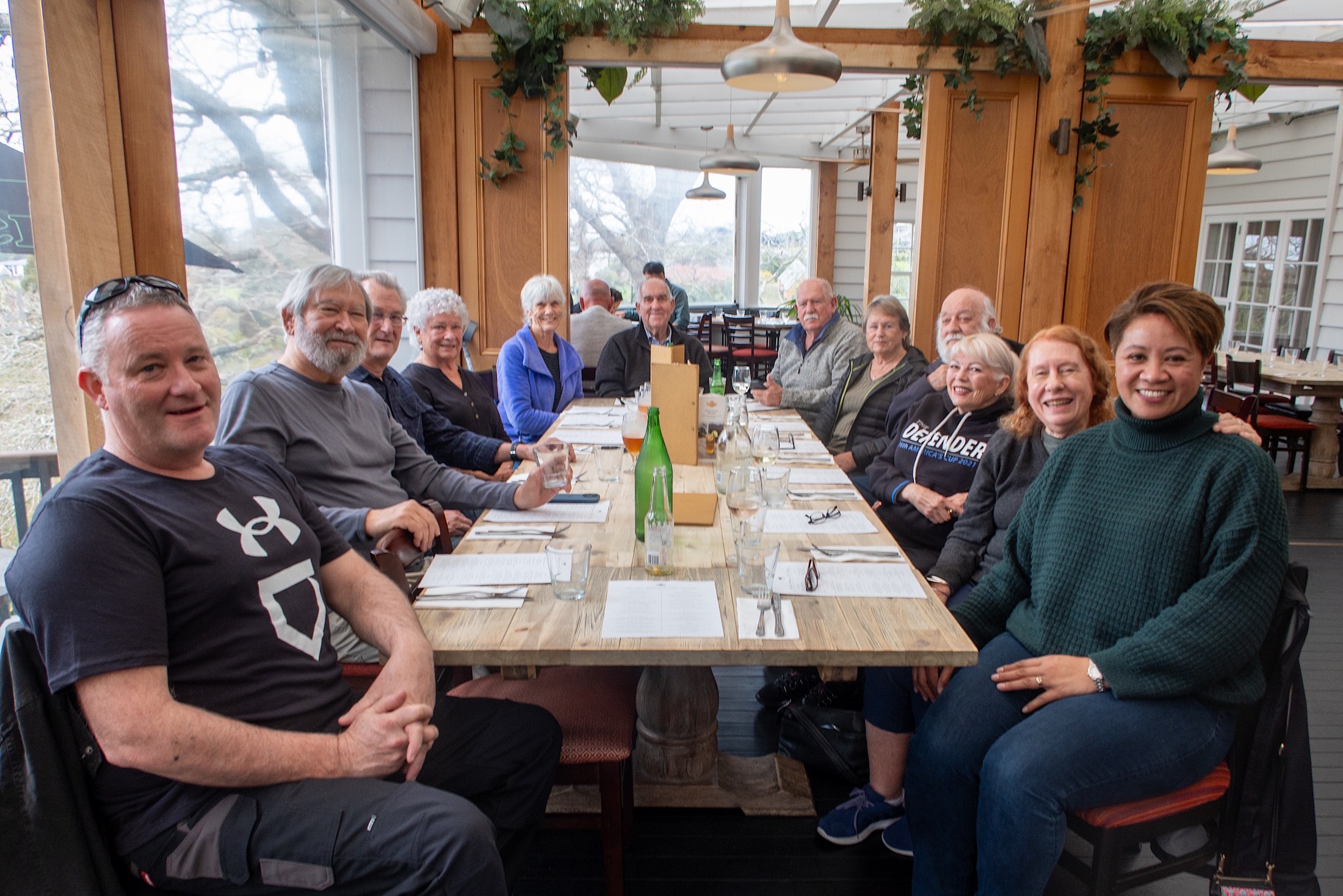
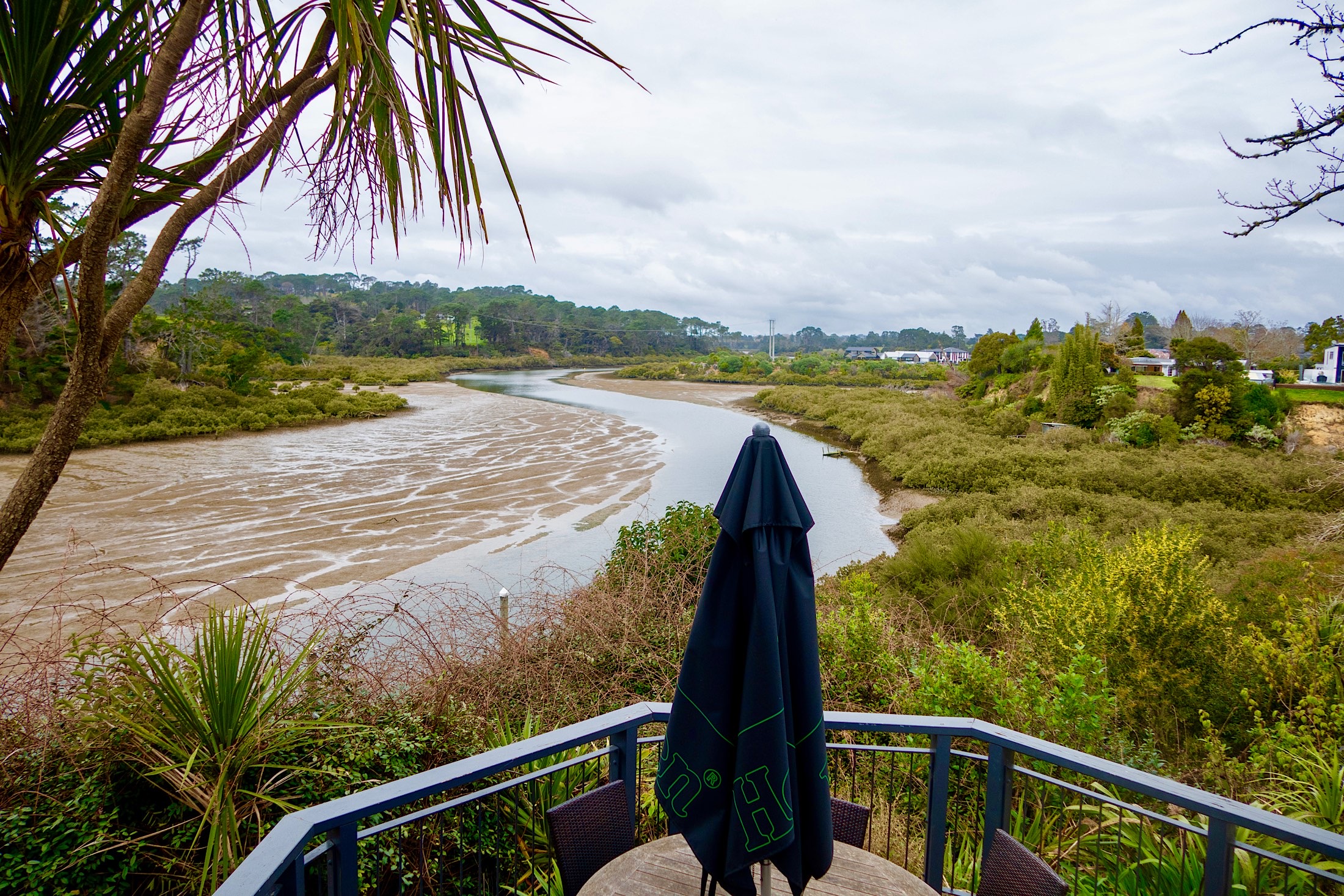
Gae’s son, Brad, organized lunch for the whole gang of us, with our spouses, at The Riverhead, billed as “New Zealand’s Oldest Riverside Tavern” that has been serving guests for 160 years. It is located along the upper reaches of Auckland Harbor.

A ferry from Auckland still regularly makes the trip up to Riverhead.

In any case, here’s our festive group.

Starting at the Left, front: Brad Heald (cousin); me, next to Steve Moore and his wife, Gaewyn (cousin); Lynette Clough (cousin) and her husband, Graham, at the end of the table; Paul Silva (cousin) and his wife; Richard Quin and his wife, Pene (cousin); and then Meda and Sapi Siavalua, who is married to Brad.

Eleanor Knowlton’s Memoirs: Setting Out

MEMOIRS OF ELEANOR HOWARD (THOMAS) BRITTAIN KNOWLTON
NOVEMBER 1834 – AUGUST 1908

Preface

June 19, 1902
About three years ago, I was earnestly requested by my son-in-law, Theo Madsen, to tell him something of my ancestors in my own biography. Owing to my age, sixty eight years, I deferred the task, as it seemed to me, it would be a tedious one, and furthermore I had never interrogated him on the subject of his family. My remarks may be brief but I will show by relating what I know of them that I am not ashamed of any of my ancestors or of my own life.

Setting out

I now will try to give as much of the pleasures and hardships of my trip across the plains.  In the year of 1857 it was thought to be very uncertain for a man to get through as the Indians were very hostile and grass and water scarce.  My husband had a drove of cattle and he once thought of leaving me in Missouri.  I objected, so when he found that I was determined to go with him he made arrangements for me.  His brother William finally decided to come along with us, bringing his wife and little girls.  He had some fine milch cows.  His wife’s father had a large tract of land which he let us turn the cattle on and so his house was our starting point.  My father’s and sister’s homes were about fifteen or twenty miles from there. 

I spent a few days with them but they would not bid me goodbye, said they would come down to Clinton’s place to see me off. Clinton was William Brittain’s father-in-law, so all the relatives on both sides congregated there on the morning of May 16th 1857 to bid adieu to us ‘forever’.  To my surprise Father, family and all came and I bade farewell to all but my sister whom I thought would take it hard  But when I said goodbye to her she answered, “Goodbye, sister, a rolling stone never gathers any moss,” and I answered back “nor a setting hen any feathers.”  My father and Clinton came with us as far as a station in Kansas which was called “One Hundred and Ten”.  Then another separation:  Clinton persuaded his daughter to go back with him.  He tried to get me to go back and her husband William Brittain said that if I would turn back he would never let me want for anything. 

He had decided to stay in Kansas, sell his cattle there and go back to Missouri.  His wife and little girl stayed also but the child died before he had his cattle disposed of. 

At last father came to me and said, “Well, daughter I see you are determined to go and risk the consequences.”  I said, “Yes, Father, I will never turn back.”  He then said, “What if your eyes get worse and you go blind, what will Dave do with the children?”  I replied that my eyes got this way in Missouri and maybe they would improve if I continued my journey.  He then kissed me and said, “Although I may never see you again I am glad to see you so determined to go on with what you have undertaken.” 

I bade Brother Sam[1] goodbye and told him to get a move on him or he would be left behind some morning.  Every one else was ready to start and Sam was just soothing every last wrinkle out of his saddle blanket before putting the saddle on.  I told father goodbye the second time and said, “I will be back.” 

In fourteen years [I came back] in the [railroad] cars to Missouri, but by that time he was in Texas.  He was a major under General Rice in the Civil War.  He did several very daring things and his life was threatened if he was ever to come back to Missouri.  One of these things was to march to Governor McClurg’s dry goods store and take everything in them.[2]  He made an invoice of what he had taken.  At the time it was reported that Governor McClurg and others had threatened Father.  The Governor came twenty-five miles to see me and to tell me that Father could come to see me whenever he liked, that he himself would have done the same thing in war time, had he been as brave as my father.  My daughter Helene spent two weeks with McClurg’s daughter shortly afterwards. 

I decided to go to Texas to visit my father but the yellow fever was very bad so I did not go, so the last time I saw my father was on the Kansas plains.

After we parted there I was almost blind.  I had two little girls, one two and one three months old.  I had to sit in the wagon with blue blankets hung round it to keep the light from my eyes.  My husband began to get discouraged and said that he would turn back if I would.  I said, “Never,” and that was the last I heard of turning back. 

We were now about ready to cross over the Kansas line.  We did not travel but a few miles a day as we had ox teams and a drove of cattle.  We had to have a man go ahead always to look for grass, water and wood.  We never looked for Indians.  It did not see much the first part of the trip.  There were trains for miles and miles ahead of us and we were about the last train crossing the Missouri River, and that was why Mr. Brittain and brother wanted to turn back.  They said that we were too far behind and that the grass would all be eaten off, but we found plenty up to the Platt River. 

Here my troubles commenced. 

Notes

[1] Eleanor’s brother Samuel Thomas was about 2 years younger than she, and the next below her in the family. Samuel was apparently born in Tennessee about the time James Jr. moved his family to McMinn Co. from Kentucky.  He never married, and died in Nevada without issue. 

[2] Raid on Governor McClurg’s store:  A summary of the Draper-McClurg family papers (1838-1981) held at the Western Historical Manuscript Collection, Columbia, Missouri is posted at 222.umsystem.edu/shmc/invent/3069.html.  In that summary is the following statement which supports the fact that the raid happened.  It is easy to see how someone who felt himself so badly victimized by what he perceived as an unruly mob would do whatever he could to keep those whom he felt were responsible out of his state. 

“Joseph W. McClurg was a prominent merchant at Linn Creek, Missouri, prior to the Civil War.  He represented Missouri in Congress for three terms, then was drafted into the governorship of Missouri, served from 1869 to 1871.  He was an intensely religious man, as most of his writings reflect.   While he was in Washington D.C., rebel raiders destroyed his store in Linn Creek, causing financial reversals from which he never recovered….”


Next: Nebraska to Wyoming

Previous

On to Missouri” May 25, 2024

Crossing the Plains from Missouri to Nevada in 1857,” May 21, 2024

An unexpected twist in the family tree

Every once in a while I wander back and browse a bit more through the results of several DNA tests I’ve taken, and end up wasting more time pondering the mysteries they reveal.

Here’s one of them.

I have a 2nd cousin–our grandmothers were sisters, and we have always known that we descend from common great-grandparents on our mother’s Hawaiian side of the family, Kina Kahooilimoku and Robert William Cathcart. In recent years, we’ve gotten to be good friends, and I’m closer to him than any other known cousins. Meda and I both met and spent a little time decades ago with his grandfather, and with his father, so we’re familiar with the family ties.

But the amount of DNA we share is significantly less than would be expected of a 2nd cousin, according to Ancestry.com. According to the company’s calculations, there is only a 3% chance that we are 2nd cousins, versus a 27% chance we are half-second cousins. The latter would mean that our grandmothers were not sisters, but half-sisters. And, since it’s hard to misidentify a child’s mother, it would likely mean that one of us traces back to a different great-grandfather.

This came to my attention when two women about my age, sisters, showed up on my list of matches with nearly as much DNA overlap as my known second cousin. And they have an associated family tree identifying their great grandfather as William Dennis Toomey.

Hmmm, a clue.

My great-grandmother, Kina, had children by three men during the mid-1880s. Two of those children by William Dennis Toomey, followed by three children attributed to Robert William Cathcart.

So I am trying to evaluate a working hypothesis to account for less shared DNA with a “known” 2nd cousin on my Cathcart side than expected, and a DNA match with sisters descended from Toomey.

Could my grandmother have actually been a daughter of Toomey?

There’s some family lore in favor of this hypothesis. My grandmother, Heleualani, apparently bore a striking resemblance to her half-sister, Florence (Flora) Toomey. My mother recalled them having the same stocky body type, similar hair and facial shape. And in some photos of events in which they were both present, my mother wasn’t able to easily tell them apart.

That was the possibility that came to mind first when I saw Toomey on the family tree of those two sisters on my DNA match list.

But there’s a key against this. If they are descended from Kina and Cathcart, we would be 2nd cousins, and the amount of DNA we share should be greater than the cousin I now suspect might be a half-2nd cousin. And that’s not the case. But DNA is not inherited in a rigid pattern, so all these probabilities are just that, probabilities.

And there are many other possibilities, of course.

It’s complicated. I’ve done DNA tests with different companies, and uploaded my DNA results to a couple of others to see matches in their data bases. Now, using these different testing systems, I’m trying to test different hypotheses. If my great-grandfather was Toomey rather than Cathcart, what differences would I expect to see in my list of DNA matches? Are there other people on my list of DNA matches with Cathcart or Toomey in their family trees? Any additional clues there? It will help if I can eliminate one or more of the most plausible explanations.

And then there’s another background issue. My great-grandmother was from Hana, and a number of generations lived in that area between Keanae and Kaupo. The population was relatively small, intermarriage was common, creating problems discerning direct genealogical connections from the background of shared DNA.

Ancestry.com has an algorithm that attempts to correct for this by screening out the DNA “noise.” How well this works is, well, another unknown.

While trying to think through all this, I stop. Does it really matter? If this branch of my family tree turns out to have taken an unexpected turn, so what? Am I a different person that I previously thought? Is my connection to my cousin different? No, I don’t think so. But then why worry about it? I’m not sure.

It’s more that this expected DNA finding creates questions in my mind that I would naturally would like to answer. So it takes its place alongside other questions posed by my DNA results. Why do my Lind family DNA matches suddenlly disappear four or five generations back? What or who is the family link to the large number Australian and New Zealand “cousins,” including lots of Maori?

It’s at this point that I usually put the whole matter aside again and turn my attention to more immediately productive things.

But the nagging questions continue somewhere in the back of my mind.