Category Archives: Personal

Eleven years and counting

My father died on Octobe 23, 2010. It’s been eleven years. Head shake. It doesn’t seem that long, except when it seems much longer.

I’m reprinting a post written a couple of days after his death. It reminds me what living through his death felt like.

First posted October 26, 2010.


empty bed

My sister and I returned to my father’s nursing home later in the day of his death. Their staff had already taken down the photos of each of our cats that had been on the bulletin board, and put magazines and books, stacked up over the past two years, into a box on the floor under the window. We stuffed most of his clothes into clean garbage bags, and decided to donate them to the facility, where they will be reused by other men. His shoes, some with lots more wear in them, would go to Goodwill.

We carried out a small chest of drawers Bonnie had put together for him, and his walker, two photographs taken on May Day 2009, and just a few odds and ends. The rest stayed behind as we walked, for the last time, back down the hall to the nursing station, past the common room that his mind often transformed into the 1940’s Commercial Club on Bethel Street, and to the elevator, down to the small lobby, and into the cramped parking lot.

There just wasn’t much left.

A friend from Austin, Texas left a response to my comment about my dad not returning in my dreams. She wrote:

My father and I have a deal: when he crosses over, if it’s at all possible, he’ll get back in touch to tell me what’s up. That said, I’ve had subtle signs from those that have passed that all is well.

You’ve had a long good bye with your dad, so watch for those subtle signs – it could be documents you stumble across that make a mental connection, a ringing phone, a person who comes into your life with a message, or even an emotion/vision that comes over you that you know is from him – you never know. It’s mysterious and wonderful, this continuum of life.

Subtle signs?

I got up at just about my normal time Monday morning, 4:45 a.m.

I made my way to the dining table, trying my best not to trip over the cats that were lobbying hard for breakfast.

I turned on an overhead light, then dimmed it down.

My laptop was waiting, and I still had to complete the little photo gallery of the weekend’s dogs. There was a stack of several portable hard drives next to the computer because I spent some time Sunday afternoon looking for “the” photo to accompany my dad’s obituary.

I grabbed the top one, which I thought had the latest photos.

As I lifted it, I turned it over to read my handwritten label. It was upside down, but I read: “Photos John Lind”. That was a surprise, both because I thought the latest drive had been on the top of the stack, and because I didn’t recall labeling a “John Lind” drive. But, I thought, let’s see what’s on it.

So I plugged it in, booted into Lightroom, my image library software. It immediately opened to the dogs playing on the beach, which meant that it was the latest drive after all.

Now I picked it up again, turned it over. This time the label was quite clear: “Photos June 2010.” That’s how I marked it, with the first month it sent into service.

Perhaps my eyes, stress, and the early hour, had simply played tricks the first time around. Just a silly little thing, perhaps.

But I thought of that comment about little signs.

Who knows?

And, finally, I expect to be offline tomorrow, and perhaps through Monday. I’m going through the 24,000 or so photos I’ve taken so far this year, and trying to select candidates to use in my three annual holiday gift calendars, featuring Kahala at dawn, our Kahala cats, and Kahala morning dogs. It’s the time of the year when “oh, I’ll work on it next month” turns into “OMG, it’s got to get done NOW!”
Thinking about my sister on this Throwback Thursday

Yesterday marked five years since my sister’s death in 2016. I need to post this then, but it just seemed to heavy a lift. So I waited. Today is easier.

After graduating from high school, Bonnie went off to the University of Colorado in Boulder, and stayed on the mainland after she graduated, returning to Hawaii only for short visits for the next 46 years. It was only after her husband’s death that she returned to Honolulu and moved in to provide home care for our parents in their final years. She had been back in Hawaii for about nine years when she died.

Bonnie was four years older than me. That means I’m now older than she was when she passed away. Not sure how I feel about that. Lucky, perhaps.

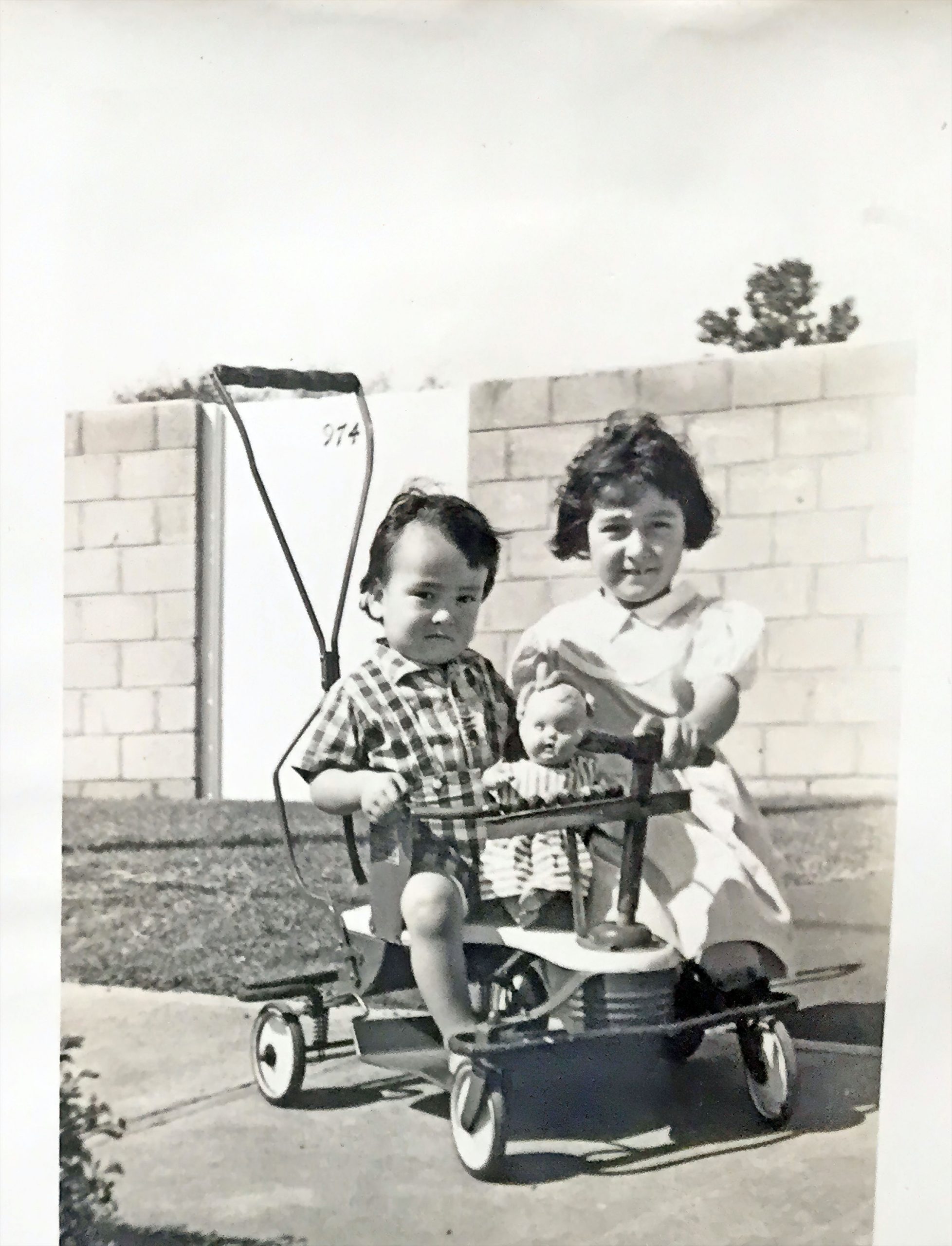
In any case, here’s a vintage photo of us taken in November 1948 in front of 974 Waiohinu Drive. In those days, we could just walk through the back hedge and proceed out along the neighbor’s driveway to Makaiwa Street, and then cross the street to Waiohinu, which is a short street which just loops around and rejoins Makaiwa.

Another bit of family history (this time from Meda’s side)

A paid post on the NY Times website this morning by Ancestry.com advertised its new collection of records from the US Freedmen’s Bureau, the post-Civil War United States Bureau of Refugees, Freedmen, and Abandoned Lands. Although the Ancestry post makes it sound like this is an exclusive from their service, a quick online search shows many other services are also offering the same collection.

And the Ancestry collection is free and apparently bypasses their pay wall.

This is how the National Archives describes the Freedmen’s Bureau:

In the years following the Civil War, the Bureau of Refugees, Freedmen, and Abandoned Lands (the Freedmen’s Bureau) provided assistance to tens of thousands of former slaves and impoverished whites in the Southern States and the District of Columbia. The war had liberated nearly four million slaves and destroyed the region’s cities, towns, and plantation-based economy. It left former slaves and many whites dislocated from their homes, facing starvation, and owning only the clothes they wore. The challenge of establishing a new social order, founded on freedom and racial equality, was enormous.

The Bureau was established in the War Department in 1865 to undertake the relief effort and the unprecedented social reconstruction that would bring freedpeople to full citizenship. It issued food and clothing, operated hospitals and temporary camps, helped locate family members, promoted education, helped freedmen legalize marriages, provided employment, supervised labor contracts, provided legal representation, investigated racial confrontations, settled freedmen on abandoned or confiscated lands, and worked with African American soldiers and sailors and their heirs to secure back pay, bounty payments, and pensions.

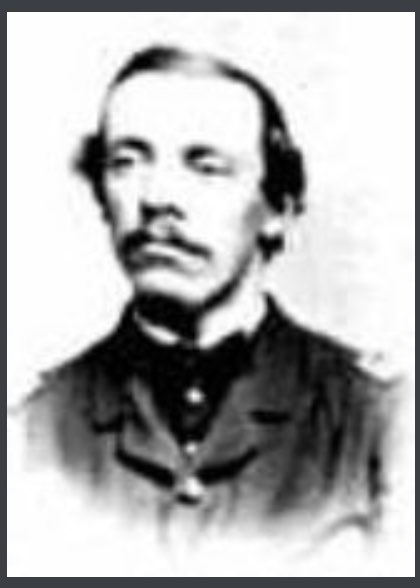
This all caught my eye because Meda’s great-great-grandfather, Bryon Porter, had joined the Freedmen’s Bureau after suffering a bullet wound through his right lung in the 1864 Battle of Petersburg, Virginia, and mustering out of the Army. One of his early assignments was to escort a group of teachers who had come west to Texas. One of those teachers was Elizabeth “Lizzie” Clay, who was about 18 at the time.

Apparently one thing led to another, and the young teacher and the war vet were married. She became Lizzie Porter, and was Meda’s great-great-grandmother.

Of course, I had to dive into the records looking for Byron Porter, and found numerous links to documents in the Freedmen’s Bureau database. Then I checked and found at least one Freedmen’s document mentioning Lizzie. It was a dispute over a debt which was referred to “civil authorities.” Her name was carefully annotated, “Elizabeth Clay (white)”. Now I’ll have to dig through to look for more of these documentary records that tie us to the past.

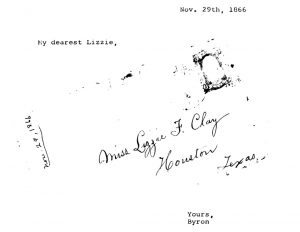
A collection of Byron Porter’s love letters to Lizzie Clay survived in the family, and were transcribed by Meda’s mother, Margaret Renton Chesney, in 1982. You can read, or browse, the letters by clicking the cover photo below. Little bits of life in Texas in 1866 or so.

More of my great-grandmother’s story

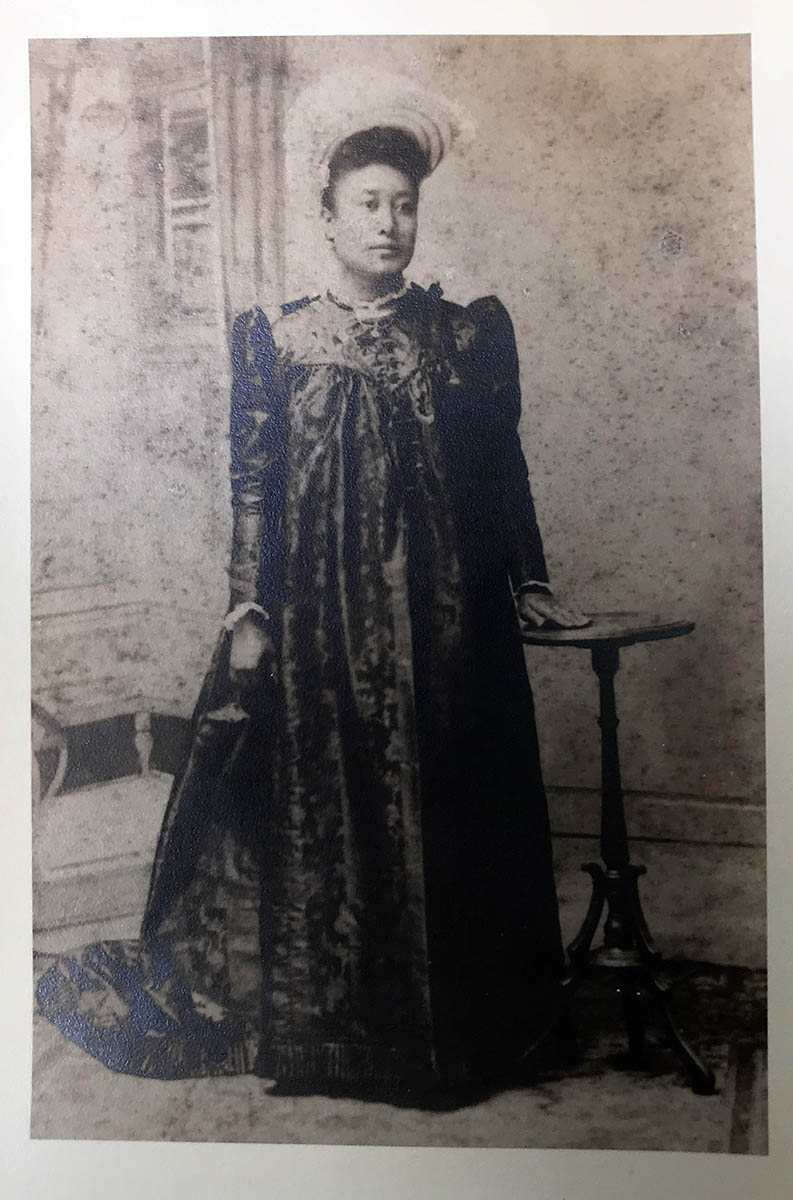
After posting a photo last week of my great-grandmother, Kina Cathcart, several people asked for more of her story.

I am dependent here on the years of research by my mother, Helen Yonge Lind, and my sister, Bonnie Stevens, who did the genealogical digging to further our understanding of our family roots. Had they been living, I would immediately punt a request like this over to one of them. But, since they are both gone, I’ll have to give it a try.

It’s not a happy story, really.

Kina was born in Hana, but there’s uncertainty about her birth date.

Her death certificate in 1913 listed her age as 47. The information apparently came from her oldest son, James Kahele. No birthdate is listed.

My mother noted the uncertainty in a note found among her papers.

Frin several sources, I have heard that she was a twin. From records of the Cockett family we have the birth of Kalua, a twin, born 1 March 1869. I have given Kina the same birthdate since she was reportedly a twin. Bt her son said she was 47 years old at death, and this would place her birth as circa 1866. Perhaps Kalua was the twin of another child in the family and Kina was born earlier.

Such are the vagaries of genealogical research.

Her father, Kahooilimoku, and mother, Kaheleualani, held property in Hana, and as I recall, Kahooilimoku was an awa farmer.

Kahooilimoku is listed in an 1880-1881 commercial directory as owners and planters of Awa on 25 acres located on Hana Road in Hana, Maui.

They were said to have been the first family to build a wood frame two-story home in Hana, but that could just be an ungrounded family tale.

Kaheleualani was one of 12 children of Kapehe, who was born in Kaupo circa 1829 but lived most of her life on the Keanae peninsula. Kapehe was said to be “something of a legend,” a kahuna lapa’au or Hawaiian medical doctor knowledgeable in herbal medicine, healing, and, another said, bone setting.

“In Keanae and other remote places, the kahuna lapa’au filled an important community role well into the 20th century, although they were not approved or licensed by the haole government,” my mother wrote in a note years later. “I remember when I was a child in the 1920’s there were Hawaiian neighborhoods where their kahuna lapa’au was favored over haole doctors.”

One family source told my mother Kapehe was considered e’epa, someone born with spiritual or psychic qualities, although this was disputed by others. She is remembered as tall and slim, “tall enough to hang gourds of food from the ceiling to keep them away from inquisitive children.”

Little was found about Kina’s early life, but when she was about 15, she was sent to Honolulu to attend school, possibly at St. Andrew’s Priory, which was established in 1867. She lived near the school with the Brickwood family. She became pregnant and was sent back to Hana, where she gave birth to a son in 1883, who was named James Kahele. It is believed the “Kahele” name came from the first letters of Kaheleualalani, Kina’s mother.

However, the uncertainty of the year of her birth means that when Kahele was born in 1883, Kina could have been as young as 14.

The following year (1884) Kina gave birth to Florence “Flora” Toomey, the first of two children fathered by William Dennis Toomey. In 1886, a brother, Alexander Toomey, was born.

My sister identified Dennis Toomey as “an English-born Haole, manager of Hana Plantation for a period in the 1880’s.”

“He was a planter and a landowner at Hana, Maui according to a Hawaii Directory of 1890,” cited by Findagrave.com. Land records show he purchased 6 acres of land from Kahooilimoku and Kaheleualani in 1885.

Kina’s mother, Kaheleualani, died in Hana in 1886 at age 37.

Kina then returned to Honolulu and met Robert William Cathcart, my great-grandfather, and gave birth to three Cathcart daughters as described in my earlier post.

Photo: Kina Cathcart c.1891

In 1888, the same year my grandmother, Heleualani, was born, Kina’s father, Kahooilimoku, and two of her younger brothers, Alapai and Kaaea, were admitted to the leper colony at Kalaupapa, records show. Kahooilimoku died there in 1890, Alapai in 1891, and Kaaea in 1892.

Cathcart left Kina shortly after the birth of the couple’s third daughter, Louisa, in 1892. He married Ellen Poaha in 1905, after the birth of four boys born between 1895 and 1905.

In 1905, at age 39, Kina married Kanu Puha. She died in Honolulu on August 1, 1913, of an acute infection at the age of 47.

In August 1915, James Kahele married Becky Keliiaipaha, Rev. Samuel Kamakaia officiating, according to a notice in the Honolulu Star-Bulletin. He was been listed in the City Directory as a laborer. He died just three years later at age 35. Three years later, his widow, Becky, died. Her published death notice says the cause of death was typhoid fever.

And in April 1925, there was an accident at Makapuu Lighthouse. This description is from the book, “Brilliant Beacons: A History of the American Lighthouse,” by Eric Jay Dolin.

Early in the morning on April 9 of that year, assistant keepers Alexander Toomey and John Kaohimaunu were getting ready to change the watch. In the process of putting alcohol into the lighter that was used to heat the IOV lamp, a small amount of alcohol dripped on the floor. When Toomey struck a atch, the alcohol fumes ignited, causing a fiery explosion. Both keepers were severely burned, but Toomey got the worst of it, his clothes having caught fire, leaving him “charred black and crinkled.” As the head keeper was about to rush the two injured en to the hospital, Toomey’s wife begged to come along. Toomey, however, insisted that she remain at the lighthouse, since with all three keepers gone she was the only one who could watch the light. According to the Bulletin, before being taken away Toomey gathered his wife and children around him to recite the Lord’s Prayer, and then he turned to his wife and said, “Stand by the light and keep it burning.” Those were the last words he and his wife ever shared, for he died the next day.

Toomey was 39.