Here’s an interesting comment left by a regular reader on Friday’s post regarding access to court records filed in digital form.
Mahalo Ian! I’m curious what the reasoning is for the truly “free” documents to only be available by adding some effort and pain to getting them…ie. having to use the courthouse terminals, or with the other suggested method…having to go to a Library to get access. Is the reasoning that there is the potential for abuse of the information if someone could access files from eCourt Kokua at home?
When I first read the comment, I started to write a reply explaining that the law allows agencies to recoup some of the cost of making copyies. Although I believe agencies can charge at little at 5 cents per page, many charge much more. I think court rules still list copy fees of $1 for the first page, and 50 cents for each additonal page, obviously far beyond the actual cost of copying.
Of course, all of this comes from the age of paper documents. Take the court records. The original documents stored at the courts where they had been filed, and it was reasonable for the public to be required to go to one of those locations to look at or request copies.
That’s why my first reaction is relief at how much easier it is to access many public records than it used to be, especially those needed for public oversight of government agencies. It’s far better than it used to be. And, to tell you the truth this sometimes that clouds my own vision.
Could easier access to court records become free public access in the future? I doubt there is any technical issue at all. The question, as it often is, comes down to money.
Here’s what Hawaii’s public records law says, in brief:
§92F-11 Affirmative agency disclosure responsibilities. (a) All government records are open to public inspection unless access is restricted or closed by law.
(b) Except as provided in section 92F-13, each agency upon request by any person shall make government records available for inspection and copying during regular business hours.
When I worked at the old Honolulu Star-Bulletin back in the 1990s, there were a couple of large projects that required reviewing large batches of public records. When an agency demanded an exorbitant amount for making copies, the newspaper arranged to move its own copy machine in and reporters made the copies themselves at a much lower cost.
Here’s what the law now provides regarding copying and costs.

This has, in large part, been made obsolete for many, perhaps most purposes, by the appearance of smart phones that make scanning documents fast, inexpensive, and unobtrusive. As long as a document is made available for inspection, it can be easily scanned with a phone. So much for copying costs. I recall a period where there was agency pushback against the technology, with attempt to ban use of phones to scan documents. However, that proved to be impossible as well as likely contrary to law.
You can imagine the conversation. “Is that a phone? No phones are allowed in the document room.”
“Oh, no. It’s not a phone. It’s a portable scanner. I don’t believe there’s any rule against that.
“Well, okay, but no photos are allowed.”
“Righto, just scans. No worries.”
Back to the question of public access to court documents via the Judiciary Electronic Filing and Service System (JEFS).
I haven’t been able to locate enough information about the financial aspects of the system to be able to say what role per-page copy fees and subscriptions play in keeping the whole system running.
However, from the outside, it appears that the primary purposes of the system of filing and retrieving documents in digital form is to keep the court system itself running efficiently without being buried in paper. The primary beneficiary of the system are the courts, judges, and attorneys, while the public benefits first of all from added efficiencies and, in the long run, substantial cost savings.
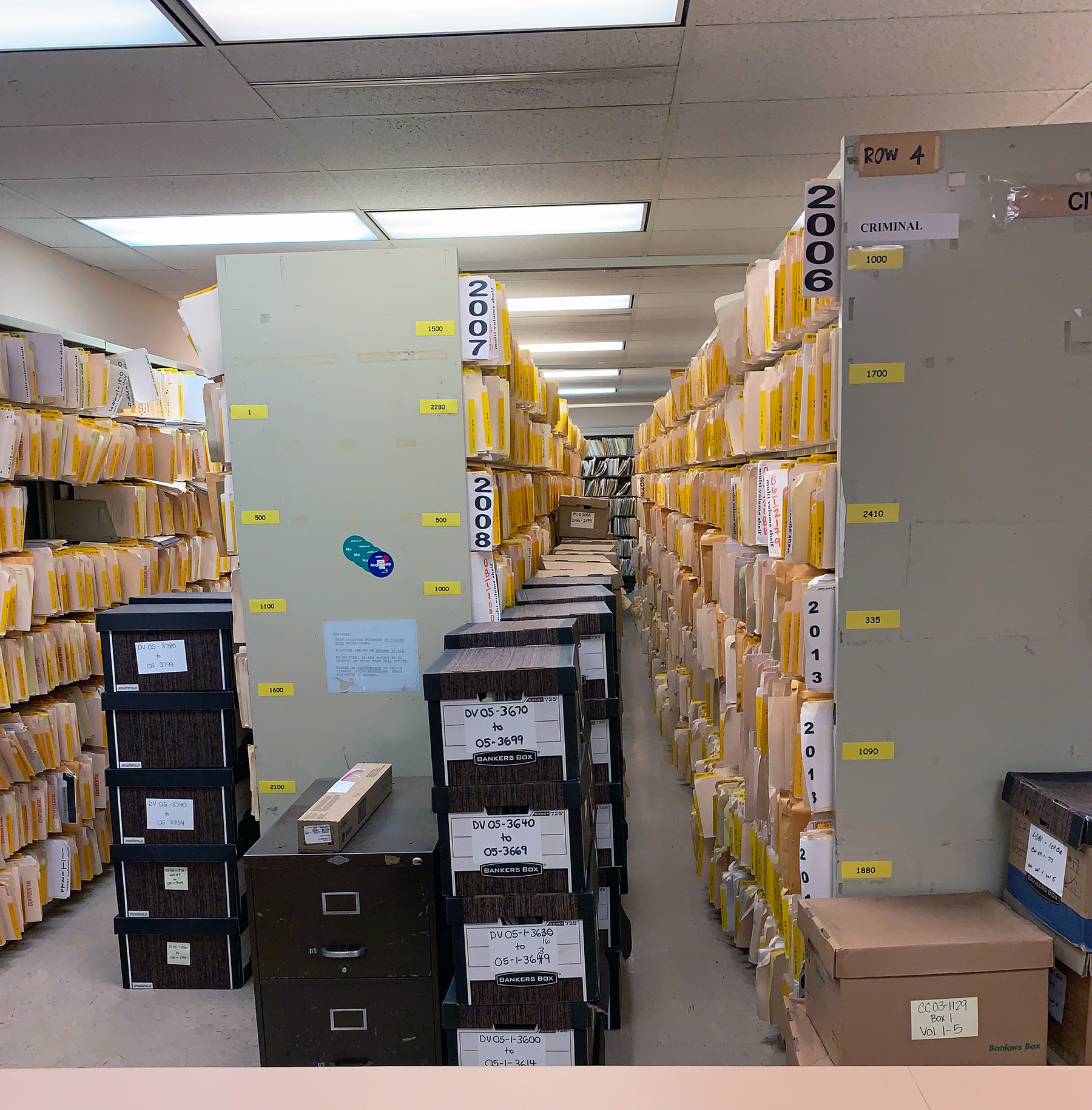
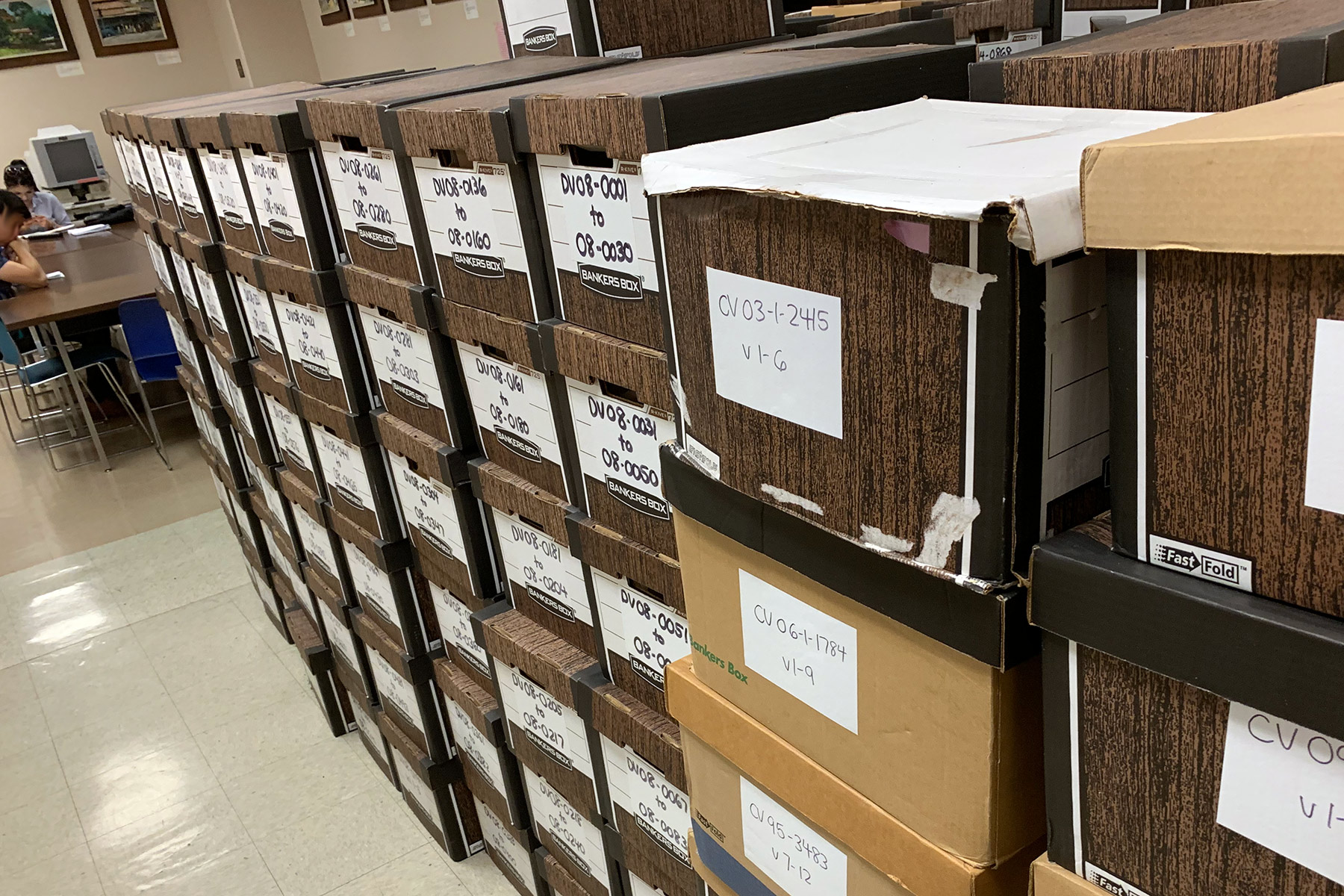
Anyone familiar with the public documents room in Honolulu’s First Circuit Court knows that before transitioning to a fully online system, the amount of incoming paper far exceeded the ability to process it or the capacity to store it. There had been an early attempt to simply scan documents after they were submitted in printed form, but that quickly bogged down as well. At times, boxes of case files were stacked up in the aisles of the documents room, creating a dangerous fire hazard. And with only a few exceptions, these were all public records that we, the rest of us who aren’t directly part of the court system, have the right to inspect and, if necessary, copy.
That says to me that allowing public access is a secondary feature of the system. And that means that, at most, there are, at most, only incremental costs incurred by allowing public use of the system. So financial problems appear to be the only barrier to providing free and open public access to court records as well as those of other state and county agencies, many of which already make their document retrieval systems publicly available at no charge.
The Judiciary’s log-in page says online payments for document retrieval are handled through the Hawaii Information Consortium, which does business as NIC Hawaii, the same group behind other major agency websites in Hawaii.
NIC HAWAII
The portal manager is the Hawaii Information Consortium, LLC dba NIC Hawaii, a Hawaii corporation and wholly owned subsidiary of eGovernment firm NIC Inc. (NASDAQ: EGOV). Our sole focus is to develop, manage and maintain web-based services that make working with the government easier for the public while improving efficiency. We also manage the official website for the state of Hawaii, Hawaii.gov.
The eHawaii.gov program was initially launched in 2000. Since then over 160 web-based services have been deployed and over 2.5 million citizens visit our site annually. While we operate as a for-profit company, state agencies, counties and local government can in many cases, work with us at no cost by utilizing our unique self funded model.
For more information, see the FAQs or visit nichawaii.egov.com.https://nichawaii.egov.com/portfolio/
And last year, NIC became a wholly owned subsidiary of Tyler Technologies.
The answer to the questions about the hurdles that would have to be overcome in order to make court records available to the public without fees is, I’m sure, buried in all the links provided by NIC and the Hawaii Information Consortium.
Please dig in and share your discoveries, thoughts and observations.