
Does the governor’s latest emergency decree mean that our early morning walks on the beach before dawn are now illegal?
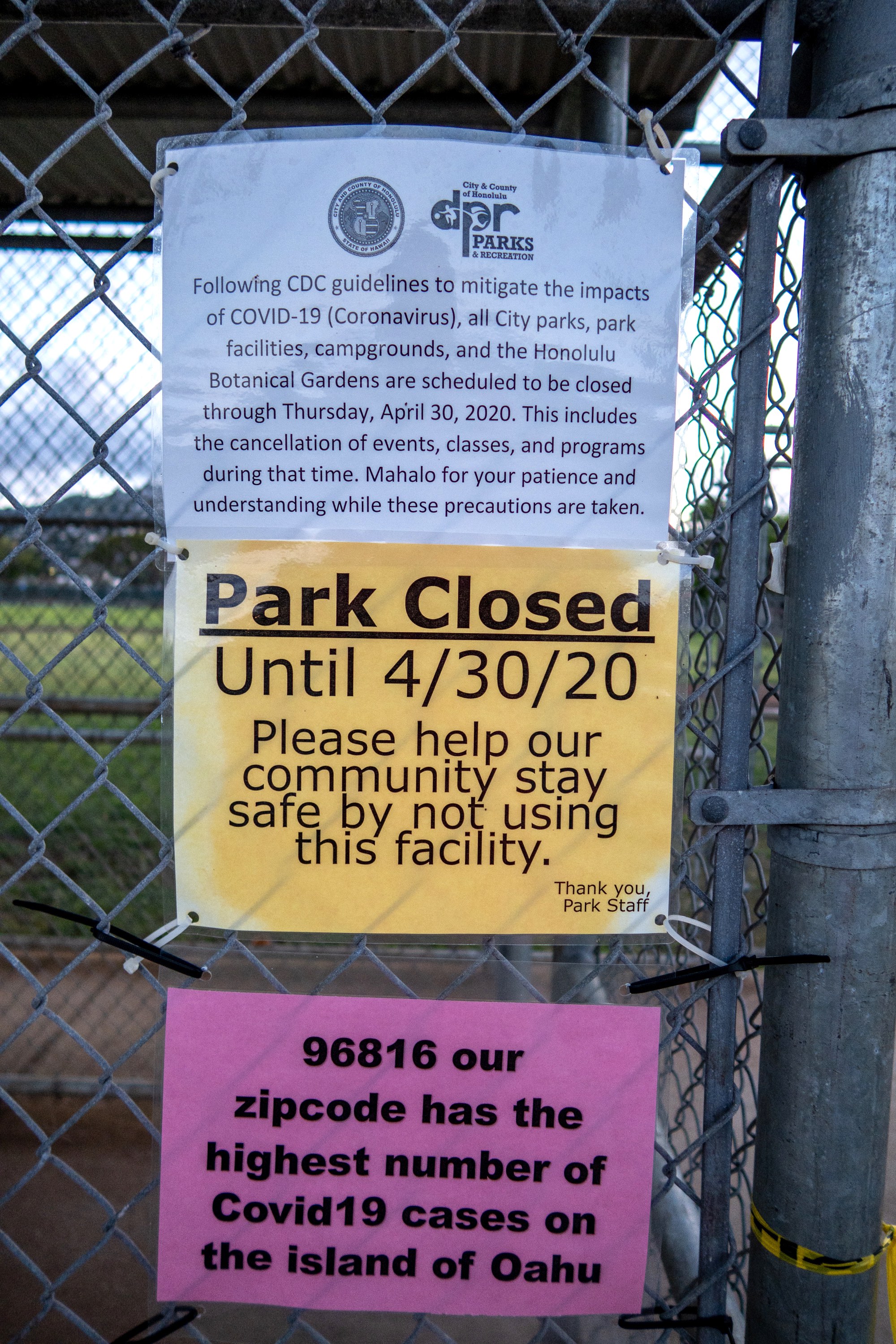
Hawaii Governor David Ige issued his 5th Supplementary Proclamation under emergency powers that derive from his declaration of a state of emergency due to the coronavirus pandemic. This 5th Supplement went into effect on Friday at 12:01 a.m., and among other things declared all state beaches “closed.”
Here’s the relevant section from the proclamation.
Beach Closures. All state beaches in Hawai?i are hereby closed. No person shall sit, stand, lie down, lounge, sunbathe, or loiter on any state beach or sand bar in Hawai?i, except when transiting across or through beaches to access the ocean waters for outdoor exercise purposes, such as surfing, solo paddling, and swimming, so long as physical distancing requirements are maintained.
Walking doesn’t fit among the activities specifically prohibited (“No person shall sit, stand, lie down, lounge, sunbathe, or loiter on any state beach or sand bar”). And the proclamation allows other “outdoor exercise activies” such as surfing, paddling, and swimming.
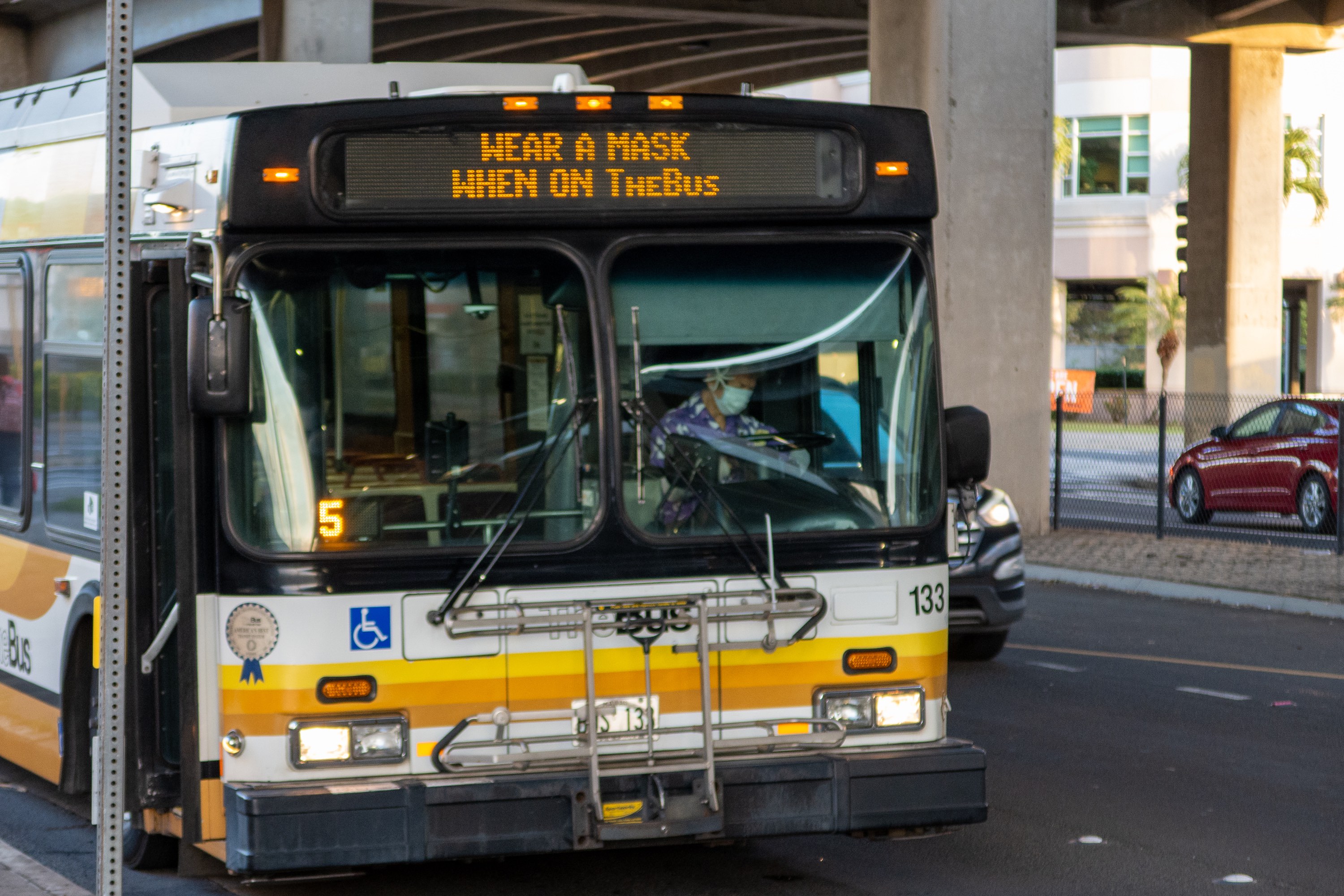
How about senior citizens getting their exercise walking on the beach very early in the morning, maintaining social distance, and wearing masks around any other people? We’re not loitering, lounging, or sunbathing. Are we just collateral damage in efforts to control groups of people partying at the beach?
Today, for the first time in a very long time, we didn’t walk to the beach to watch the sunrise. Instead, out of an abundance of caution, we walked a couple of miles around the neighborhood, up around Kahala Mall, and back. Definitely not the same as welcoming being on the beach to welcome the dawn.
Discover more from i L i n d
Subscribe to get the latest posts sent to your email.
The problem with ambiguity is that it gives law enforcement the license and latitude to make up its own policies. Let’s give a hard time and a citation to some people, but ignore the actions of others.
HPD has shown by the past action of its officers that it needs crystal clear guidance to prevent harassment and profiling.
I’m in one of the vulnerable groups and am grateful for social distancing, but I don’t see the point of increasing it. What we’ve done in Hawaii is working. Symptoms, cases, and deaths are declining. (Sources available.) We’re making this disease go away. What we need now is to figure out how to keep it from coming back.
Hawaii’s official policy to contain the coronavirus pandemic “is based on CDC guidance to not test people who are asymptomatic or have only mild symptoms and can recover at home in isolation. This policy aims to preserve test kits and personal protective equipment that might be needed should the outbreak worsen.”
https://www.civilbeat.org/2020/04/shes-running-hawaiis-virus-response-but-should-we-trust-her/
This is out of step with what the rest of the world is now doing.
In New York City, the policy is that anyone who has any symptoms whatsoever is to be considered infected.
In fact, one physician in NYC stated that even if it is suspected that someone only has the flu, then it should be assumed that they also have the coronavirus. This because in the experience of his hospital and other hospitals in NYC, those who have the flu also have the coronavirus — every single time.
Testing people who have symptoms is a waste of time and kits. These patients should be considered infected.
The emphasis at that point is on isolating the patient and tracing who they have come in contact with so that those people can isolate and be tested.
The irony is that Hawaii’s testing policy is meant to save test kits, but it is wasting them.
Actually, Hawaii’s policy was the proper policy for the EARLY STAGES of the pandemic, when test kits were few and the number of people who were infected was low.
Also, masks are essential. For example, SOUTH KOREA NEVER WENT INTO LOCKDOWN. Yet if one excludes travelers to South Korea who were infected abroad, HAWAII HAS A HIGHER NUMBER OF NEW INFECTIONS THAN THE ENTIRE NATION OF SOUTH KOREA. The South Korean model is all about maintaining social distance, banning large gatherings (schools, gyms), using masks, and aggressively testing those who are asymptomatic.
Again, there was no lockdown in South Korea.
Yes, but…Hawaii, like much of the U.S., has been unable to procure sufficient tests to eliminate the need to focus primarily on health care workers and other first responders. At least that’s my understanding.
Yes, there is a shortage of test kits in the U.S.
The point is that what few kits we have are being wasted on patients who should be presumed to be infected. Instead of testing obviously sick people, they should be isolated and their previous contacts should be informed and tested.
Also, it has to be assumed that every healthcare worker and first responder is infected, so they should not be tested. They should not be living at home with their families. Some doctors already live together in Airbnb houses as a precaution. With all this unused hotel capacity, nurses and EMTs should be living in hotel rooms, and the rest of us should be paying for it. It’s not enough to applaud them for their service.
On how Americans are rapidly going broke during the lockdown:
https://www.nytimes.com/interactive/2020/04/23/opinion/emergency-savings-coronavirus.html
On how President Trump might get re-elected because of the lockdown:
https://www.nytimes.com/2020/04/22/opinion/coronavirus-trump.html
On how policies regarding the coronavirus epidemic should be made on a regional and local case-by-case basis, not the one-size-fits-all total lockdown model of New York City. Importantly, the presence of coronavirus is permanent, and policies designed to eradicate it are wrongheaded. Less afflicted rural areas simply need to get back to work before the economy suffers an irreversible collapse.
https://www.nytimes.com/2020/04/24/opinion/coronavirus-lockdown.html
“There is currently no evidence that people who have recovered from Covid-19 and have antibodies are protected from a second infection,” the WHO said in a briefing note. Most studies carried out so far showed that people who had recovered from infection had antibodies in their blood – but some of these people had very low levels of antibodies. This suggested that another part of the body’s immune response – T-cells, which eliminate infected cells – may also be “critical” for recovery. As of Friday no study had evaluated whether the presence of antibodies to the virus conferred immunity to subsequent infection by the virus in humans, the WHO said.
https://www.bbc.com/news/world-52425825
What does this mean for developing a vaccine?
This might discredit the UK’s and Sweden’s strategy of building “herd immunity”. The theory is that vulnerable groups would be isolated while the pandemic somewhat harmlessly passed through the population, granting immunity to enough people that vulnerable groups could then re-enter society.
The problem with this is that:
1) It does not seem that vulnerable groups were adequately isolated.
2) Everyone is vulnerable if they are exposed to high enough amounts of virus (e.g., young female nurses dying).
3) Even young healthy survivors of COVID-19 are developing permanent major health problems in their internal organs.
4) Finally, it turns out that there is very little or no immunity.
It seems that public health officials in Sweden and the UK did not take into account the fundamental UNCERTAINTY of epidemics.
Statistics:
As of today, more Americans have died in the last few months from COVID-19 (54,265 fatalities) than perished in combat in the Korean War (54,246 fatalities).
In a couple of days, more Americans will have have died from COVID-19 than died in Vietnam (58,209) over a period of 20 years of military engagement.
https://en.wikipedia.org/wiki/United_States_military_casualties_of_war#Wars_ranked_by_total_number_of_U.S._military_deaths
Today, Hawaii has the lowest fatality rate by population size in the United States from COVID-19, with 10 deaths per 1 million persons.
The fatality rate by population size in South Korea from COVID-19 is 5 deaths per 1 million persons, half Hawaii’s rate.
The fatality rate in Singapore is 2 deaths per 1 million persons.
In Hong Kong, it is 0.5 deaths per 1 million persons.
I made a mistake above.
I stated that 54,246 American troops died in the Korean War.
In reality, “only” 36,516 American troops died in the Korean War.
This means that as of now, well over twice as many Americans have died from the coronavirus than in the Korean War.
I got the 54,246 fatality figure from Wikipedia, but the entry was corrected on May 10 to show the proper number of fatalities.
It is a common mistake to state that 54,246 American troops died in the Korean War.
It is a false statistic is based on faulty counting by the U.S. military.
https://www.history.com/this-day-in-history/first-u-s-fatality-in-the-korean-war
“The original figure of American troops lost–54,246 killed–became controversial when the Pentagon acknowledged in 2000 that all U.S. troops killed around the world during the period of the Korean War were incorporated into that number. For example, any American soldier killed in a car accident anywhere in the world from June 1950 to July 1953 was considered a casualty of the Korean War. If these deaths are subtracted from the 54,246 total, leaving just the Americans who died (from whatever cause) in the Korean theater of operations, the total U.S. dead in the Korean War numbers 36,516.”
For comparison purposes, the U.S. population is at least double what it was during the Korean war.
In addition, I wonder whether some COVID-19-related deaths should be reclassified, as was the case of Korean war deaths.
Most Americans Who Carry the Coronavirus Don’t Know It
To suppress Covid-19, we need to test those with no symptoms.
Those in high-risk asymptomatic groups who must be urgently targeted include health workers, especially those in long-term care facilities; the homeless and those working in shelters; grocery store employees and delivery drivers, taxi drivers, emergency workers, employees in high density workplaces like delivery warehouses and meat processing plants; and anyone who has had close contact with a known Covid-19 patient. These high-risk groups need to be tested as often as every five days, given what we know about the time it takes to develop symptoms after becoming infected, and those found to be infected should self-isolate immediately while their contacts should be quarantined for 14 days.
https://www.nytimes.com/2020/04/26/opinion/coronavirus-test-asymptomatic.html
Disaster preparation is becoming mainstream.
https://www.nytimes.com/2020/04/24/technology/coronavirus-preppers.html
The article mentions an organizations that is oriented toward prepping for ordinary people. Its website provides a checklist that most people would find reasonable and doable.
https://theprepared.com/prepping-basics/guides/emergency-preparedness-checklist-prepping-beginners/
Most emergency preparedness guides advise preparing supplies for a 72 hour period. The website says that two weeks worth of supplies is more realistic. The best way to achieve this is to buy a little more than usual when shopping, and then store it. This is affordable because the food can be consumed even if it is not utilized during an emergency. In any case, such a level of preparation obviates the need for panic buying. Panic buying is stressful for the individual shopper and puts stress on the whole society, is expensive, and is time consuming at a moment when time is of the essence.
It should be remembered that lockdown officially ends on May 31st, and the following day, June 1st, is the beginning of hurricane season.
Tests in recovered patients found false positives, not reinfections, experts say
South Korea’s infectious disease experts said Thursday that dead virus fragments were the likely cause of over 260 people here testing positive again for the novel coronavirus days and even weeks after marking full recoveries.
http://m.koreaherald.com/view.php?ud=20200429000724
https://time.com/5830594/south-korea-covid19-coronavirus/
“South Korea’s Health Minister on How His Country Is Beating Coronavirus Without a Lockdown”
“[T]hanks to early preparations, and a robust public health response based around extensive testing and tech-powered contact tracing, the nation’s tally of infections has been kept to just 10,765, about half directly related to Shincheonji. More impressive still, no major lockdown or restrictions on movement have been imposed, save a few scattered curfews.
“On Apr. 15, some 29 million people turned up to vote in parliamentary elections—yet no known infections arose, thanks to strict social distancing at the polls. On Wednesday, South Korea had zero local infections for the first time since the outbreak was first recorded 72 days previously (though four new cases had been imported.)”
“As COVID-19 displays very unique features, we needed to be creative and innovative, as well as using traditional methods to combat the virus. For example, drive-thru screening clinics, an ICT [information and communications technology] app called Special Immigration Procedure [provided to new airport arrivals], and Life Treatment Centers for patients with mild symptoms were innovative. If we had failed to separate them and tried to put all new patients in hospitals, our overloaded healthcare system could have collapsed.
“Since COVID-19 spreads very fast, an early diagnostic test is critical. About 80% of COVID-19 patients have mild symptoms, and only 10% have severe symptoms. So the medical system needs to respond accordingly. In other words, efficient allocation of limited medical resources is very important.
“Next, the greatest leverage we have for controlling COVID-19 is people’s trust in the state. Deep trust not only minimizes public anxiety, but is critical in inducing the participation and cooperation of the people in enforcing the potent vaccine that is social distancing.
“For this, it is very important to provide relevant information to the people in the most transparent possible manner. In addition, it is also important to have smooth inter-ministerial and central-to-local governmental communication.
“We never considered a full lockdown as part of our policy response to COVID-19. Although there was an explosive new outbreak in a certain region, we had confidence that we could locate contacts and isolate them successfully.
“South Korea is a democracy which respects and ensures the individual freedom of the people as much as possible, so we relied on people’s voluntary cooperation based on their trust in public anti-epidemic authorities.
“As such, instead of physical lockdown, we fought the virus through an epidemiological approach such as wide diagnostic testing and isolation of contacts, while encouraging people’s voluntary cooperation for social distancing. We believed this was more effective than forcible measures and indeed it paid off.”
A TALE OF TWO SOCIETIES
1) SOUTH KOREA — or, HOW TO DO IT THE RIGHT WAY FROM THE VERY BEGINNING
https://www.forbes.com/sites/alexandrasternlicht/2020/04/30/south-koreas-widespread-testing-and-contact-tracing-lead-to-first-day-with-no-new-cases/
“South Korea’s Widespread Testing And Contact Tracing Lead To First Day With No New Cases
“For the first time since February 18, South Korea had a day with no new local COVID-19 diagnoses on Thursday, a result of an aggressive strategy for handling the outbreak which included mass rapid testing and comprehensive digitally-enabled contact tracing.
“South Korea has employed a comprehensive testing and contact tracing strategy that has enabled it to successfully curb the spread of coronavirus without a strict lockdown.
““[South] Korea was able to successfully flatten the curve on COVID-19 in only 20 days without enforcing extreme draconian measures that restrict freedom and movement of people,” writes ministers of the South Korean government in their April 15 coronavirus playbook.'”
2) GEORGIA, USA — or, HOW TO GET IT ALL WRONG EVERY SINGLE TIME
https://www.businessinsider.com/georgia-reports-1000-new-covid-cases-as-kemp-lifts-stay-at-home-order-2020-5
“Georgia reported over 1,000 new coronavirus cases on the same day its governor lifted the stay-at-home order for most residents
“Health officials also reported that there were 33 new deaths on Thursday, bringing the state’s total death toll to 1,140.”
https://www.businessinsider.com/hong-kong-has-tracking-bracelets-to-enforce-coronavirus-quarantine-2020-4
“People arriving in Hong Kong must wear tracking bracelets for 2 weeks or face jail time.
“Hong Kong has taken a stricter approach to coronavirus quarantines than many countries, using wristbands to enforce a mandatory 14 day quarantine on anyone arriving from another country.
“Hong Kong, along with Singapore and Taiwan, initially seemed to have gotten ahead of COVID-19, the coronavirus disease, with few infections. Then, a new wave of coronavirus cases spiked, largely from travelers from abroad. In response, arrivals have been given wearable technology to ensure that they follow the 14 day quarantine orders, or risk six months in jail and a $645 fine, plus possible social media backlash.”
On the other hand, it might be a waste of time and resources to figure out how to restart tourism because it might be dead for years anyway.
https://www.cnbc.com/2020/05/02/warren-buffett-says-berkshire-sold-its-entire-position-in-airlines-because-of-the-coronavirus.html
“Warren Buffett says Berkshire sold all its airline stocks because of the coronavirus
“Berkshire Hathaway Chairman and billionaire value investor Warren Buffett said that the conglomerate has sold the entirety of its equity position in the U.S. airline industry. The prior stake, worth north of $4 billion dollars in December, included positions in United, American, Southwest and Delta Airlines.
“The world has changed for the airlines. And I don’t know how it’s changed and I hope it corrects itself in a reasonably prompt way,” he said during Berkshire’s annual shareholder meeting Saturday, which was virtual this year. “I don’t know if Americans have now changed their habits or will change their habits because of the extended period.””
Coronavirus: What global travel may look like ahead of a vaccine
https://www.bbc.com/news/world-52450038
Australia and New Zealand have eliminated the coronavirus, and they are opening their borders to each other.
https://www.cnn.com/travel/article/new-zealand-australia-travel-bubble-intl-hnk/index.html
It might be possible for Hawaii to allow in visitors from Australia and New Zealand without the 14-day quarantine. Also, South Koreans could be included.
The real problem is young tourists from Western countries who are easily evading the mandatory quarantine in Waikiki.