Category Archives: environment

Who’s Hu?

There’s a lot of confusion about the company which apparently was formerly known as Hu Honua Bioenergy. It’s the company behind what has ballooned into a $500 million project, with costs that seem to be mounting by the day.

Anyway, here’s the latest confusion.

Pacific Business News reported today on the company’s emergency appeal to the Hawaii Supreme Court, which was filed yesterday.

From PBN:

Honua Ola Bioenergy submitted a filing with the Hawaii Supreme Court Wednesday, requesting the Hawaii Public Utilities Commission vacate its July 9 decision that killed the Hu Honua biomass project.

“We have done everything asked of us by the PUC, including building out the facility to completion as the PUC ordered us to do in 2017, along with training and providing careers to dozens of Big Island residents,” said Warren Lee, president of Honua Ola Bioenergy, in a statement. “We are now ready to produce renewable energy this year and make Hawaii less dependent on fossil fuels. The only thing holding us back and keeping Hawaii from moving forward are these three PUC commissioners [Chairperson James Griffin, Commissioner Jennifer Potter, and Commissioner Leodoloff Asuncion].”

Okay…but…

Here’s the header from the actual motion filed with the Supreme Court. It’s filed on behalf of Hu Honua, not Honua Ola.

And it is signed by five attorneys on behalf of, you guessed it, Hu Honua, and not Honua Ola.

So Who’s Hu and why is Honua Ola getting/taking credit? Since the company formerly known as Hu Honua has never disclosed its corporate structure, it’s hard to get clarity on who (or Hu) is doing what.

Calling all birders

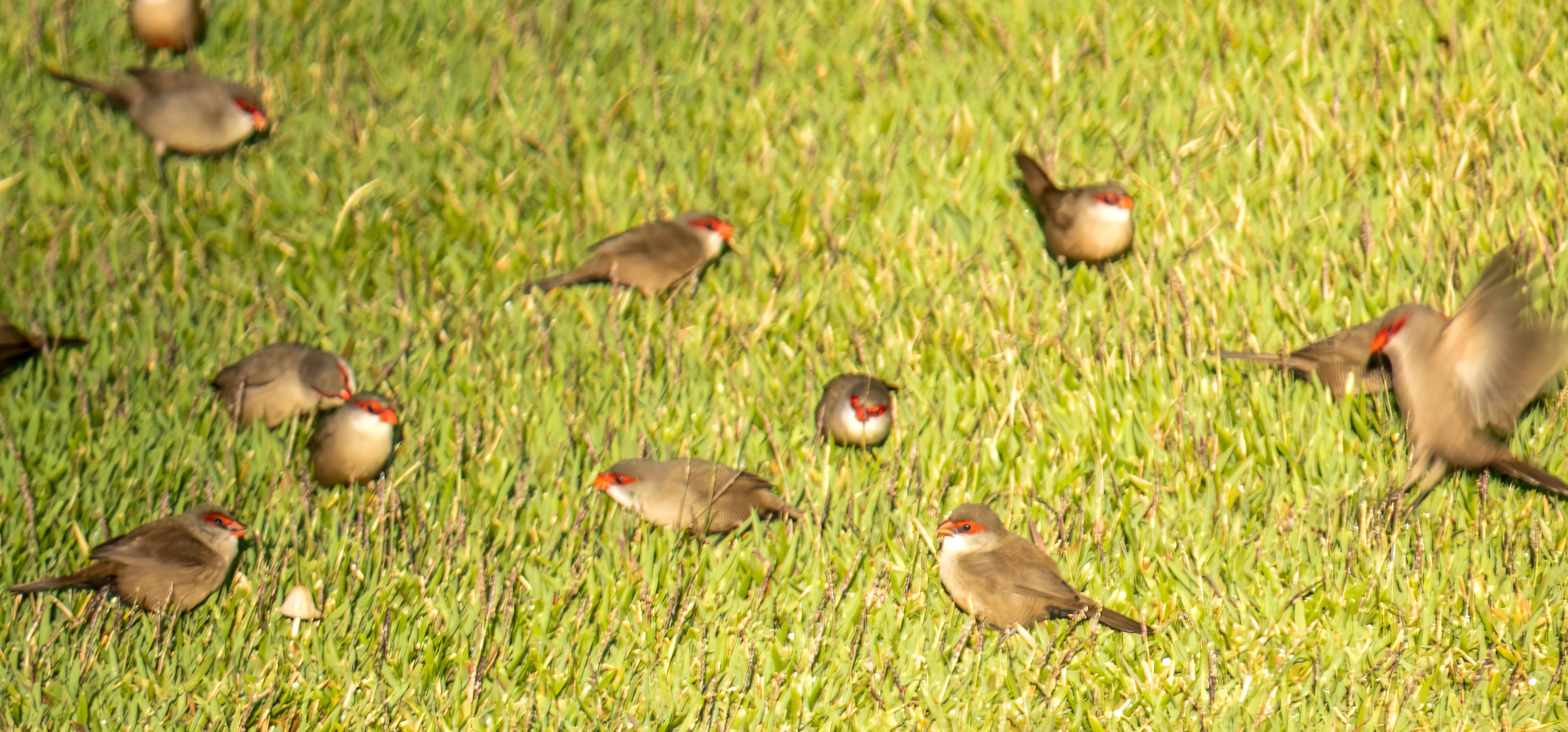
So we’ve been seeing groups of these very small birds among the tall grass in Waialae Beach Park and along toward the golf course.

They look like some variant of what we used to just call a rice bird, swooping in to feed on the grass seeds, then flying off. They appear to be about half the size of the more common Java Sparrow.

But these are different. They have a red/orange bill, and a similarly colored mask that extends back past their eyes.

Leafing through a Hawaii bird guide published by UH Press, the closest match is a black-rumped waxbill (estrilda troglodytes).

But it is described as “seldom seen” and “known only from the North Kona District of the Big Island….”

Any suggestions?

Click on the photo to see a larger version.

A little history lesson from a friend

When we’re in Portland, we always try to make time to visit with Tom Schroeder, who had a long career as a meteorologist at the University of Hawaii, and is an Emeritus Professor in SOEST, the School of Ocean and Earth Science and Technology. He retired to Portland, but has remained a frequent visitor to Hawaii.

He had an interesting tale to tell in an email received this morning.

Thanks for the history lesson, Tom!

This past Tuesday PBS American Experience featured Mister Tornado, the late Tetsuya “Ted” Fujita of University of Chicago. He was remarkable. I knew him and had dinner with him a few times over the years. His contributions ranged from tornado structure, the modern intensity (F) scale and solution of the microburst wind shear which causes airline crashes.

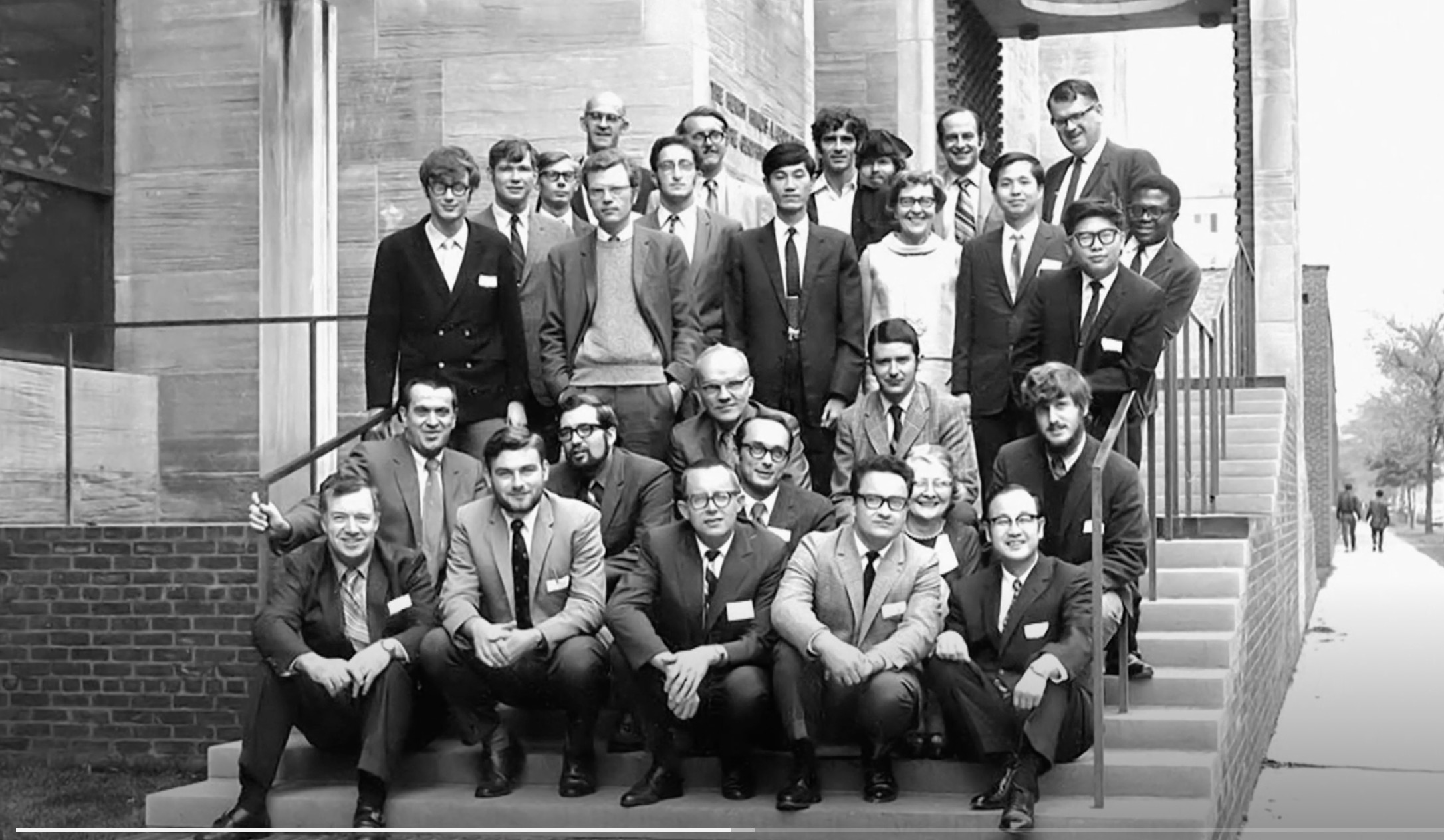
~ 25 minutes into the show a black and white group photo appears . It was a regional tornado researcher meeting at University of Chicago ( ~ 1971). It was a regional tornado researcher meeting at University of Chicago ( ~ 1971).

In the back row , second from left, is a very young me.

(Click on the photo to see a larger version)

Here is a bit of irony.
August 9, 1945. Ted is a young engineering faculty member in Japan. It is a cloudy day. A B-29 is heard overhead. The plane makes several passes. Clouds obscure the ground. Unable to find the target the plane diverts to it’s alternate: Nagasaki.

Fujita is tasked with analyzing the blast. He identifies blast pattern, etc.

30 years later Eastern Airlines flight 66 crashes on landing approach to JFK. There were thunderstorms in the area.
Ted examines flight recorders on flight 66 and other planes on the same landing approach. Some had diverted, others landed with no problem.

He found an intense small-scale downdraft which he named “microburst “ which resembled his Nagasaki analysis.
Fortunately we have developed sensors and protocols such that we haven’t lost an aircraft to shear for many years.