The value of vaccines

I saw this study referenced in a lawsuit filed by 15 states seeking to overturn the Trump administration’s reversing of longtime child vaccination protocols supported by years of evidence.

It provides estimates of the value of childhood vaccinations in sharp contrast to the actions of the current adminiatration.

The study: Health and Economic Benefits of Routine Childhood Immunizations in the Era of the Vaccines for Children Program — United States, 1994–2023

Link: CDC Morbidity and Mortality Weekly Report of August 8, 2024

Abstract
Since 1994, the U.S. Vaccines for Children (VFC) program has covered the cost of vaccines for children whose families might not otherwise be able to afford vaccines. This report assessed and quantified the health benefits and economic impact of routine U.S. childhood immunizations among both VFC-eligible and non–VFC-eligible children born during 1994–2023. Diphtheria and tetanus toxoids and acellular pertussis vaccine; Haemophilus influenzae type b conjugate vaccine; oral and inactivated poliovirus vaccines; measles, mumps, and rubella vaccine; hepatitis B vaccine; varicella vaccine; pneumococcal conjugate vaccine; hepatitis A vaccine; and rotavirus vaccine were included. Averted illnesses and deaths and associated costs over the lifetimes of 30 annual cohorts of children born during 1994–2023 were estimated using established economic models. Net savings were calculated from the payer and societal perspectives. Among approximately 117 million children born during 1994–2023, routine childhood vaccinations will have prevented approximately 508 million lifetime cases of illness, 32 million hospitalizations, and 1,129,000 deaths, at a net savings of $540 billion in direct costs and $2.7 trillion in societal costs. From both payer and societal perspectives, routine childhood vaccinations among children born during 1994–2023 resulted in substantial cost savings. Childhood immunizations continue to provide substantial health and economic benefits, while promoting health equity.

A copy of the lawsuit is attached below.
Puzzle solved with an unexpected twist at the end

In the immortal words of Yogi Berra, it’s deja vu all over again!!

While I was spinning my wheels yesterday afternoon, several readers were doing their due diligence and solving the puzzle.

A reader commenting as “Joel” was the first to point out late Sunday afternoon that I went through this same exercise in a “Throwback Thursday” post almost exactly 10 years ago!

“Hi Ian, I think the consensus the last time this was discussed is that it’s the contessa taken from hale manoa,” he wrote in a comment.

Honestly, I had no recollection that this was the second time around on this littel mystery, but it’s true!

And back in 2016, several people quickly recognized the location.

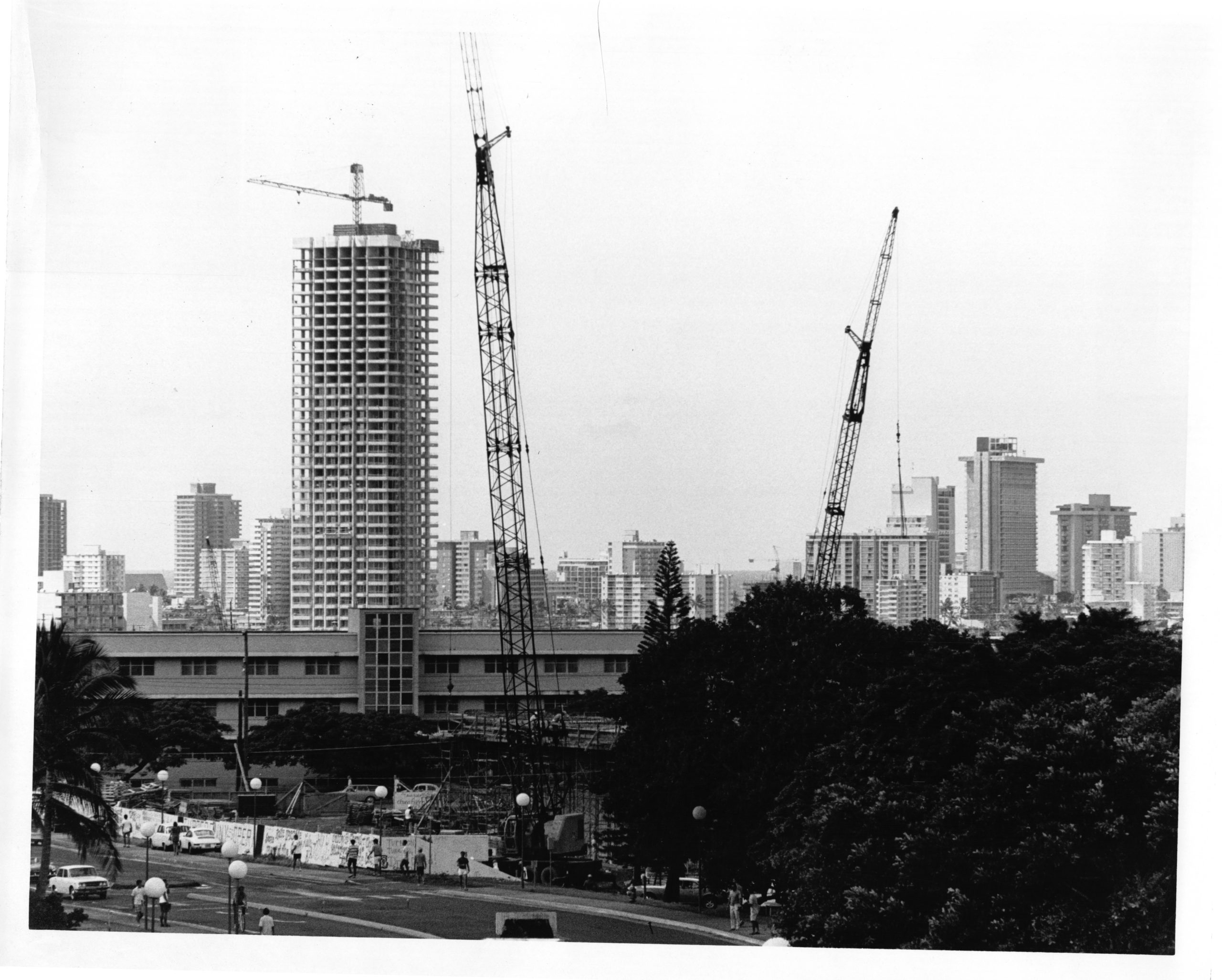
The photo is taken from Hale Manoa at the East West Center. For a period in 1970, I was the primary photographer for the East West Center, paid as a student worker. It was a lot of fun and gave me my own darkroom to work and play in. I must have spent some time in the Hale Manoa living quarters and took this photo of the view looking down toward Waikiki.

Screenshot

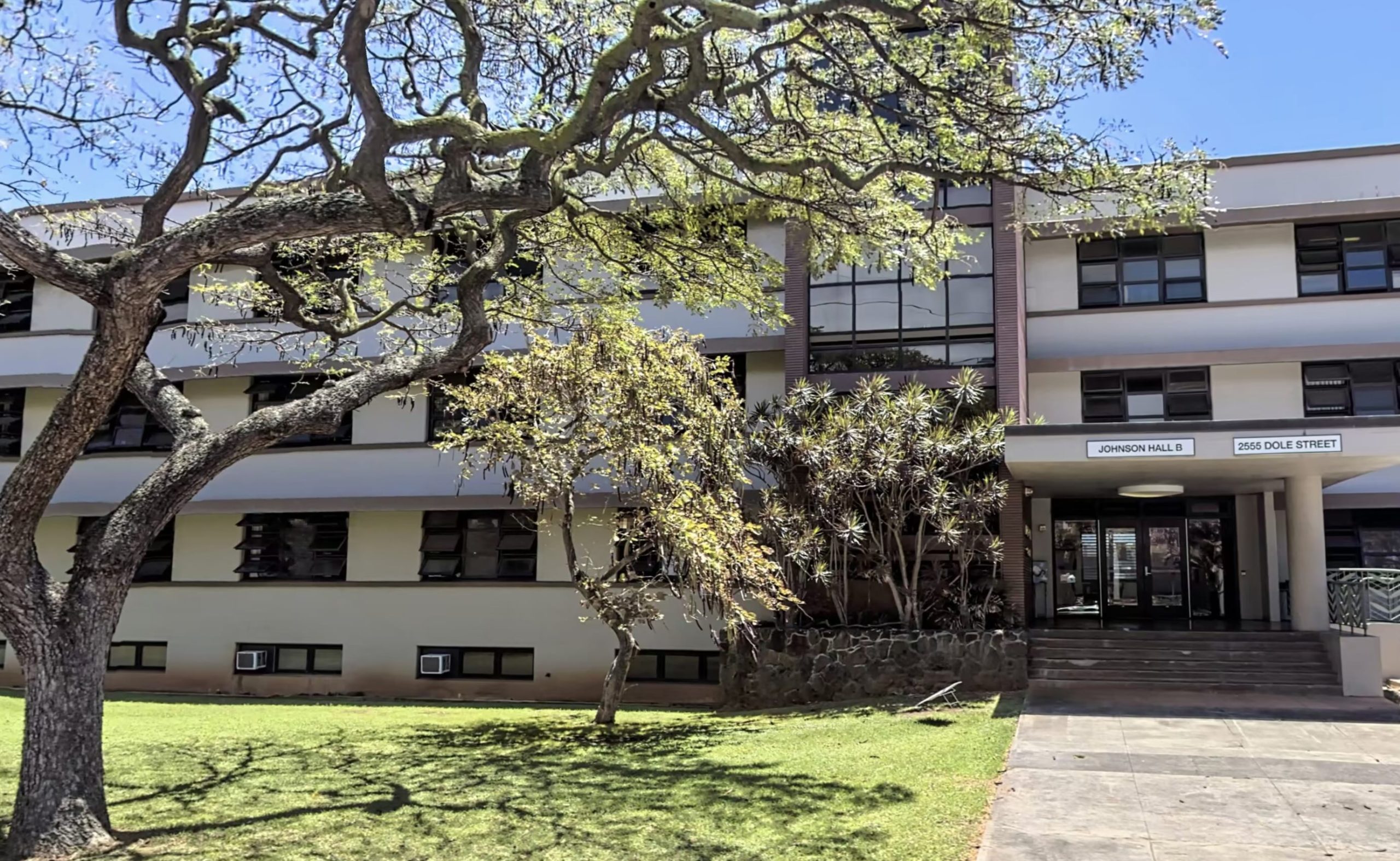
The street is East West Road, heading towards Dole Street, where the low rise building shown is Johnson Hall B, a student dorm.

The building under construction across the street, at the corner of East West Road and Dole Street, is the UH enginerring building, Holems Hall.

And at the very bottom of the photo, in the center, is the back of the sign welcoming welcoming visitors to the East West Center.

And this Google Map shows the approximate line of sight from Hale Manoa to the Contessa down on King Street, where construction appears to have been nearing completion.

Still spinning my wheels trying to ID the building in that 1970s photo

A post here on Sunday asked for help in identifying this high-rise building under construction back somewhere in the 1970s (“A 1970s condo under construction“). You an click on the photo to view a larger version.

I’ve been making some progress today, but haven’t gotten to a clear answer that accounts for everything in the photo.

One problem is that the photo was taken with a telephoto lens of undetermined length, which compresses distances and distorts relative locations.

I did make a small step forward.

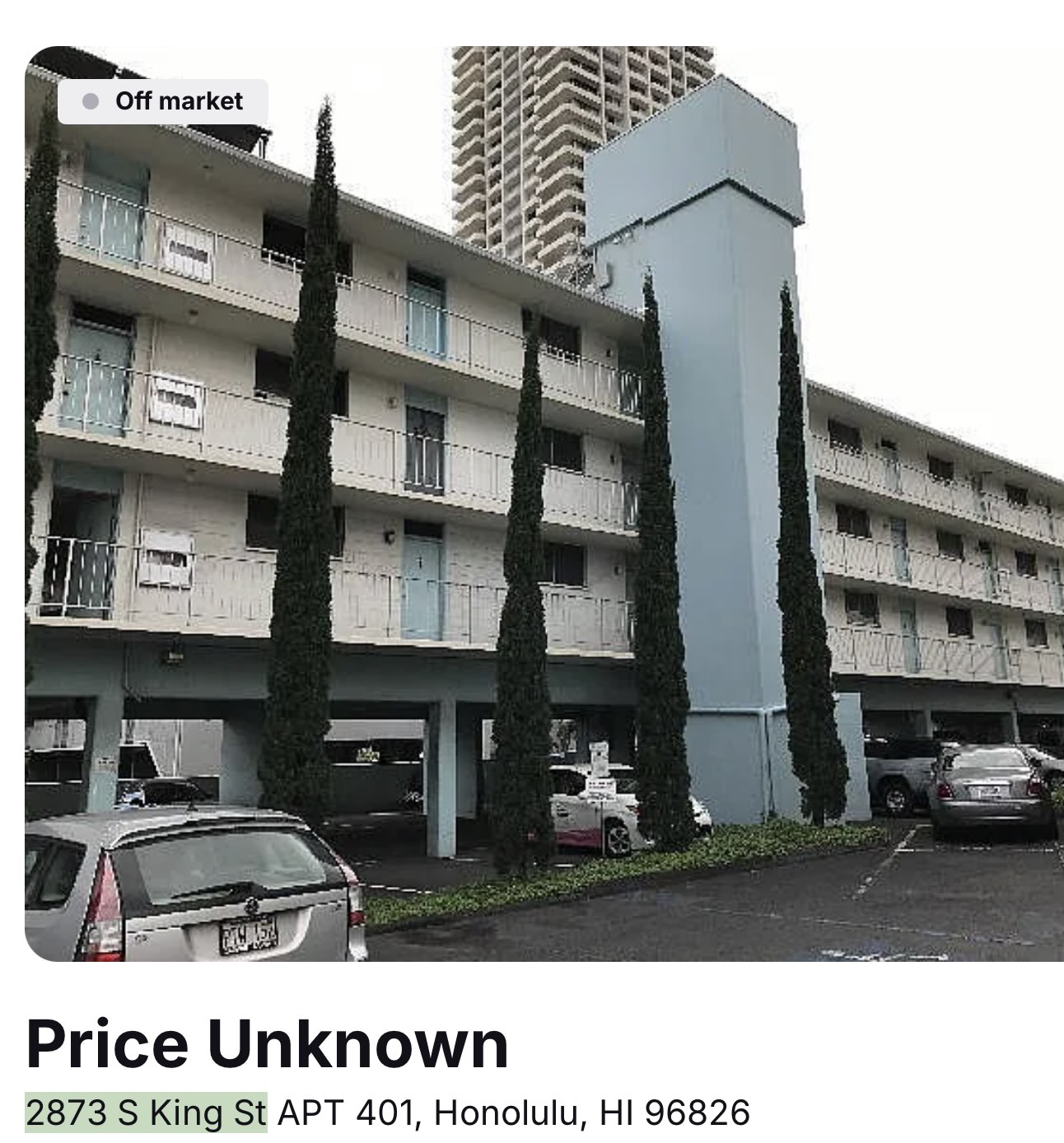
• The low-rise building behind the construction site is quite distinctive. It appears to be the apartment building at 2873 S King St. There is a smaller building that fronts King Street, and 2873 is right behind it, just off of church lane.

Here is how it looks today in a photo lifted from a real estate ad, with the Contessa right behind it.

Screenshot

At first, I thought the high rise under construction had to be the Contessa, which is right next door to 2873 S. King.

I still think this is most likely.

However, I can’t figure out a vantage point from which the photo could have been taken, and from which the Contessa lines up with 2873 S. King in the same manner, and the street in front–whether a section of King Street, Kapiolani Blvd, or Kapahulu Ave–appears as it does in the original photo. It seems to me all those pieces have to fall into place before we have the answer.

Then I found myself considering whether it night be the Regency Tower, as suggested in a comment by Clyde Kobatake.

But if that’s the Regency, then where is the Contessa (built in 1971)? It should be visible elsewhere in the photo. Where is it?

I’m thinking the photo might have been taken from a spot along the west-bound Kapiolani off-ramp from H-1, which could approximate the perspective.

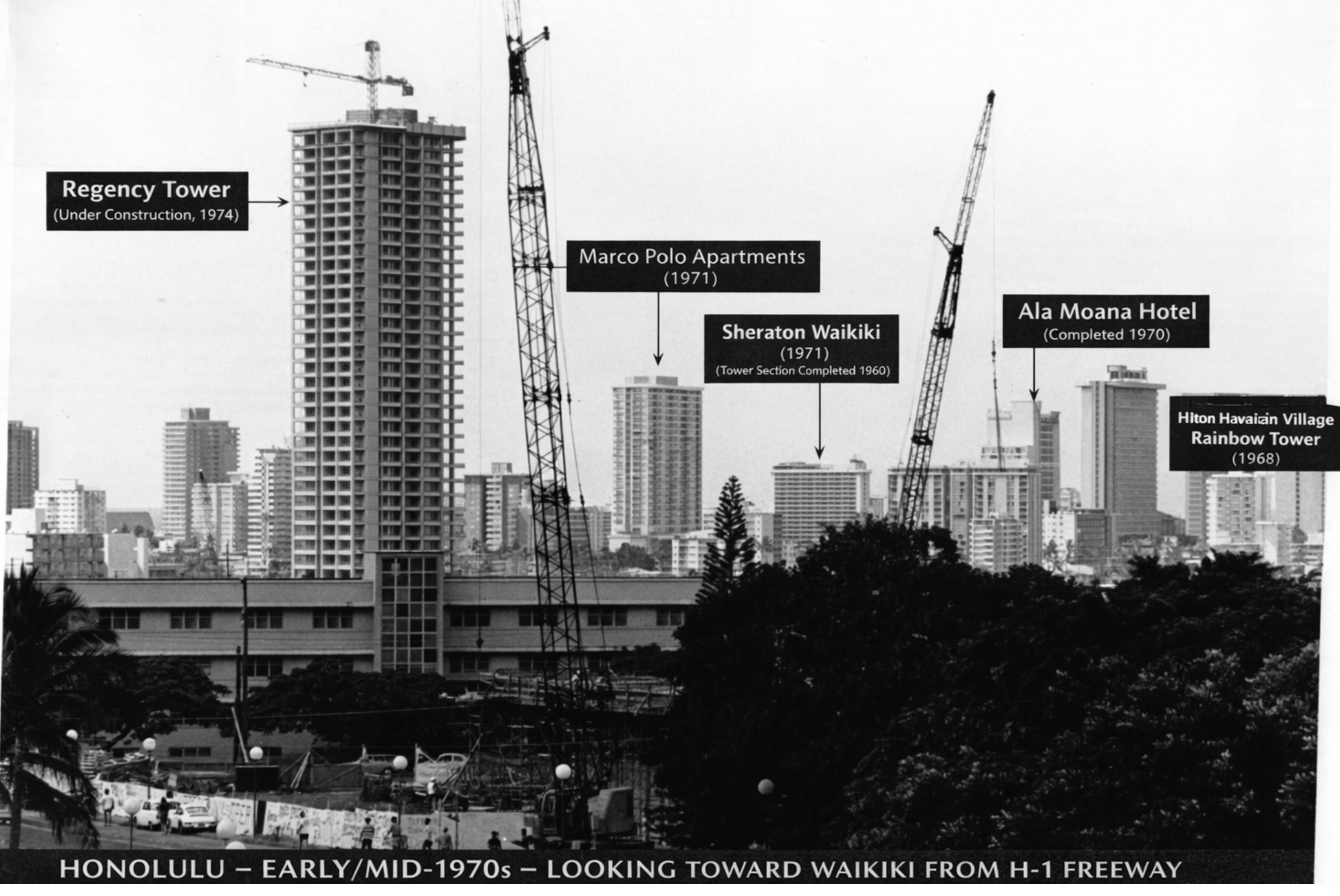
Other info. Before I hit a daily limit, I asked ChatGPT to identify buildings seen in the original photo. It made several obviously incorrect identifications, but after a back-and-forth with me, it offered this annotated version.

I don’t have much confidence in it, but still this might be useful.

Screenshot

I’m hoping all you amateur sleuths are going to contribute to finding the answer!