Category Archives: Consumer issues

Another look back at the NextEra deal

All the public discussion of the pending global settlement of Lahaina Fire litigation has made one thing clear: Hawaiian Electric, one of the nation’s smallest electrical utilities, has limited financial resources to contribute to the overall settlement. This “ability to pay” apparently was taken into account during settlement negotiations, which recognized that pushing Hawaiian Electric into bankruptcy would create a whole new set of problems for the entire state.

That sends me back to a question I raised a year ago: Would Hawaii have been better off if Next Era Energy’s proposed purchase of Hawaiian Electric in 2014 had gone through?

You may recall that Next Era, one of the country’s largest energy corporations, offered to purchase Hawaiian Electric for a bit over $4 billion. The deal was nixed by the Public Utilities Commission in July 2016 in the face of almost united political opposition from the state’s political establishment.

Admittedly, I never understood exactly what was behind the politics of the opposition. To me, it seemed a lot like the 1950s when the Big Five companies, at the center of the island’s suger-era power structure through their network of interlocking directorates, tried to keep national retailers from pushing into Hawaii. Sears was the first major firm to break through the political and economic blockade and open up a store in Honolulu in 1941.

Although I never heard it discussed, there may have been deep concern within Hawaii’s Democratic-controlled power structure that NextEra, based in Florida, would be pushing far more conservative political ideas reflecting those Florida roots and the far-Right slide of Florida policy makers?

But as a much larger entity, NextEra would have brought its deep corporate pockets into Hawaii, which would have undoubtedly rattled existing relationships in business and government.

But it would also have brought the financial strength to borrow funds at lower costs, meaning additional resources that could have potentially been available to mitigate fire risks, and would have certainly been able to fund a larger contribution to the Lahaina Fire settlement.

Given the experience of the past year, would a different decision be made today?

See:

In hindsight, was it a mistake to reject NextEra Energy? August 20, 2023
Email scam cost a company in Hawaii over $8 million last year

An unnamed company in Hawaii lost over $8.2 million to scammers just days before Christmas in 2023, according to a lawsuit seeking forfeiture of a portion of the funds recovered by federal agents from a Florida credit union.

The government’s civil forfeiture lawsuit filed in Honolulu’s Federal District Court did not name the company, which is referred to only as “Company #1”, but said it had fallen victim to a “business email compromise,” or “BEC” in which the as-yet-unknown scammers sent an email to the company’s representative that pretended to be from its outside legal counsel.

The phony email successfully spoofed the law firm’s email address, and the company’s representative then followed instructions and wired $8,328,651 from First Hawaiian Bank to Regions Bank, which is headquartered in Birmingham, Alabana, and operates in 15 states, from Florida to Iowa and Texas.

First Hawaiian Bank had issued a warning about business email fraud two years ago in July 2022 (“Business Email Compromise (BEC) is on the Rise“).

Business email fraud is a basic form of internet fraud, according to the FBI’s 2023 Internet Crime Report.

In 2023, the IC3 received 21,489 BEC complaints with adjusted losses over 2.9 billion. BEC is a sophisticated scam targeting both businesses and individuals performing transfers of funds. The scam is frequently carried out when a subject compromises legitimate business email accounts through social engineering or computer intrusion techniques to conduct unauthorized transfers of funds.

These BEC schemes historically involved compromised vendor emails, requests for W-2 information, targeting of the real estate sector, and fraudulent requests for large amounts of gift cards. More recently, the IC3 data suggests fraudsters are increasingly using custodial accounts held at financial institutions for cryptocurrency exchanges or third-party payment processors, or having targeted individuals send funds directly to these platforms where funds are quickly dispersed.

The complaint provides no information about the company targeted by the scammers, the nature of its business, or its interests and operations in Hawaii.

The account where the money was wired was associated with “Subsidiary Trading JR LLC,” a Florida company registered to do business by Jonathan Ryall Patton in October 2023. Prior to receipt of the money wired from First Hawaiian Bank, the account had a balance of just $59.23, the lawsuit reports.

“Numerous outgoing wires and checks were subsequently issued” from the account, including several checks made out to Patten that totaled over $4.4 million.

The account was totally drained and closed by January 24, 2024, just 33 days from the date of the original wire.

Continue reading

An overlooked group of Lahaina fire victims

Although Hawaiian Electric has been much in the news since the fire that destroyed Lahaina last August, here’s something that hasn’t been talked about much.

There’s a class of victims in the Lahaina fire disaster that hasn’t been mentioned publicly yet, at least that I’ve been able to find.

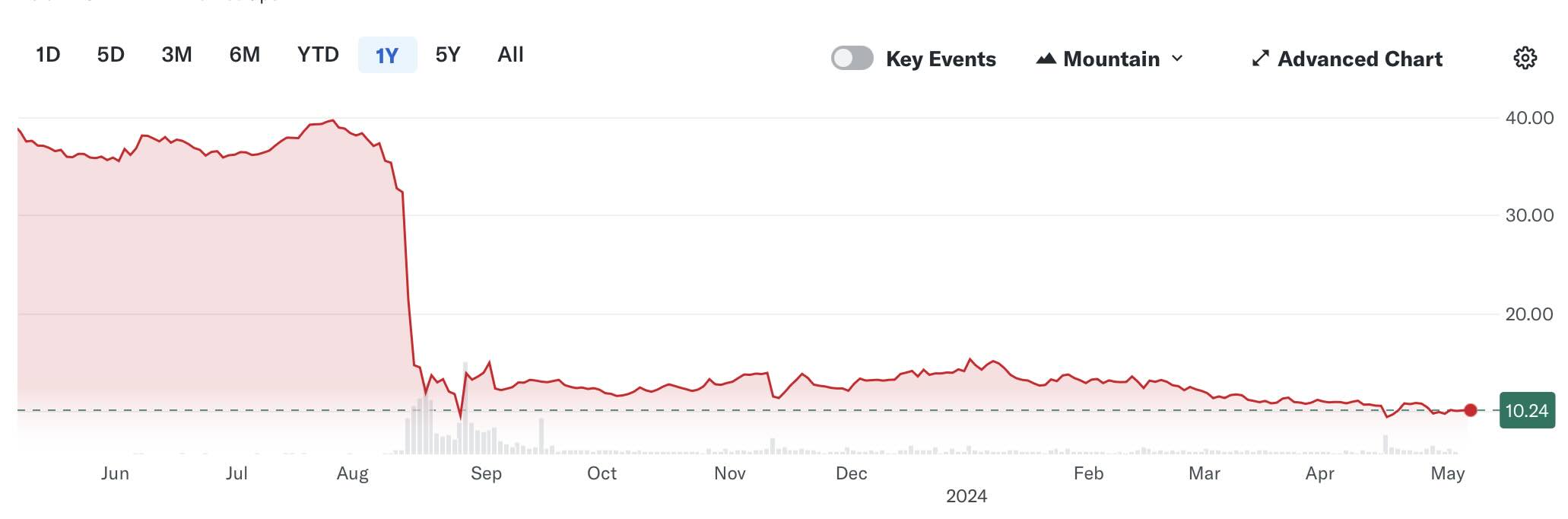
I’m talking about the thousands of Hawaii retirees who lost up to 3/4 of their retirement savings when the value of their investments in Hawaiian Electric Industries, the parent company of Hawaiian Electric Company, or HECO, plummeted almost overnight in the days after the fire.

While institutional investors with their computerized trading systems and full-time investment managers got out from under the HE stock without major damage, most retirees are “buy & hold” investors who just aren’t that nimble when things go topsy-turvey.

One recent estimate is that individual retail investors hold 35.59% of the company stock.

One financial website reported: “The share price as of May 17, 2024 is 11.50 / share. Previously, on May 22, 2023, the share price was 36.29 / share. This represents a decline of 68.31% over that period.”

Yes, sadly, I’m part of that group. I inherited a nice retirement nest egg from my mother, who had invested small amounts in Hawaiian Electric many decades ago, and followed the conservative path by just reinvesting the dividents, letting the number of shares, and the overall value, continue to slowly grow.

Over at least 60 years, that’s a lot of compound growth. And I had continued in the same vein. After all, what’s more stable, in the long run, that a local utility subject to state regulation, including a guaranteed rate of return on the company’s investments in infrastructure? It wasn’t a growth stock, but it appeared to be one that allowed the retirees who owned its stock to sleep at night.

I attended several annual stockholder meetings while the NextEra buyout was being debated. There were a whole lot of middle class folks who were there because their retirement incomes were at stake. I wish that I could provide numbers of individual stockholders here in Hawaii, or who formerly lived here but have since moved elsewhere. But the meetings were held in very large ballrooms, and those present likely represented an even larger group that didn’t attend.

They were doing fine.

Until the fire. Then they all took a double hit. First, the stock’s value plummeted, as did the value of their retirement assets. And HEI stopped paying a dividend, meaning that those who were relying on those dividends to supplement their social security and pensions were suddenly facing harder times.

It’s fair to say that these shareholders are better off than those who lost their lives or their property in the Lahaina fire. But some, I’m sure, many who assumed they were comfortable are facing new and worsening financial hardships as the company’s prospects are difficult at best.

Here’s a chart of Hawaiian Electric Industries stock price in the months before and after the fire from Yahoo Finance. Imagine your savings taking that sort of hit.