
In a post here last week, I described a bill pending before the Honolulu City Council that would provide real property tax relief for members of the Sand Island Business Association (SIBA), which controls an industrial park on about 70 acres of land on Sand Island leased from the state.
I’m very critical of SIBA’s special interest bill for a variety of reasons, which I attempted to summarize in that post.
But there’s one part of the issue that resonates. And that is the difficulty any property owner faces when trying to understand the basis for their property’s tax appraised value determined each year by the city’s Real Property Assessment Division. The secrecy of the assessment process impacts all property owners.
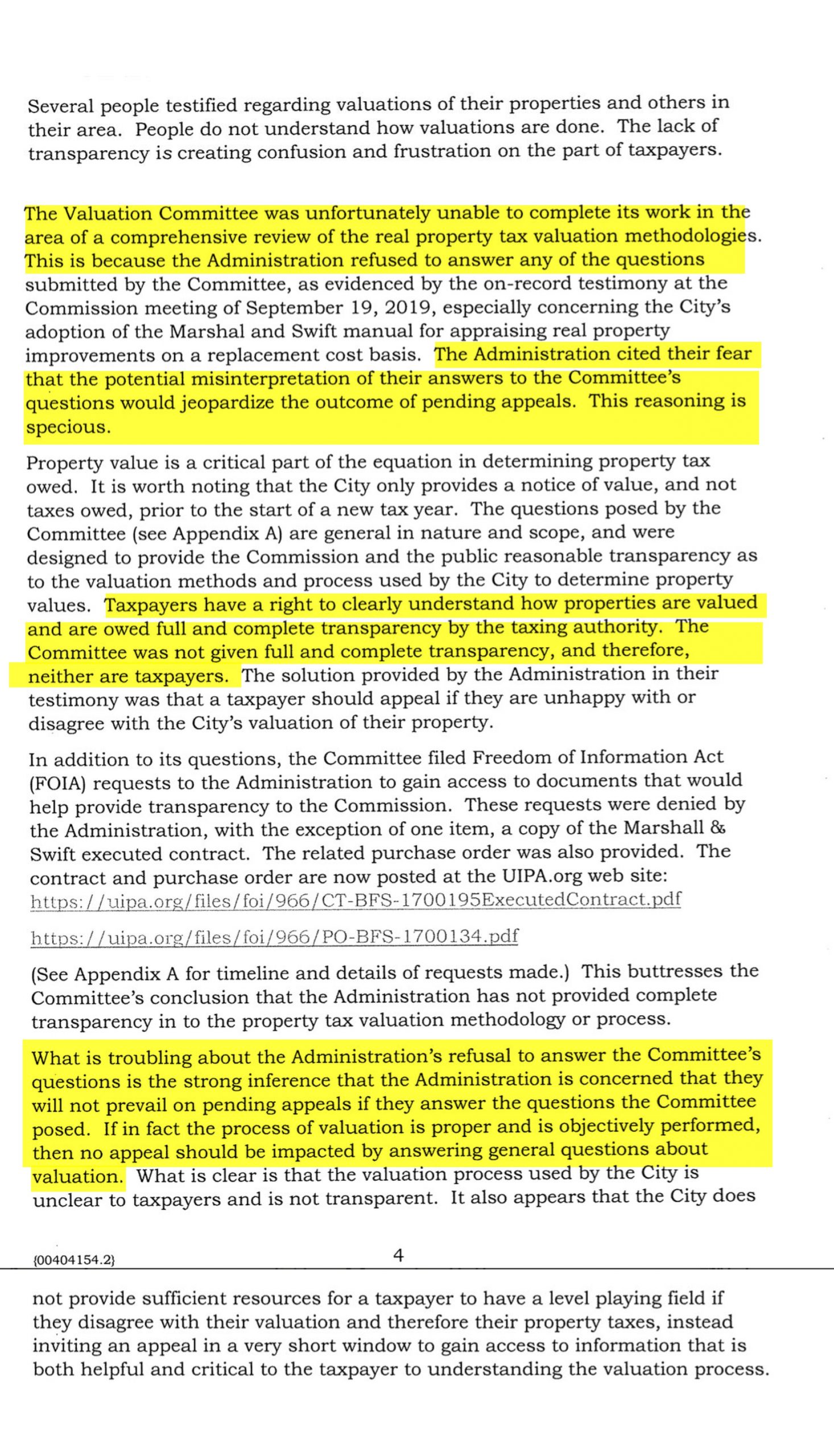
The city’s own 2019 Oahu Real Property Tax Advisory Commission ran into the same stone wall when they asked the city questions about its assessment methodology.
I’m going to quote at some length from the commission’s report to the city council, as it is quite revealing.
The yellow highlighting is my own.
Discover more from i L i n d
Subscribe to get the latest posts sent to your email.
Thank you for covering this, Ian. I just looked at the city’s website, and I still don’t see much improvement in taxpayer education regarding the assessment process. The Commission had made recommendations that the city be more transparent about the process, but there’s not even any mention of the two methods the city uses to value property that I can see. This is very disappointing. Taxpayers should understand the method used to arrive at any tax they pay. (Disclosure: I was on the 2019 and 2011 Real Property Tax Advisory Commissions.)
That’s so ridiculous, and probably illegal. Any taxpayer should be able to readily obtain the methodology by which their taxes are calculated. This should also obviously be in writing and subject to disclosure through a public records request, which the advisory commission should pursue. What possible legal basis could the city offer for refusal to disclose? A fear that an established policy could be misinterpreted is not a valid reason.
And what does the new administration have to say about all this?
As chair of the Valuation Committee, I did make several FOIA requests for one of the documents we thought would help us understand the valuation process. We went back and forth for almost two months. Then they wanted to charge me $41.75 for it. It took the involvement of Brian Black from the Civil Beat Law Center to finally get the requested information. By that time, the Commission was ready to write up its draft report to submit to city council, and there really wasn’t time for additional discussions.
A good time to follow up on this issue is when the budget bills come out next month. There will be a separate bill for real property tax rates. That bill is usually reintroduced as a resolution and goes through two committee hearings and two full council hearings. I encourage you and others to testify.
It was over 20 years ago, but I contested my appraisal. Back then, after I submitted my appeal, I got a visit from a city appraiser, who told me how my home was appraised and, IIRC (it was a long time ago) even provided me with the comps he said were used.
That said, I think we should take a step even further back and reconsider how much sense it makes to base property taxes on value. We’ve seen how property values can swing quite a bit over time, and how spending plans are made when values are high that result in pain and angst when values drop.
Perhaps rather than absolute property value, taxes should be apportioned based on relative value.
Yes, if you appeal, they will show you a worksheet of how they arrived at the value. The Commission asked that a sample worksheet be posted on the city’s website as part of the educational process. That hasn’t happened.
They just hope anyone with a question will go through the appeals process (which they should not have to) and THEN they correct things.
HNL government policy: throw it at a wall and hope it sticks.