Category Archives: Media

UH Press now offers open access to 140+ books online

Back in early 2021 I called attention to the University of Hawaii Press’ “Hawaii Open” project which, at that time, offered free access to a list of 90 books online.

That list has now grown to 148 books, and so might be worth taking another look.

Hawai‘i Open is the latest home for the University of Hawai‘i Press’s Open Access book projects, featuring over 140 titles covering Asian, Hawaiian, and Pacific studies. This online platform provides free access to these publications through the support of notable organizations such as the Humanities Open Book Program, the Sustainable History Monograph Pilot and Knowledge Unlatched.

Hawai‘i Open serves to highlight and promote the University of Hawai‘i Press’s rich backlist, facilitating the wide dissemination of valuable knowledge. This initiative is built upon the open-source scholarship platform Manifold, reflecting the University of Hawai‘i Press’s commitment to pioneering scholarship and innovation in the digital age.

You can browse the list and read any of the books online, or download in pdf or epub formats.

Thanks to Richard Borreca for 50 years of fine reporting!

Richard Borreca signed off on his column today in the Honolulu Star-Advertiser for the last time after a 50-year run as one of Hawaii’s most important political analysts and reporters.

We were face-to-face in adjoining cubicles during my relatively short stint in the newsroom of the old Honolulu Star-Bulletin, which ended in March 2001 when the newspaper was sold to Canadian publisher David Black.

And after he finally retired from daily reporting, Richard produced a regular column aimed at making sense of dynamics of local politics.

I learned a lot from him as a colleague, although I was a Mac guy and he was hooked on his PC.

Richard, you’ve produced an extraordinary lifetime of works!

Thank you from all of us out here who have relied on your sage perspective over many years.

How long is fifty years?

It’s an excruciatingly long time. Looking back, I can recall the key events as well as the twists and turns of life within each of the past five decades. So much life lived, so many things observed. But I can close my eyes and place myself back in certain events from 50 years ago, sense memory takes over, and I can almost relive those events again in my mind.

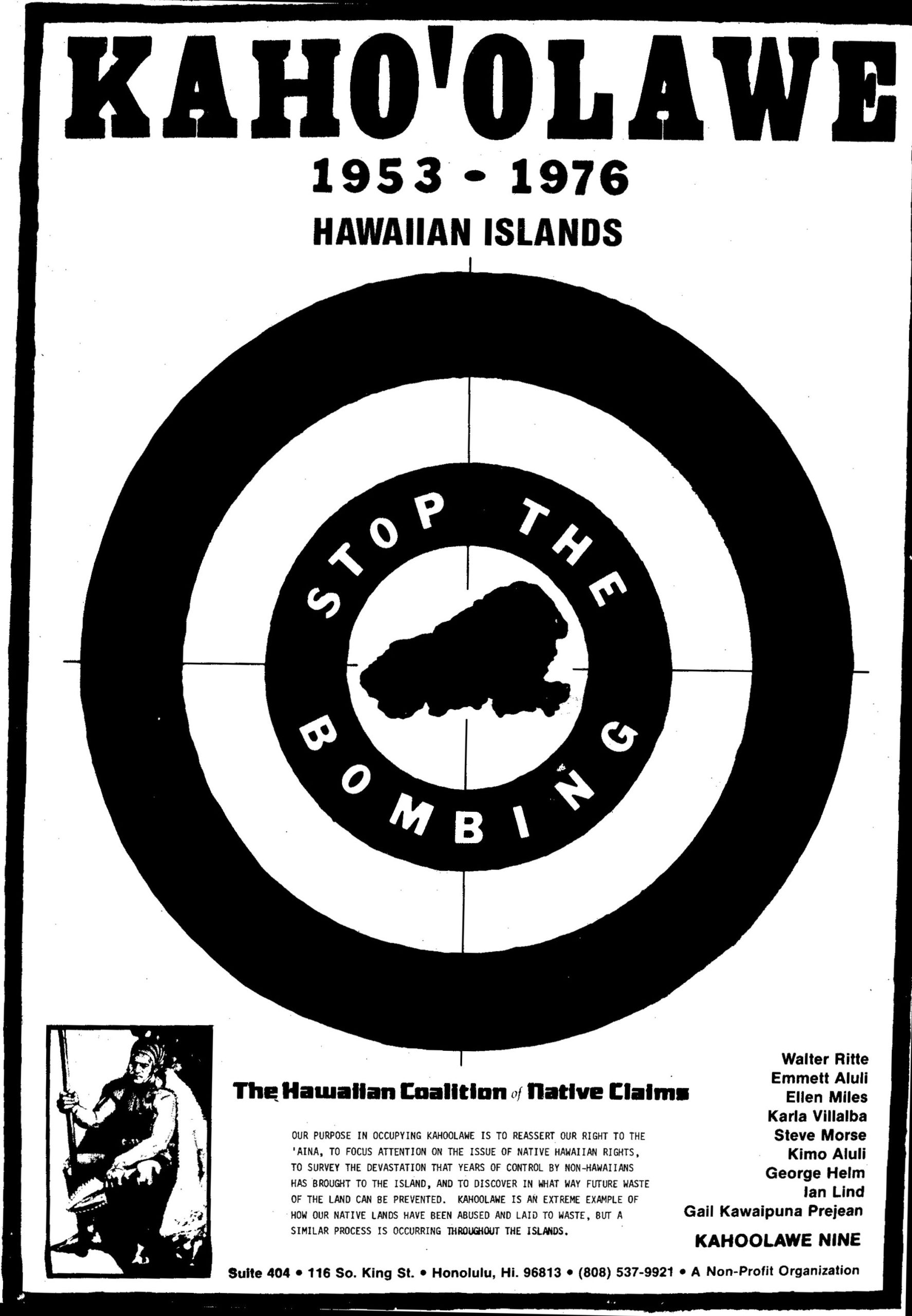
And today marks one of those long-ago events. It is the 50th anniversary of the Sunday, January 4, 1976 when I was part of a small group landing on Kahoolawe, later dubbed the Kahoolawe Nine, as a protest envisioned as a way to put the issues and concerns of Native Hawaiians on the national agenda at the start of the American Bicentennial. It started as the brainchild of Charlie Maxwell to highlight a bill in Congress to authorize reparations to Native Hawaiians for their loss of native lands as a result of the overthrow of the Hawaiian Kingdom in 1893 and its subsequent transition to a U.S. territory.

It’s sobering for me to realize that at least five of the original Kahoolawe Nine did not live to see this 50th anniversary–George Helm (d.1977), Kawaipuna Prejean (d.1992), Emmett Aluli (d.2022), and Stephen Morse (d.2025). The Maui News story about the Kahoolawe Nine in 2006 (see link below) reported Ellen Miles had died previously, although I couldn’t find a published obituary or other available record. Walter Ritte is the only other one of the original nine quoted in current news stories.

Maui Now published a story about the anniversary today, as did the Honolulu Star-Advertiser. For more of the story, I suggest Maui News reporter Kekoa Catherine Enomoto’s excellent story to mark the 30th anniversary in 2006, and my own Civil Beat column in advance of the 40th anniversary a decade ago. And SFGate.com did their own story for the 50th anniversary, providing a bit of national coverage.

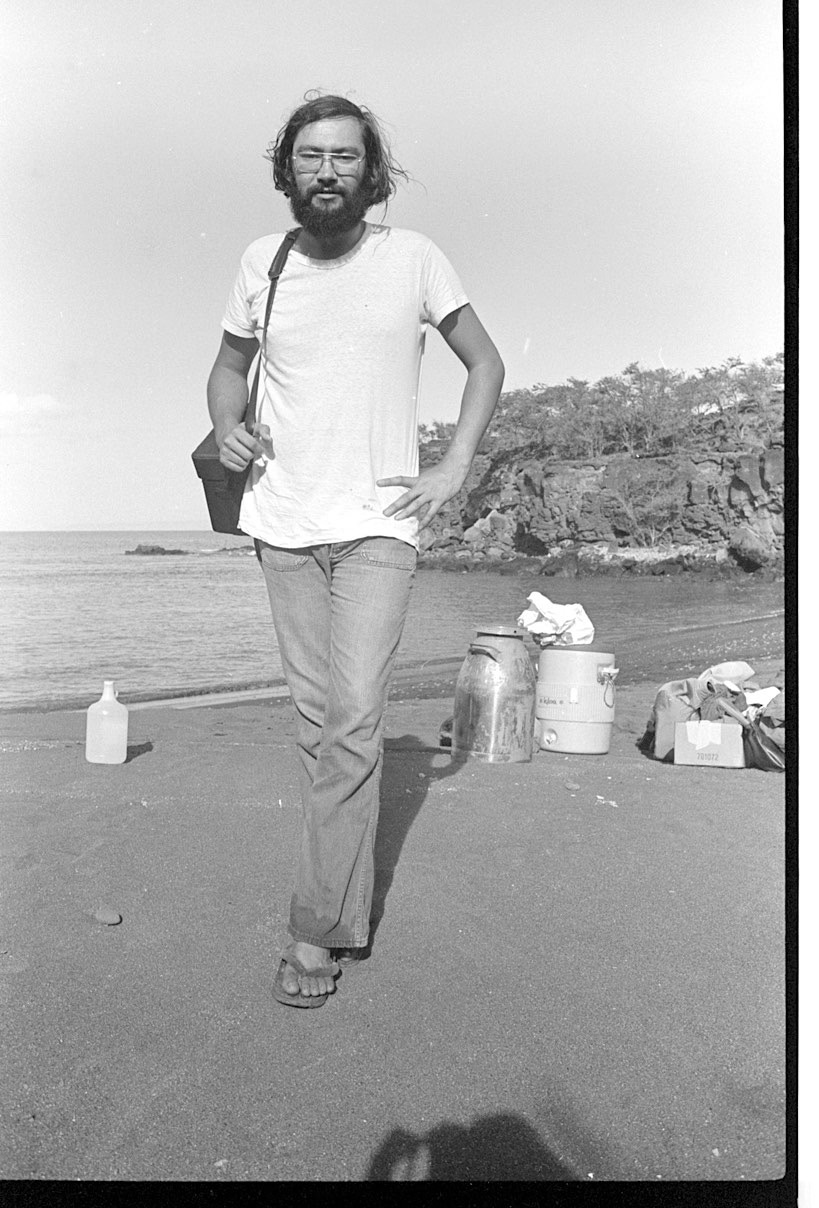
That’s a photo of me on the beach during our relatively brief time on Kahoolawe in 1976. Lots of my other photos of that first landing have also been posted online for several decades. Someday I`’ll get around to reposting better versions of those photos, but for now they’ll have to do.

Afterthoughts

Here are a couple of suggestions that I wanted to pass on.

First, “The Music of George Helm: A True Hawaiian,” recorded before his death in 1977, is available on Apple Music and, I expect, other streaming services as well. George was more than just one of the Kahoolawe Nine. He was a driving force in bringing Kahoolawe’s message to the public as he criss-crossed the state collecting music and stories as he constantly sought to expand his musical knowledge. It was, as I recall, recorded live at the Gold Coin lounge in downtown Honolulu and, as a result, is a bit rough around the edges in a few places. He was lost far too young.

I would would be remiss if I failed to recommend Steve Morse’s self-published memoir, “First Landing: Story of the Kaho`olawe Nine,” available in paperback on Amazon for just $8.99. I checked Powell’s Books, and Alibris.com, a used book site, in search of alternative sources but didn’t find any. It’s an easy read, based primarily on Morse’s personal recollections, but also placing events in a personal and political context. My copy of the book suffers from the choice of a very light typeface which makes reading a bit more difficult, but that shouldn’t deter you from reading Morse’s account.

And the University of Hawaii Press has republished “Na Mana‘O Aloha O Kaho‘Olawe: Hawai‘I Warriors—Love For Land And Culture,” the diaries of Walter Ritte Jr. and Richard Sawyer, written in 1977, “a day-to-day record of their thoughts and reflections when the two men occupied the island of Kaho?olawe for thirty-five days, using their bodies as shields to stop the bombing and desecration of the island by the US military.”

Also see:

Early days of the Protect Kahoolawe Ohana, February 1976

Walter Ritte on Trial 1976

Sovereignty Sunday, January 1977

PKO at the Federal Courthouse in Honolulu, 1977

Aloha Aina Newsletter 1978-79

In case you missed this….

The news “food chain” at work!

Last month, I wrote a post about my dad’s role in converting a beautiful stone house in Kaaawa into a restaurant that, more than 70 years later, is considered an island landmark—Kaaaawa’s Crouching Lion.

A couple of weeks later, I was contacted by Jonathan Masaki at Hawaii News Now, who asked if I would share the tale for their “Stories of Hawaii” segment. Of course, I agreed.

The segment—“How the Crouching Lion Lodge became a North Shore landmark”—aired this week.